VERIFIED CONTEXT · A botanical collection inside a public park
Seoul Botanic Park in Magok offers a useful change of scale: a close look at a plant, followed by a walk that puts it back into a landscape. When the site formally opened in May 2019, Seoul described a combination of botanical garden and public park. That distinction still helps a first visit make sense. The conservatory is one part of the place, not the whole afternoon.
The current visitor guide separates the paid Greenhouse and Display Gardens from the free Forest Field, Lake Garden and Wetland. Korea Tourism Organization uses slightly different English labels, including Open Forest and Themed Garden, for the same broad division. Follow the park's current map and the name of the zone you want, rather than assuming every green space lies behind a ticket gate.
BEFORE YOU GO · Protect the time for looking
For September, the Greenhouse and Display Gardens operate from 9:30 AM to 6 PM, with last admission at 5 PM. Those March–October hours appear in the operator's February 22, 2026 notice, its admissions page and KTO's listing. The paid gardens normally close on Mondays; the seasonal notice says they open when Monday is a public holiday. Check the dated notices for any replacement closure or exceptional schedule before travelling.
Standard individual admission is KRW 5,000 for adults aged 19–64, KRW 3,000 for ages 13–18 and KRW 2,000 for ages 6–12. Tickets apply to the Greenhouse and Display Gardens and are valid on the purchase date. Eligibility-based exemptions and discounts require supporting documents; use the linked admissions page if one may apply to you. The three free park zones are listed as open year-round.
ARRIVAL · Name the zone as well as the station
The operator's subway directions connect Magongnaru Station Exits 3 and 4, on Line 9 and AREX, to Forest Field. They also list Yangcheon Hyanggyo Station Exit 8 on Line 9 for a roughly ten-minute walk to the Botanic Garden. These are different approaches, not interchangeable instructions for reaching one front door. Save the park name, 서울식물원, and its address, 161 Magokdong-ro, Gangseo-gu, alongside your chosen zone.
Our suggestion is to use the Forest Field approach when the walk itself is part of the visit, or consider the Botanic Garden approach when indoor plant viewing is your main purpose. Station connection does not mean arrival at the conservatory entrance. Allow time to cross the grounds and consult current directions for your own mobility needs; the quoted walking estimate is not an accessibility guarantee.
SEOULIAN EXERCISE · Compare before you collect names
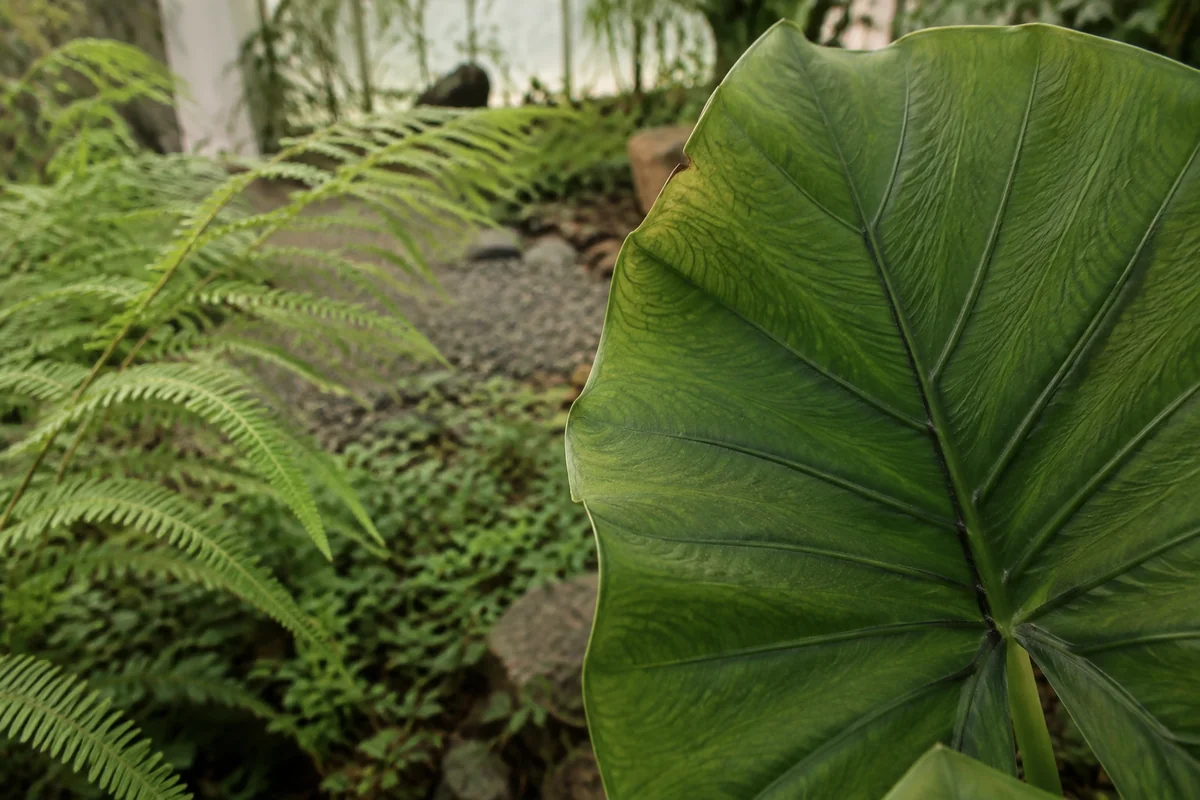
The conservatory organizes its displays around plants and plant cultures associated with twelve cities in tropical and Mediterranean regions. Instead of treating that as twelve boxes to tick, choose one leaf you can see clearly from the path. Notice its outline, the direction of its veins and how light sits on its surface. Then find a contrasting shape nearby. Read the labels to learn what the plants are; do not infer a species or habitat from appearance alone.
This is a self-directed looking exercise, not a guided program or a claim about which specimens will be on display. A phone photograph can help you remember the comparison, but a short written observation works too. Stay on visitor paths and leave plants and stones where they are. The park's visitor rules prohibit collecting, entering planted areas and bringing camera tripods into the Greenhouse and Display Gardens.
WIDEN THE VIEW · Give the lake a different job
After the close-up, change the question from what a leaf looks like to how planting shapes a place to walk or pause. The operator describes Lake Garden's lakeside route and crossing path as opportunities to observe waterside plants and take in a wider view. That makes it a useful second setting for the same curiosity, without adding another paid attraction.
Our suggested pace is deliberately flexible: leave the collection when your attention starts to fade, then spend the remaining time on a manageable section of the lake walk. You do not need to complete every zone. Weather, path notices and your energy should determine how far you go; this article does not certify today's surface conditions or promise a particular flower, bird or seasonal colour.
TAKEAWAY · Make a small visit repeatable
If the paid gardens are closed or your arrival is too late for admission, a daytime visit to the free park can still stand on its own, subject to local notices. If the conservatory is your priority, arrive comfortably before the admission cutoff and treat the outdoor walk as optional. A smaller plan is easier to adapt than an itinerary built around seeing everything.
The useful souvenir is a way of paying attention. Choose a plant, write down what made you stop, and compare it with something growing near home. Seoul's garden then becomes more than a distant setting in a camera roll: it gives you a question you can carry into an ordinary walk somewhere else.
THE SEOULIAN SIGNAL · EDITORIAL INTERPRETATION
Why this matters
Plan around two boundaries: the paid collection has an admission cutoff, while the surrounding free park has a different role. Magongnaru connects to Forest Field, not directly to every garden entrance. One careful observation and a short lake walk are a complete visit, not a failed attempt to see the entire site.
SOURCE DESK · RESEARCH RECORDS
Research used for this analysis
- Admission Information Seoul Botanic Park · Current paid/free zone boundary, March–October opening and last entry, age bands, standard fees and purchase-day ticket validity.
- Conservatory & Display Gardens: Regular Operating Hours (Mar–Oct), February 22, 2026 Seoul Botanic Park · Dated primary confirmation of September hours, last entry, Monday closure and public-holiday exception. Facts only; no KOGL Type 4 image or expressive content reused.
- Seoul Botanic Park Korea Tourism Organization · VISITKOREA · Independent institutional cross-check of address, zone names, seasonal hours, last entry, routine closure and individual prices.
- Directions: Subway Seoul Botanic Park · Magongnaru Exits 3/4 for Forest Field and Yangcheon Hyanggyo Exit 8 for the Botanic Garden; the operator's walking estimate is not treated as an accessibility certification.
- Botanic Garden: Conservatory Seoul Botanic Park · Twelve-city tropical and Mediterranean display concept; no unverified species, flowering or scientific claims inferred.
- Lake Garden Seoul Botanic Park · Landscape context for waterside plant observation and the lakeside/crossing paths, not live route-condition confirmation.
- Visitor Guidelines Seoul Botanic Park · No plant or stone collecting, no entering planted areas, and no tripods in the Greenhouse and Display Gardens.
- Seoul Botanic Park Officially Opens May 1, published May 3, 2019 Seoul Metropolitan Government · Historical opening and botanical-garden/public-park concept only. Not used for present-day prices, hours, routes, plant counts or availability.
Original synthesis & image rights
Original SEOULIAN synthesis, fact-checked September 5, 2026, from the park operator's current visitor pages and February 2026 seasonal notice, Korea Tourism Organization's destination listing, and Seoul Metropolitan Government's May 2019 opening report. The 2019 report supplies historical context only; current hours, fees and access are checked against current operator guidance. The seasonal notice and admissions page agree with KTO; an outdated winter-hours panel on the operator's homepage is not used. No source sentences, plant photographs, maps, guidebook layouts, posters or artwork are reproduced. The operator's seasonal notice carries a KOGL Type 4 restriction: no licensed image or expressive content from that notice is reused. The cover was independently created with built-in Imagegen, reviewed and disclosed as an illustration, with PNG, WebP, prompt and hashes recorded. The observation exercise and suggested pacing are SEOULIAN's own editorial recommendations, not an official tour or firsthand field report. Targets and reported usage remain attributed to the city and are not presented as independently verified outcomes.
Image disclosure
Credit: SEOULIAN · Created with ChatGPT Image Generation
Creator: SEOULIAN with ChatGPT Image Generation
Source type: SEOULIAN imagegen editorial photo
Disclosure: AI-generated editorial illustration created with ChatGPT Image Generation; illustrative and not documentary evidence. This fictional conservatory scene does not show Seoul Botanic Park, identify a plant species, or document any real collection, exhibition, bloom, building or visitor condition.
License: Original SEOULIAN AI-generated editorial image