Search this page

Results update as you type.

SEOULIAN desk · FOOD

The Korean table, explained.

Ingredients, fermentation, regional dishes, dining customs, and the people who keep Korean food moving.

30 published stories in this section.

All Food

30 stories · Page 1 of 2

A Wikimedia Commons image illustrating Korean cuisine

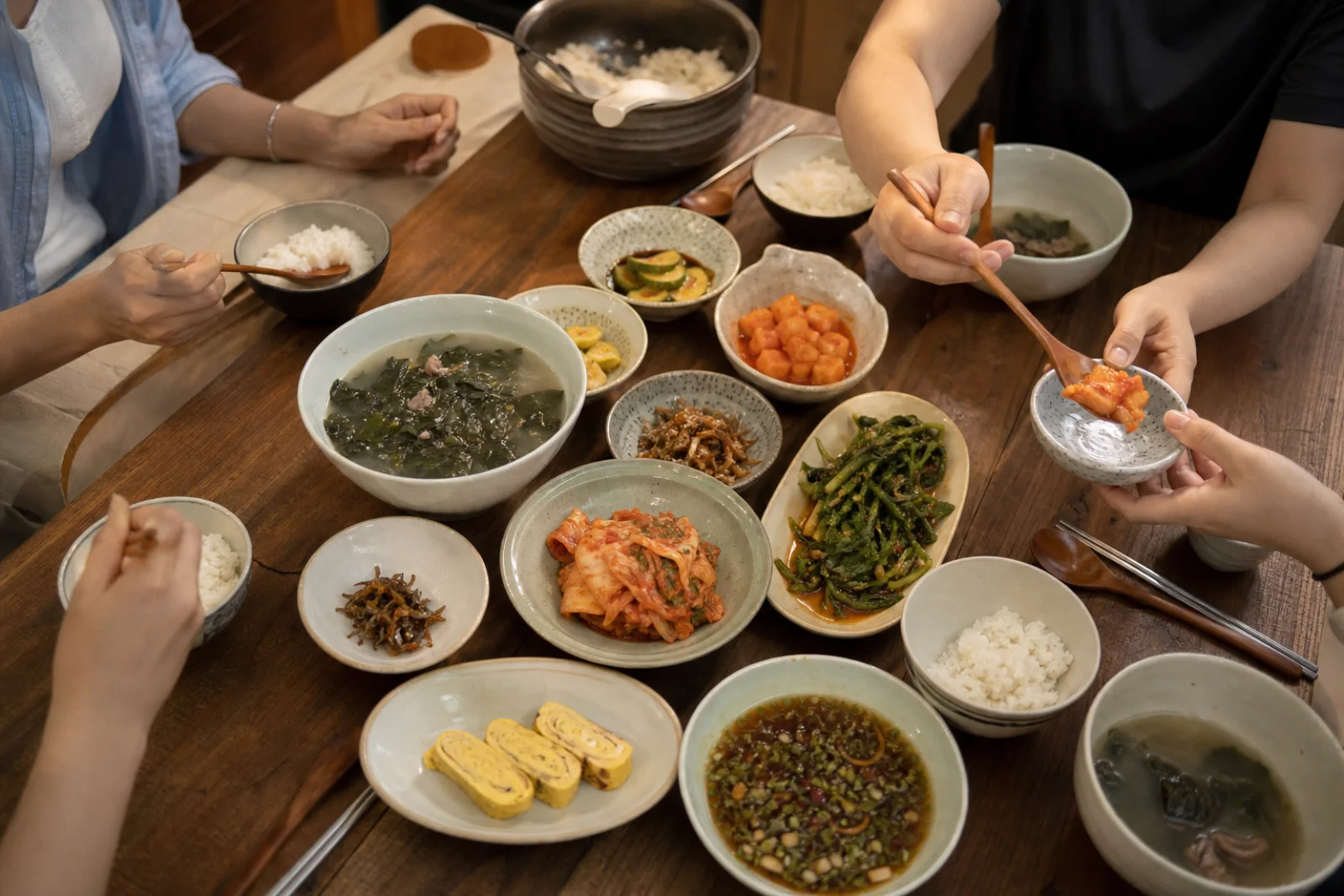
Korean cuisine

Korean cuisine is the set of foods and culinary styles which are associated with Korean culture. This cuisine has evolved through centuries of social and political change. Originating from ancient agricultural and nomadic traditions in Korea and southern Manchuria, Korean cuisine reflects a complex interaction of the natural environment and different…

Read the brief
A Wikimedia Commons image illustrating Kimchi

Kimchi

Kimchi (; Korean: 김치; pronounced [kim.tɕʰi]) is a traditional Korean side dish (banchan) consisting of salted and fermented vegetables, most often napa cabbage or Korean radish. A wide selection of seasonings are used, including gochugaru (Korean chili powder), spring onions, garlic, ginger, and jeotgal (salted seafood).

Read the brief
A Wikimedia Commons image illustrating Kkakdugi

Kkakdugi

Kkakdugi (Korean: 깍두기) or diced radish kimchi is a variety of kimchi in Korean cuisine. Usually, Korean radish (called mu 무 in Korean) is used, but other vegetables or fruits can also be used. Kkakduk-kkakduk is an ideophone related to dicing/cubing. Kimchi made with radish that are not diced into cubes are not called kkakdugi.

Read the brief
A Wikimedia Commons image illustrating Gimjang

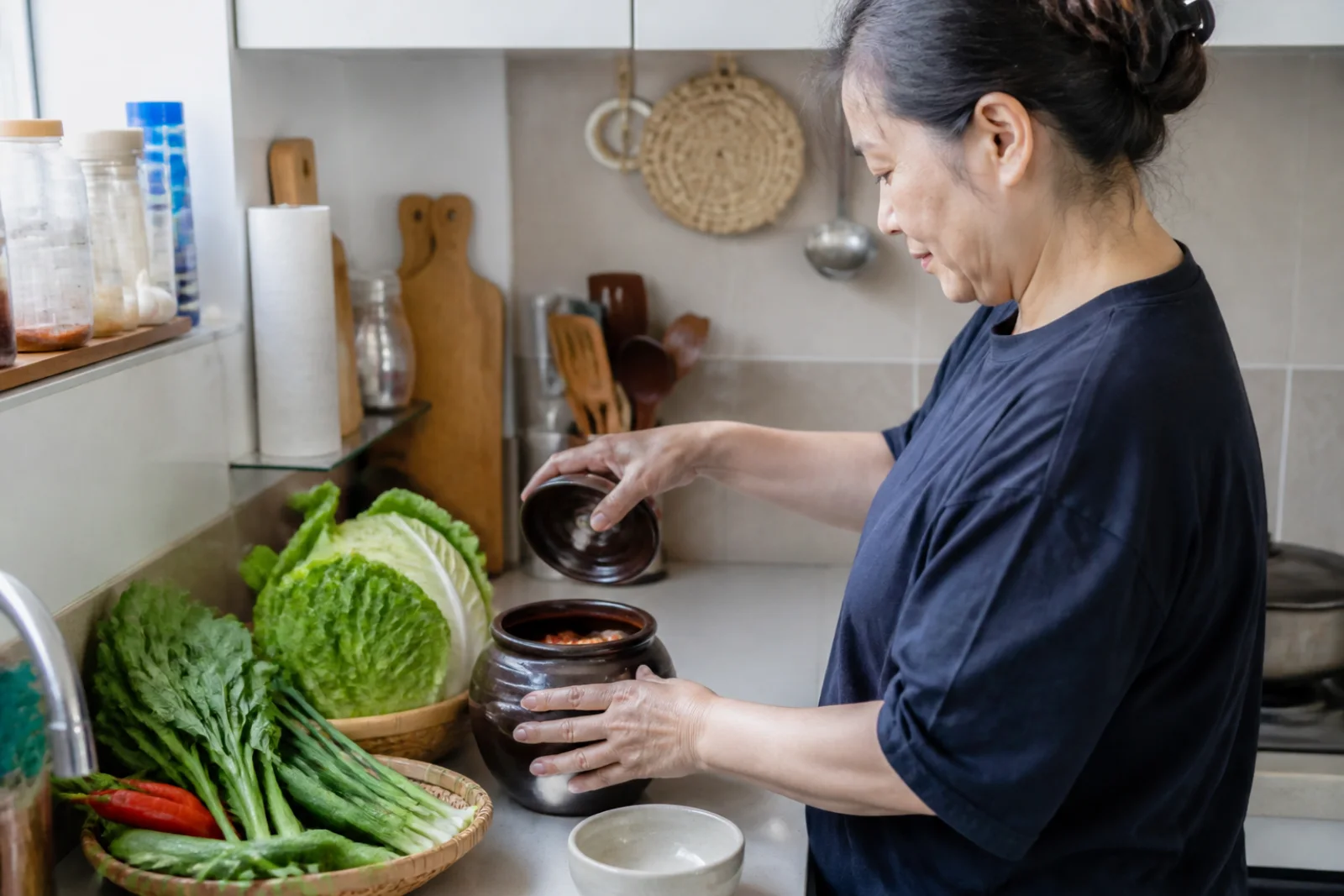
Gimjang

Gimjang (Korean: 김장), also spelled kimjang, is the traditional process of preparation and preservation of kimchi, the spicy Korean fermented vegetable dish, in the wintertime. During the summer months, kimchi is made fresh, from seasonal vegetables.

Read the brief
A Wikimedia Commons image illustrating Dongchimi

Dongchimi

Dongchimi (Korean: 동치미) is a variety of kimchi in Korean cuisine consisting of Korean radish, napa cabbage, scallions, pickled green chilli, ginger, Korean pear and watery brine . As the name dong (동; 冬; lit. 'winter') and chimi (치미, an ancient term for "kimchi"), suggests, this kimchi is traditionally consumed during the winter season.

Read the brief
A Wikimedia Commons image illustrating Soy sauce

Soy sauce

Soy sauce (sometimes called soya sauce in British English) is a liquid condiment of Chinese origin, traditionally made from a fermented paste of soybeans, roasted grain, brine, and Aspergillus oryzae or Aspergillus sojae molds (kōji). It is recognized for its saltiness and pronounced umami taste.

Read the brief
A natural AI-generated SEOULIAN editorial photograph illustrating Gochujang

Gochujang

Gochujang or red chili paste is a savory, sweet, and spicy fermented condiment popular in Korean cooking. It is made from gochugaru (red chili powder), chapssal (glutinous rice), meju (fermented soybean) powder, yeotgireum (barley malt powder), and salt.

Read the brief
A natural AI-generated SEOULIAN editorial photograph illustrating Bibimbap

Bibimbap

Bibimbap ( BEE-bim-bap; Korean: 비빔밥; lit. ''mixed rice''), sometimes romanised as bi bim bap or bi bim bop, is a Korean rice dish. It is served as a bowl of warm white rice topped with namul (sautéed or blanched seasoned vegetables) and gochujang (chili pepper paste).

Read the brief
A Wikimedia Commons image illustrating Bulgogi

Bulgogi

Bulgogi ( buul-GOH-ghee, UK also BUUL-gog-ee, US also BOOL-goh-ghee; Korean: 불고기 [puɭɡoɡi], lit. 'fire meat') is a gui (Korean-style grilled or roasted dish) made of thin, marinated slices of meat, most commonly beef, grilled on a barbecue or on a stove-top griddle. It is also often stir-fried in a pan in home cooking.

Read the brief
A natural AI-generated SEOULIAN editorial photograph illustrating Galbi

Galbi

Galbi (Korean: 갈비; pronounced [kal.bi]), kalbi, galbi-gui (갈비구이), or grilled ribs is a type of gui (grilled dish) in traditional Korean cuisine. "Galbi" is the Korean word for "rib", and the dish is usually made with beef short ribs. When pork spare ribs or another meat is used instead, the dish is named accordingly.

Read the brief
A Wikimedia Commons image illustrating Bossam

Bossam

Bossam (Korean: 보쌈) is a pork dish in Korean cuisine. It usually consists of pork belly that is boiled in spices and thinly sliced. The meat is served with side dishes such as spicy radish salad, sliced raw garlic, ssamjang (wrap sauce), saeu-jeot (salted shrimp), kimchi, and ssam (wrap) vegetables such as lettuce, kkaennip (perilla leaves), and inner leaves…

Read the brief
A natural AI-generated SEOULIAN editorial photograph illustrating Japchae

Japchae

Japchae (Korean: 잡채; Hanja: 雜菜; IPA: [tɕap̚tɕʰɛ]) is a savory and slightly sweet dish of stir-fried glass noodles and vegetables that is popular in Korean cuisine. Japchae is typically prepared with dangmyeon (당면; 唐麵), a type of cellophane noodles made from sweet potato starch; the noodles are mixed with assorted vegetables, meat, and mushrooms, and seasoned…

Read the brief
A natural AI-generated SEOULIAN editorial photograph illustrating Tteokbokki

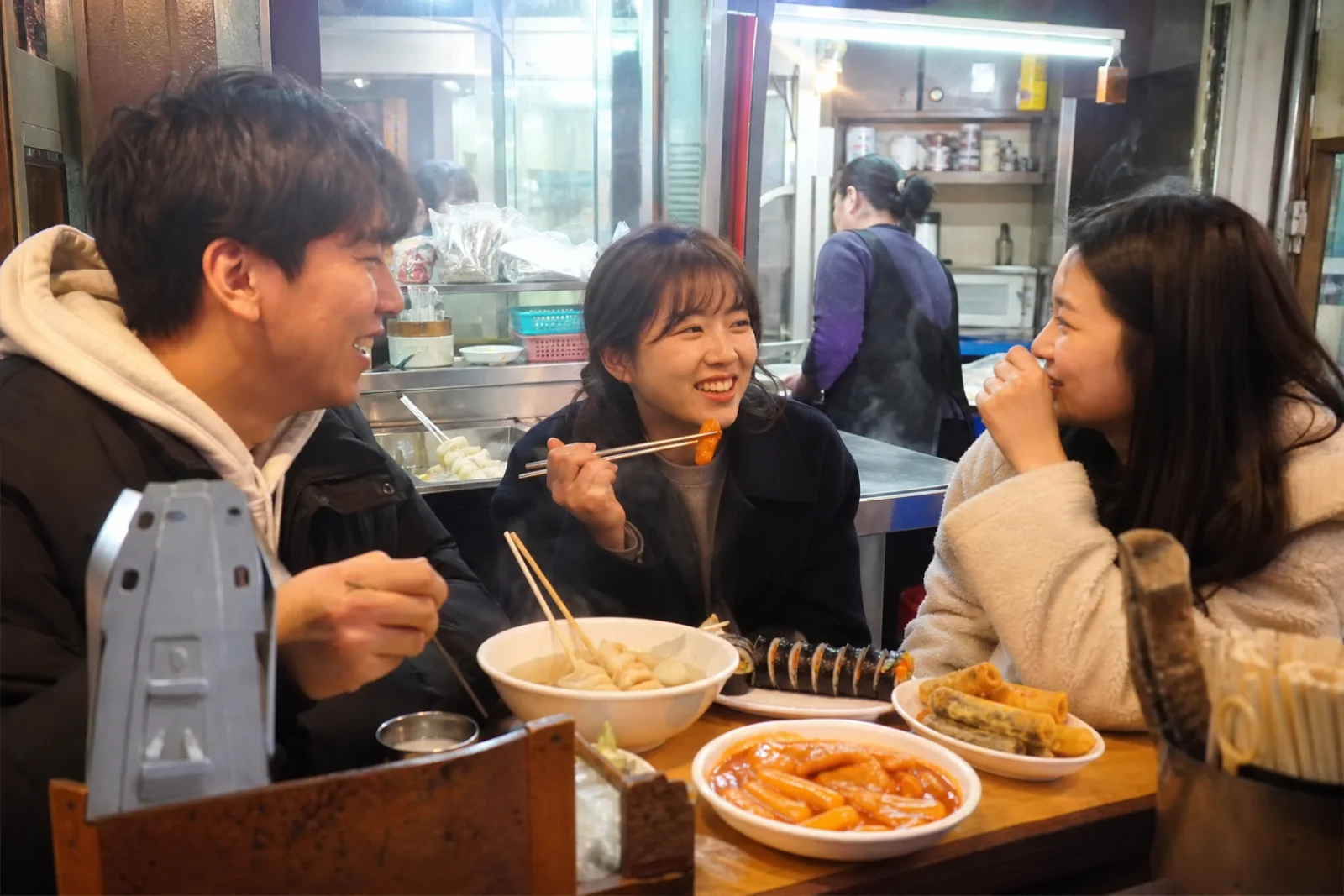
Tteokbokki

Tteokbokki (English: TUK-bok-ee, TUK-boh-kee; Korean: 떡볶이, pronounced [t͈ʌk̚p͈ok͈i]), topokki or simmered rice cake, is a Korean food made from small-sized garae-tteok (long, white, cylinder-shaped rice cakes) called tteokmyeon (떡면; lit. 'rice cake noodles') or commonly tteokbokki-tteok (떡볶이 떡; lit. 'tteokbokki rice cakes').

Read the brief
A Wikimedia Commons image illustrating Sundubu-jjigae

Sundubu-jjigae

Sundubu-jjigae (Korean: 순두부찌개) is a jjigae in Korean cuisine. The dish is made with freshly curdled extra soft tofu (sundubu) which has not been strained and pressed, vegetables, sometimes mushrooms, onion, optional seafood (commonly oysters, mussels, clams and shrimp), optional meat (commonly beef or pork), and gochujang or gochugaru.

Read the brief
A natural AI-generated SEOULIAN editorial photograph illustrating Doenjang-jjigae

Doenjang-jjigae

Doenjang-jjigae (Korean: 된장찌개; pronounced [twen.dʑaŋ.t͈ɕi.ɡɛ]), referred to in English as soybean paste stew, is a Korean traditional jjigae (stew-type dish), made from the primary ingredient of doenjang (soybean paste), and additional optional ingredients of vegetables, seafood, and meat.

Read the brief
A Wikimedia Commons image illustrating Naengmyeon

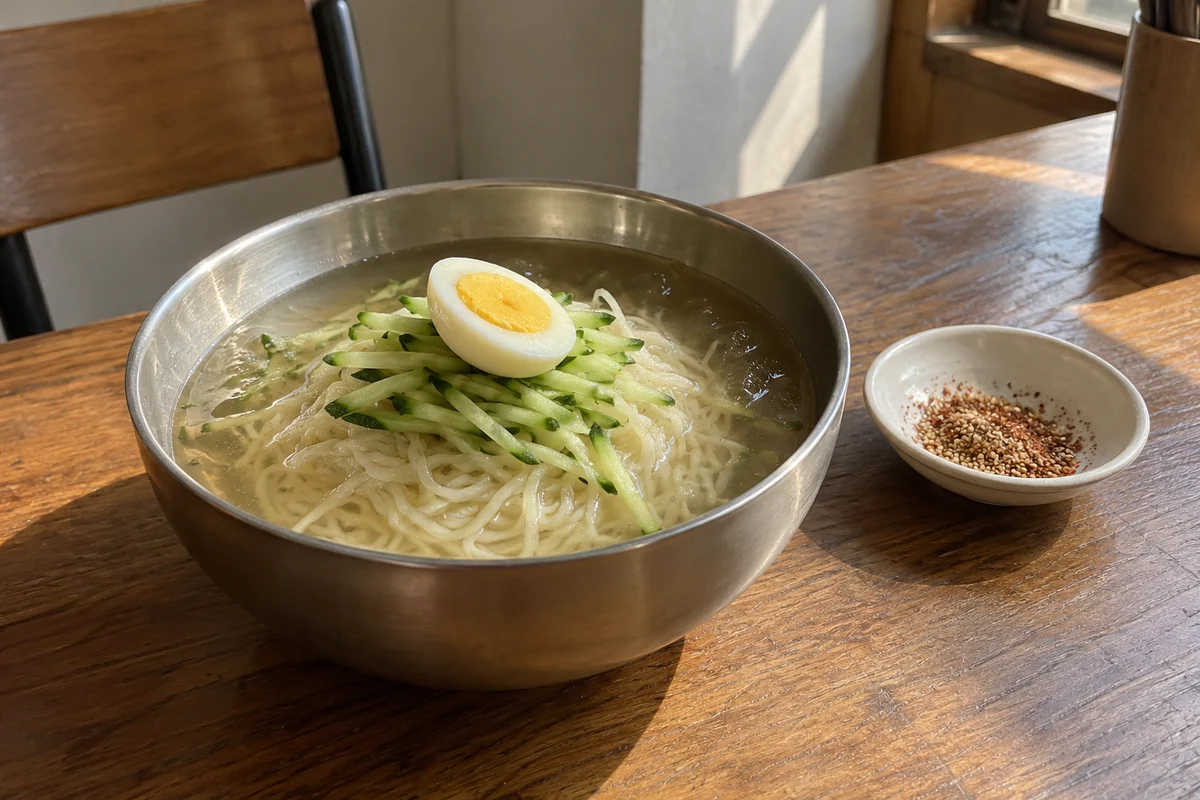
Naengmyeon

Naengmyeon (냉면, in South Korea) or raengmyŏn (랭면, in North Korea) is a noodle dish of North Korean origin which consists of long and thin handmade noodles made from the flour and starch of various ingredients, including most commonly buckwheat (메밀, memil) but also potatoes, sweet potatoes, arrowroot starch (darker color and chewier than buckwheat noodles)…

Read the brief