Start with the least glamorous part of breakfast
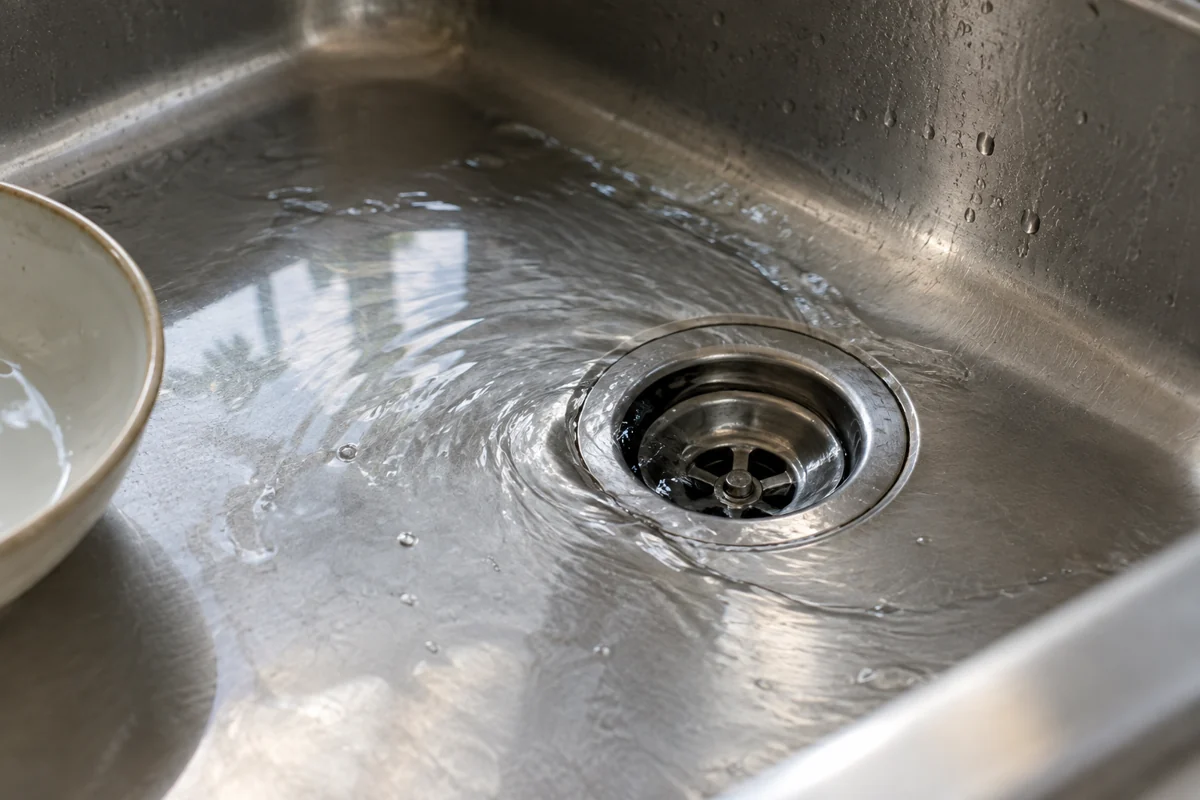
The bowl is washed, the water disappears, and attention moves to the next thing. For a different kind of Seoul outing, stay with that disappearing water. The Seoul Sewerage Science Museum gives an everyday act a much larger setting: the infrastructure that continues working after a household is finished with it.
This is a source-based introduction, not a firsthand visit. Our suggestion is simple: arrive with one ordinary question rather than a checklist of spectacular objects. What happens between a drain and the next stage of treatment?
VERIFIED FACT · A museum attached to an urban system
Seoul Metropolitan Government's February 2018 introduction dates the museum's opening to September 2017 at the Jungnang Sewage Treatment Center. The museum's own first-floor guide describes a screening about the water cycle and wastewater treatment, alongside explanations of the treatment facilities and their roles.
There is also an independent historical record: ISO's water-reuse technical committee reported visiting the museum during its May 2018 Seoul meeting. That establishes a professional visit, not an ISO endorsement of today's exhibits or a promise of visitor access to operational areas.
SEOULIAN INTERPRETATION · Follow a process, not just a pipe
Try organizing your visit around three verbs: collect, separate, treat. They are a reading aid, not the museum's official exhibition route. A pipe can move something out of sight without resolving what happens to it; following the next step makes the city more legible.
The museum's technical explanation distinguishes water treatment from sludge treatment and describes biological treatment using microorganisms. You do not need to memorize engineering terms to ask a useful question: what is being removed or changed at this stage? Do not interpret a clear-looking sample as proof that water is drinkable; this article makes no drinking-water claim.
For a family or a curious traveling companion, let each person bring a different household example—a rinsed bowl, a shower, a laundry load—and look for what the exhibits can actually explain. It creates a shared conversation without needing everyone to know the same Korean cultural references.
VERIFIED PRACTICAL INFORMATION · Check the current visitor page
At our September 14, 2026 UTC check, the museum's visitor page lists free admission and hours of 09:00–17:00. It lists closures on Mondays, January 1, and the days of Seollal and Chuseok. September 14 is a Monday: this is a future-visit idea, not a suggestion to go today.
Use the current address: 64, Jadongchasijang 3-gil, Seongdong-gu (자동차시장3길 64). The museum gives Line 5's Janghanpyeong Station, Exit 8, as a walking approach of approximately ten minutes. Its contact number is 02-2211-2540. Reopen the official visitor page before departure, especially around holidays.
We have not confirmed English-language guided sessions, step-free access throughout the approach, or unrestricted entry to working treatment facilities. Ask the museum about those needs. The visitor rules prohibit commercial-purpose photography; no museum photographs or exhibit diagrams are reproduced here.
Leave with a better question
Our editorial reason to include this museum is not that every trip needs an infrastructure lesson. It is that a modest, familiar question can make an unfamiliar city easier to understand. Afterward, the useful souvenir might simply be a more precise question about how your own neighborhood works.
The cover is a fictional kitchen-sink illustration, not a photograph of the museum, its equipment or the quality of Seoul's water. No forecast is issued for this guide.
THE SEOULIAN SIGNAL · EDITORIAL INTERPRETATION
Why this matters
SEOULIAN interpretation: begin with a household question; do not assume that a museum visit includes access to an operating treatment plant.
SOURCE DESK · RESEARCH RECORDS
Research used for this analysis
- Seoul Sewerage Science Museum · February 1, 2018 Seoul Metropolitan Government · Historical opening and treatment-center location only; outdated address and shuttle details not reused.
- Visitor information and directions · checked September 14, 2026 UTC Seoul Sewerage Science Museum · Current stated hours, free admission, closures, address, walking approach, contact and commercial-photography restriction.
- First-floor exhibition guide · checked September 14, 2026 UTC Seoul Sewerage Science Museum · Screening subject and facilities explanation; no promise of English sessions.
- Sewage Treatment System · checked September 14, 2026 UTC Seoul Sewerage Science Museum · Basic distinction between water and sludge treatment and role of microorganisms; no numerical performance or health claim.
- TC282 Seoul May 2018 Meeting Communique · July 6, 2018 ISO/TC 282 · Iris Efergan · Independent historical evidence of the committee's museum visit; not current visitor information or certification.
Original synthesis & image rights
Original SEOULIAN synthesis of linked factual sources. Visiting suggestions are editorial interpretation, not firsthand reporting. No source prose, museum photographs or technical diagrams reproduced. Unique built-in Imagegen cover is disclosed and is not documentary evidence. Targets and reported usage remain attributed to the city and are not presented as independently verified outcomes.
Image disclosure
Credit: AI-generated editorial illustration; not documentary evidence. Fictional household sink, not the museum or evidence of water quality.
Creator: SEOULIAN with ChatGPT Image Generation
Source type: SEOULIAN imagegen editorial photo
Disclosure: AI-generated editorial illustration; not documentary evidence. Fictional household sink, not the museum or evidence of water quality.
License: Original SEOULIAN AI-generated editorial image