START HERE · Notice what does not move
A robot museum invites an obvious question: what can the machines do? At Seoul's Robot & AI Museum, known as RAIM, there is another way to begin. Look at the building before making a list of demonstrations. Its curved exterior offers a useful introduction to the work of turning a digital idea into something people can enter.
This is a design-reading guide, not a report from an attended tour. The aim is modest: give an English-speaking visitor three things to notice—the overall shape, the way that shape was made, and the transition to the exhibitions upstairs. You do not need an engineering vocabulary to start.
VERIFIED CONTEXT · Two practices, one structure
The museum credits the joint design to Melike Altinisik Architects and Withworks, identifying Melike Altinisik and Kwon Hyuk Chan in its architectural account. MAA's own project record likewise credits both practices. Reading those names together avoids reducing a collaborative building to a single famous silhouette.
In Anadolu's August 2024 interview, Altinisik discussed the relationship between the exterior, surrounding public space and interior. Her practice describes the overall form as spherical and non-directional. Those are statements about design intent; they are not proof that every visitor will find the building equally intuitive.
SEOULIAN's first observation prompt is to notice how an entrance becomes legible within a curved form. From a permitted pedestrian area, compare the broad outline with the point where people actually go inside. A memorable exterior and an easy-to-find doorway solve different problems.
LOOK CLOSER · A smooth shape still needs parts
The museum's construction account describes a shared three-dimensional building model and off-site production of components. It also records laser CNC fabrication, robot welding and scans of the built structure used to reconcile the model with on-site conditions. MAA's project account corroborates the use of digital fabrication and reverse engineering for the exterior.
The useful idea here is not that a building appeared at the press of a button. A continuous-looking surface still has to become separate pieces, be joined and fit a real structure. That distinction makes the architecture relevant to a museum about robotics without requiring the claim that robots built everything.
For a second observation, look for the relationship between the large curve and its smaller divisions. Stay in public areas; there is no need to touch a surface or inspect construction details up close. Ask what your eye notices first: the whole shape or the pattern that makes it possible.
THEN GO UP · Follow the change in scale
MAA describes a central vertical exhibition tunnel linking the entry experience to the upper exhibition floors. Anadolu's interview also discusses the escalator-accessed tunnel as a deliberately designed transition. It is another part of the architecture to read, not simply a corridor between attractions.
If your booked visit uses that route, notice how the view changes between the entrance and the exhibition level. Keep moving safely and use a stationary, permitted place for any photographs. Our third prompt is to compare anticipation with orientation: does the route make you curious, help you understand where you are, or both? Different answers are welcome.
PLAN THE VISIT · Separate architecture from availability
RAIM is at 56 Madeul-ro 13-gil, Dobong-gu. The museum directs subway visitors to Chang-dong Station on Lines 1 and 4, Exit 1, describing a walk of about five minutes. Save the Korean name, 서울로봇인공지능과학관, alongside the address when checking your route.
Before travelling, use the museum's current visit and reservation pages for the particular experience you want. This article does not confirm admission prices, available places, tour languages or session times. Those operational details are separate from the architectural record, and older listings should not be treated as a booking confirmation.
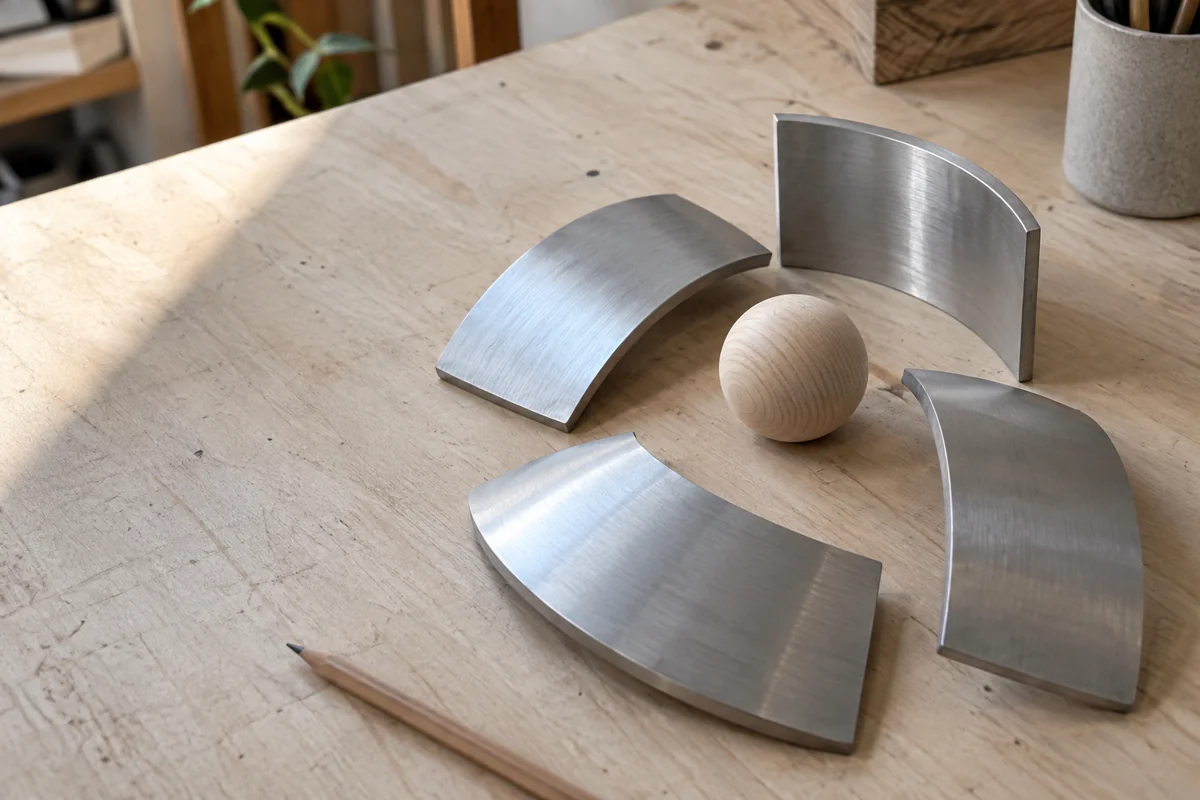
The takeaway is a small change of attention: a museum visit can include learning how its container was made. Source pages were checked on September 15, 2026. The cover is a fictional materials study, not the museum, its model or a record of its construction.
THE SEOULIAN SIGNAL · EDITORIAL INTERPRETATION
Why this matters
Look at the shell, the joints and the route through the building as three different design questions. Check the operator's live visit and reservation notices before planning an interior visit.
SOURCE DESK · RESEARCH RECORDS
Research used for this analysis
- Architectural overview; checked September 15, 2026 Seoul Robot & AI Museum · Primary municipal museum record: joint design credits, model-based coordination, off-site manufacture, CNC/robot welding and site scanning. Inconsistent area and opening metadata, rankings and promotional predictions omitted. No media or expression reused.
- Seoul Robot & AI Museum project record; checked September 15, 2026 Melike Altinisik Architects · Design practice's own account corroborates joint credits, the spherical/non-directional design intent, digital fabrication and vertical exhibition tunnel. Descriptions of intent are attributed; no claim that robots built the whole building, no current availability or world's-first claim.
- Interview with the museum architect, August 21, 2024; checked September 15, 2026 Anadolu · Mehmet Sah Yilmaz · Separately conducted, dated architect interview corroborating exterior/public-space intent, fabrication and escalator-linked exhibition tunnel. Only narrow factual paraphrase; no quotations, attendance projections, superlatives or photographs reproduced.
- Directions; checked September 15, 2026 Seoul Robot & AI Museum · Current operator address and attributed subway approach: Chang-dong Lines 1/4 Exit 1, approximate five-minute walk. No guaranteed journey time or accessibility route invented.
- Current visit information and reservation links; checked September 15, 2026 Seoul Robot & AI Museum · Reader handoff to operator's current access and reservation guidance only. The article intentionally does not assert price, availability, language or time because other listings are inconsistent.
Original synthesis & image rights
SEOULIAN independently synthesized named architectural facts from the museum and design practice, cross-checked against Anadolu's separately conducted 2024 architect interview. The observation prompts are SEOULIAN editorial suggestions, not a claimed visit. No source prose, quotations, plans, museum photographs, portraits, robot designs or artwork are reproduced. Variable prices, conflicting tour times, inconsistent floor-area/opening metadata and promotional superlatives are excluded. The original Imagegen cover is explicitly non-documentary and recorded with its original, optimized version, prompt and hashes. Targets and reported usage remain attributed to the city and are not presented as independently verified outcomes.
Image disclosure
Credit: AI-generated editorial illustration; not documentary evidence. A fictional materials study, not RAIM, its model, exhibits or construction. SEOULIAN · Created with ChatGPT Image Generation.
Creator: SEOULIAN with ChatGPT Image Generation
Source type: SEOULIAN imagegen editorial photo
Disclosure: AI-generated editorial illustration; not documentary evidence. A fictional materials study, not RAIM, its model, exhibits or construction. SEOULIAN · Created with ChatGPT Image Generation.
License: Original SEOULIAN AI-generated editorial image