The pattern is the first invitation
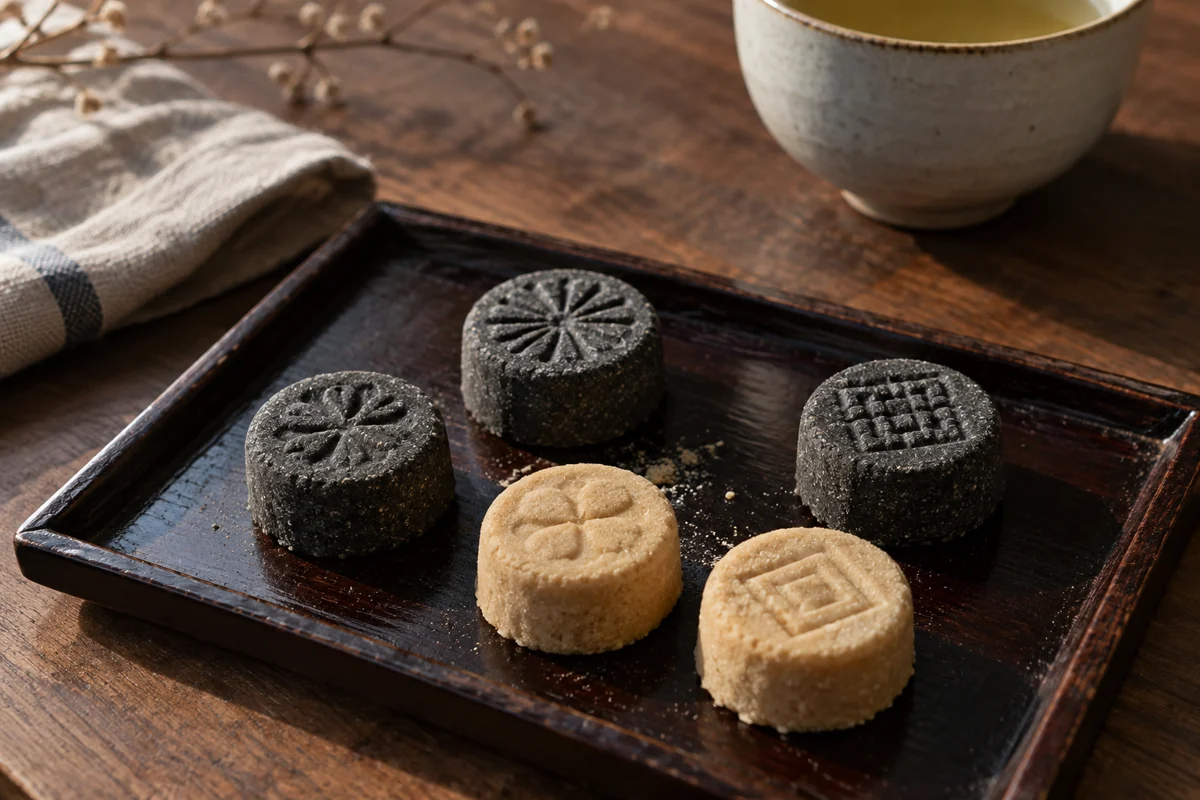
Before eating a small piece of dasik, turn the plate so that light catches its surface. The shallow design may be easier to notice from the side than from directly above. That pause is our suggested starting point: not a formal tea ritual, just a way to see how a food has been shaped.
Dasik is Korean tea confectionery. Korea Tourism Organization's black-sesame entry describes a mixture of ground sesame and honey formed in molds. Independent recipe writer JinJoo at Kimchimari also describes pressing the sweets in a dasikpan, the mold used to give them shape and surface designs. The two accounts support the same basic distinction: the impression comes from forming the sweet, rather than from drawing on it afterward.
Two questions, not one
What made the pattern? What made the flavor? These are separate questions. A mold can help you understand the first; the ingredient description helps with the second. Do not treat a flower-like design as evidence that a sweet contains flowers, or a dark color as a complete ingredient list.
KTO describes the black-sesame version specifically, while Kimchimari's account discusses versions based on different powders. Neither is a specification for every commercial dasik. Our editorial suggestion is to compare two pieces by their actual ingredient labels, then notice how their surfaces and textures differ. There is no need to identify a supposedly correct color or shape.
If a seller can explain a particular motif, listen to that explanation as information about that piece. This guide does not assign a universal symbolic meaning to every pattern. Without a documented maker or design history, an attractive impression is not enough evidence for an elaborate cultural story.
How to make a first encounter useful
At a shop or tea venue, ask which ingredient gives a chosen piece its main flavor and whether the assortment changes. If buying a gift, ask for storage instructions and an ingredient list that the recipient can understand. Those answers matter more than selecting the most elaborate-looking box.
Do not infer dietary suitability from the words traditional, tea cookie or plant-based ingredients. Ask about the actual recipe and handling when restrictions matter. This is not a claim that every piece contains the same sweetener, or that a short cultural description can replace product information.
For a simple tasting, choose a drink you already enjoy and one sweet you are curious about. Look before the first bite, then ask your companion what they noticed. Comparing observations can be more interesting than deciding immediately whether the sweet deserves a score. These are SEOULIAN's suggestions, not prescribed Korean manners.
A food guide, not a recipe or a visit report
The linked sources let you follow two different paths: KTO's concise food introduction and Kimchimari's full preparation account. We have not reproduced the recipe, quantities, photographs or step-by-step instructions. If you want to make dasik, consult a complete recipe rather than improvising from this article.
Fact-checked September 13, 2026 against KTO's October 19, 2023 entry and Kimchimari's January 28, 2022 article. No health benefit, origin date, universal symbolism, current venue availability or firsthand tasting is claimed. The cover is a fictional AI illustration of pressed sweets, not a photograph of a product or a tested recipe.
THE SEOULIAN SIGNAL · EDITORIAL INTERPRETATION
Why this matters
SEOULIAN interpretation: separating a food's surface design from its ingredients makes room for curiosity without inventing symbolism.
SOURCE DESK · RESEARCH RECORDS
Research used for this analysis
- Black Sesame Tea Confectionery — October 19, 2023 Korea Tourism Organization · Primary food reference: black sesame, honey and forming in confectionery molds. No historical or health assertions adopted.
- Korean Tea Cookies (Dasik) for Lunar New Year — January 28, 2022 JinJoo / Kimchimari · Independent recipe author's account corroborates the dasikpan and ingredient variation. Recipe text, quantities, images, historical assertions and dietary labels are not reproduced.
Original synthesis & image rights
Original SEOULIAN synthesis of linked factual sources. Looking and tasting suggestions are editorial judgments, not universal customs or a firsthand review. No source prose, recipe instructions or photographs reproduced. Unique built-in Imagegen cover is disclosed and is not documentary evidence. Targets and reported usage remain attributed to the city and are not presented as independently verified outcomes.
Image disclosure
Credit: AI-generated editorial illustration; not documentary evidence. Fictional pressed tea sweets, not a photographed product or tested recipe.
Creator: SEOULIAN with ChatGPT Image Generation
Source type: SEOULIAN imagegen editorial photo
Disclosure: AI-generated editorial illustration; not documentary evidence. Fictional pressed tea sweets, not a photographed product or tested recipe.
License: Original SEOULIAN AI-generated editorial image