Separate the garden from the event clock
The 2026 Seoul International Garden Show continues at Seoul Forest through Tuesday, October 27. Seoul’s opening announcement counted 167 gardens across 90,000 square meters, made by invited and competition designers, companies, institutions, citizens, and students. That scale is real, but it is a poor itinerary. The installations form a landscape to enter gradually; staffed tours, markets, performances, and other programs follow separate calendars.
This distinction resolves an apparent clash in the official information. The city says the gardens themselves can be visited at any time, while event and tourism pages publish operating windows for programmed activity. Do not read one time range as a gate on the entire park. Confirm any activity on the live program page, and regard the planted spaces as the stable layer of the visit. Admission to the show is listed as free, but reservations or capacity rules can still apply to individual programs.
Build a three-garden route, not a 167-item checklist
Begin at the information center near Seoul Forest Gate 2 and choose one design question. For form, compare one invited garden with one of the five competition gardens. The official English map identifies Henri Bava’s Fluid Woodland Understory Garden and Lee Nam-jin’s Garden of Waiting as the invited pair, then labels five competition works separately, including PopK Garden. Use the map codes to locate a small set rather than following every marker in numerical order.
For a more social lens, add one citizen, student, or global garden after the designer works. Ask three questions at each stop: What directs your feet? What has changed since early summer? Where can a person pause without blocking the path? Those questions turn visible materials, shade, growth, and seating into a readable comparison. They also keep the visit open to disagreement: a garden can succeed as habitat, public room, visual composition, or invitation to linger without doing all four equally well.
Use English interpretation where it is strongest
Every garden has a QR-linked Smart Guide. The city says information is available in nine languages: Korean, English, Chinese, Japanese, and Spanish include audio and text, while Vietnamese, Thai, Malay, and Indonesian are text-only. That makes a self-guided route the most dependable option for an international visitor. Keep mobile data available, carry a battery, and scan at the garden rather than treating the generated page as a substitute for the physical site.
For a human guide, the current official detail page lists free English docent tours on Fridays, Saturdays, and Sundays in September and October, from 3 PM to 4 PM and from 5 PM to 6 PM. Capacity is about 20 people per session, advance booking is through Naver Booking, and the meeting point is the information center within 200 meters of Seoul Forest Station Exit 4 or Gate 2. A session needs at least three bookings; if it is below that threshold two hours before departure, the organizer may cancel it. Arrive ten minutes early and keep the Smart Guide as your backup.
Follow the live page when the brochure and season diverge
The launch-era English leaflet is useful for the site map, garden categories, and Smart Guide overview, but its broad tour calendar is no longer the safest source for September. On September 4, the live program index explicitly said the Seoul Forest–Seongsu Connect Tour and the special in-depth tour would not operate in September or October. The current English docent detail page supplies the narrower Friday-to-Sunday schedule above. Build around that live information, not an image of an older timetable saved to a phone.
Weather and operations can still change a confirmed-looking plan. The organizer says English tour reservations for the next month open on the 25th, close when full, and can remain available until ten minutes before a confirmed session. If the mobile booking flow is difficult, use the contact route on the official detail page or ask at the information center, while recognizing that staff cannot create space in a full group.
Know which forest you are visiting
Visit Seoul lists the main address as 273 Ttukseom-ro and directs subway riders to Seoul Forest Station on the Suin–Bundang Line, Exit 4. Its event page places the station exit about 691 meters from the venue listing, while the docent page places the information center within 200 meters of Exit 4 or Gate 2. These descriptions refer to different points in a large site. Save the official event map and allow time to orient yourself after leaving the station.
Maeheon Citizen’s Forest belongs to the same 2026 show, but it is not a second September venue. Seoul’s August update schedules its autumn edition for October 1–27 and said roughly 50 gardens would be built there ahead of opening. Until that date, keep this route at Seoul Forest. When October begins, check both official venue pages rather than assuming one reservation, program, or opening time covers both parks.
Let one garden change the next one
The most useful rhythm is look, rest, compare. Take one wide photograph only after you have noticed the path; sit where seating is intended; then carry one detail—a plant layer, a framed view, a change in ground texture—to the next garden. Avoid stepping into planting beds for a cleaner angle, and ask before making identifiable visitors the subject of a photograph. A public garden works because many people can enter the scene without any one person claiming it.
Finish after three gardens if you can explain how they differ. Continue only if curiosity, shade, and time still agree. Seoul Forest is already a park, not a temporary exhibition hall, and the show is most legible when birds, joggers, families, design students, and visitors remain part of the same ordinary landscape. The achievement is not seeing 167 objects. It is leaving with a sharper way to notice the next patch of city green.
THE SEOULIAN SIGNAL · EDITORIAL INTERPRETATION
Why this matters
The strongest international-visitor tool is the pairing of a live English docent booking with the nine-language QR guide. Reserve the guide if the timing works, but design a self-guided three-garden route that still succeeds if the session fills, changes, or is canceled.
SOURCE DESK · RESEARCH RECORDS
Research used for this analysis
- ‘Seoul Turns Green’… 2026 Seoul International Garden Show Opens, Linking Seoul Forest and Seongsu for 180 Days Seoul Metropolitan Government · Primary municipal source for the opening date, October 27 closing date, 167 gardens, 90,000-square-meter garden area, participant categories, anytime garden access, and nine-language Smart Guide.
- Seoul Forest Garden Docent Tour (English) Seoul International Garden Show Organizing Committee · Live operator page checked September 4, 2026 for current English tour days, times, capacity, fee, Naver booking, meeting point, minimum-participant rule, booking release date, and weather caveat.
- Commentary Program Index Seoul International Garden Show Organizing Committee · Live operator index checked September 4, 2026 to verify that the Connect Tour and special in-depth tour are not operating in September–October.
- 2026 Seoul International Garden Show Seoul Tourism Organization — Visit Seoul · Current visitor listing used to cross-check the dates, free admission, Seoul Forest address, and access from Seoul Forest Station Exit 4.
- Seoul Forest to Host Autumn Garden Festivities Through October The Korea Times · Independent, editor-reviewed reporting published September 2 used to confirm that autumn programming is active and the Seoul Forest show continues through October; no photograph or wording is reproduced.
- Seoul International Garden Show Expands to Maeheon Citizen’s Forest this Fall Seoul Metropolitan Government · Primary August update used to distinguish the future October 1–27 Maeheon phase from the currently open Seoul Forest venue.
- Seoul Unveils Its Largest, Longest International Garden Show Spanning Seoul Forest to Seongsu-dong Seoul Metropolitan Government · Primary source for invited and competition garden names, the English site map, and installed-garden context; none of its images are reproduced.
- Show Garden Competition for Seoul International Garden Show 2026 Seoul International Garden Show Organizing Committee · Official competition notice used to verify that the five show gardens were specified as permanent installations in place during and after the show.
- SEOUL INTERNATIONAL GARDEN SHOW 2026 Association of Korean Exhibition Industry · Independent industry-association listing used to cross-check the Seoul Forest venue, May 1–October 27 dates, organizer contact, and mix of garden and cultural programs.
Original synthesis & image rights
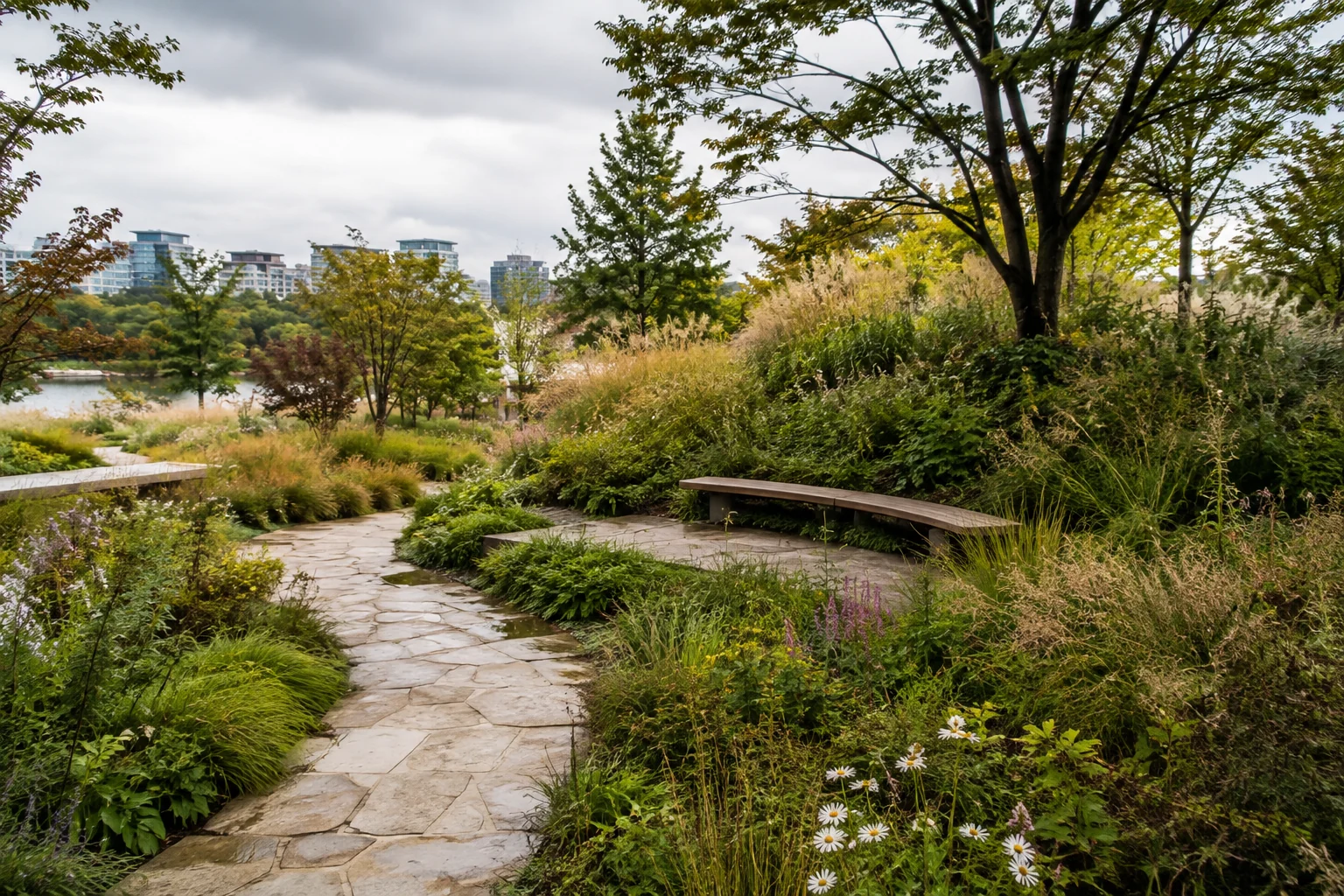
SEOULIAN independently synthesized and checked facts from the Seoul Metropolitan Government, the current Seoul International Garden Show program, Visit Seoul, and independent reporting by The Korea Times without reproducing their wording. The cover is an original AI-generated editorial illustration created for this article and recorded with its prompt, original PNG, optimized WebP, hashes, and disclosure; it does not reproduce a real garden artwork and is not presented as evidence of today’s weather, crowd level, tour availability, or any specific installation. Targets and reported usage remain attributed to the city and are not presented as independently verified outcomes.
Image disclosure
Credit: SEOULIAN · Created with ChatGPT Image Generation
Creator: SEOULIAN with ChatGPT Image Generation
Source type: SEOULIAN imagegen editorial photo
Disclosure: AI-generated editorial illustration; not documentary evidence of a specific garden, place, crowd, condition, or event.
License: Original SEOULIAN AI-generated editorial image