Let the lines lead
When looking at a quilted garment, it is tempting to begin with its color or outline. Try a different entry point: choose one stitched line and follow it until a fold or seam interrupts your view. Does the cloth rise beside it? Does a change of light make the same surface look different? These are simple looking prompts, not a test of sewing knowledge.
Nubi is a Korean quilting technique. K.heritage ART's record for a robe by Yoo Sun-hee describes fabric layers stitched at regular intervals, with or without cotton batting. That last distinction is useful: do not assume that every quilted textile contains a thick filling. The stitches connect layers as well as shaping what you see.
Two objects, two useful questions
K.heritage ART documents a layered quilted jungchimak, a traditional robe, with stitching spaced 0.9 centimeters apart. Treat that measurement as information about this particular work, not a rule for all nubi. Our suggested question is how repeating a small interval changes your impression of a much larger garment.
A second example sits in the Metropolitan Museum of Art's online collection: a Korean nubi jeogori, or quilted top, dated to the 1990s and catalogued as nylon and cotton. Its object number is 2024.301.31. The museum identifies it as a winter garment and explains the colored sleeve stripes as saekdong.
The combination makes a useful comparison. In one record, a precise spacing helps describe a maker's work. In the other, the materials and date interrupt the easy assumption that a traditional technique belongs only to a distant past or to one fiber. Neither object alone stands for every Korean quilted garment.
A three-minute looking exercise
First, look at a whole garment before zooming in on a detail. Notice where your eye stops. Then follow a group of stitches and compare the flat and folded areas. Finally, return to the full view: has a quiet part of the garment become more interesting? This is SEOULIAN's proposed exercise, not a formal Korean viewing custom.
Read the accompanying record after your first look. Separate what it actually tells you from what you guessed. A fiber, date or maker attribution can come from documentation; an impression of softness or weight from a screen is only an impression. A photograph cannot verify how a garment feels in the hand.
If exploring contemporary pieces in a shop, ask which fibers and filling were used, how the item was made and how it should be cared for. Appearance alone does not establish hand stitching, age or provenance. Permission to look at a textile is also not permission to touch a museum object.
Start online, without promising an exhibition
Both source links below offer a concrete starting point for looking. At our September 13, 2026 check, the Met record marked its top as not on view. This article therefore does not recommend traveling to see that object. The K.heritage ART record is used as documentation, not as confirmation of current opening hours or a bookable class.
You do not need to buy a garment or learn to quilt to begin noticing construction. On the next textile you encounter, ask what joins its layers and what is simply on the surface. That small change of attention can make an ordinary-looking piece worth a second look.
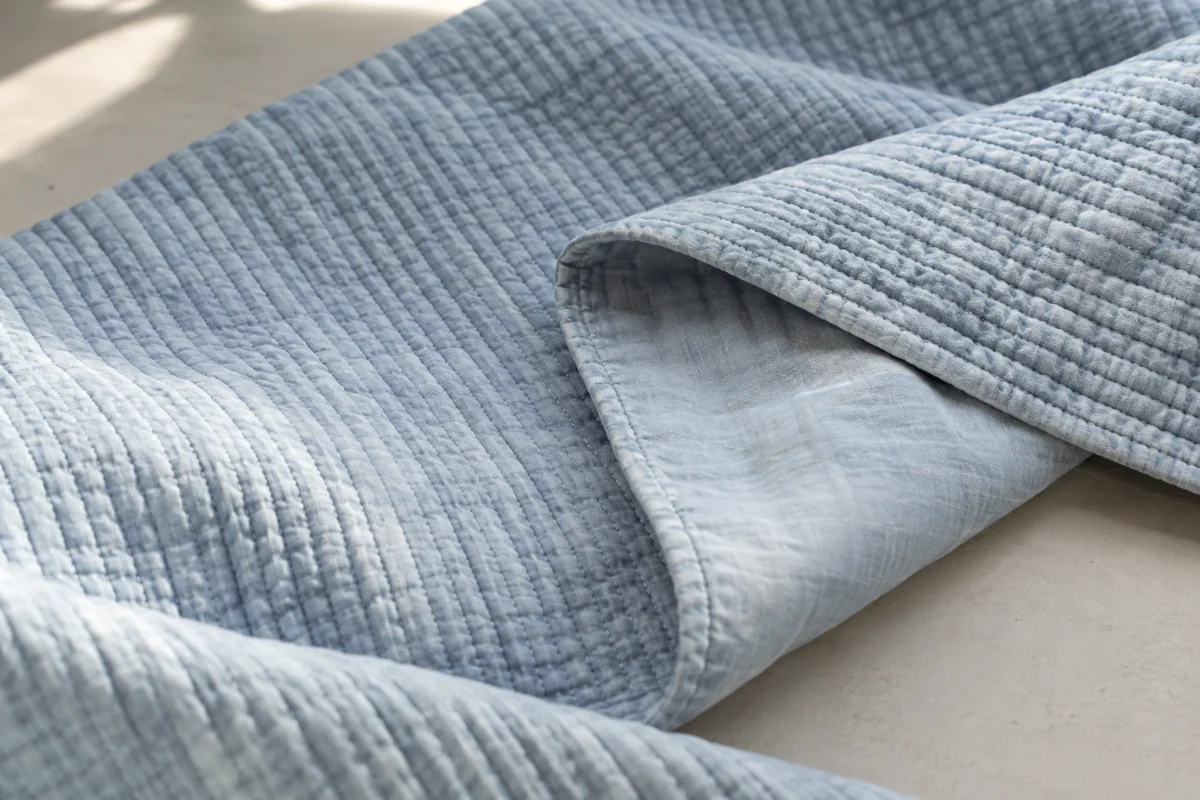
This is an original source-based visual guide, not a firsthand handling report, an authenticity assessment or a sewing tutorial. No museum photograph, artisan image or instructions have been reproduced. The cover is a fictional AI-generated textile study, not either documented work.
THE SEOULIAN SIGNAL · EDITORIAL INTERPRETATION
Why this matters
SEOULIAN interpretation: looking at construction before decoration gives non-specialists a practical way into textile craft.
SOURCE DESK · RESEARCH RECORDS
Research used for this analysis
- Nubi jeogori (Quilted top), object 2024.301.31 — undated collection record, checked September 13, 2026 The Metropolitan Museum of Art · Primary collection record: 1990s, nylon and cotton, winter garment, saekdong and not-on-view status. Object image not reproduced.
- Yoo Sun-hee [D2], 2026 exhibition work record — checked September 13, 2026 K.heritage ART · Independent exhibiting institution's primary work documentation: nubi layered construction with or without batting, robe and 0.9cm spacing. No current venue access, biographical status or thermal-performance claim adopted; artwork image not reproduced.
Original synthesis & image rights
Original SEOULIAN synthesis of linked museum and exhibition records. The looking exercise is editorial guidance, not a firsthand handling report. No source prose, artwork images or sewing instructions reproduced. Unique built-in Imagegen cover is disclosed and is not documentary evidence. Targets and reported usage remain attributed to the city and are not presented as independently verified outcomes.
Image disclosure
Credit: AI-generated editorial illustration; not documentary evidence. Fictional quilted textile, not a museum object or a named artisan's work.
Creator: SEOULIAN with ChatGPT Image Generation
Source type: SEOULIAN imagegen editorial photo
Disclosure: AI-generated editorial illustration; not documentary evidence. Fictional quilted textile, not a museum object or a named artisan's work.
License: Original SEOULIAN AI-generated editorial image