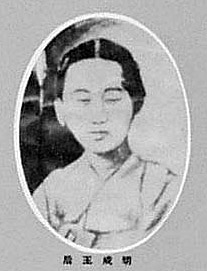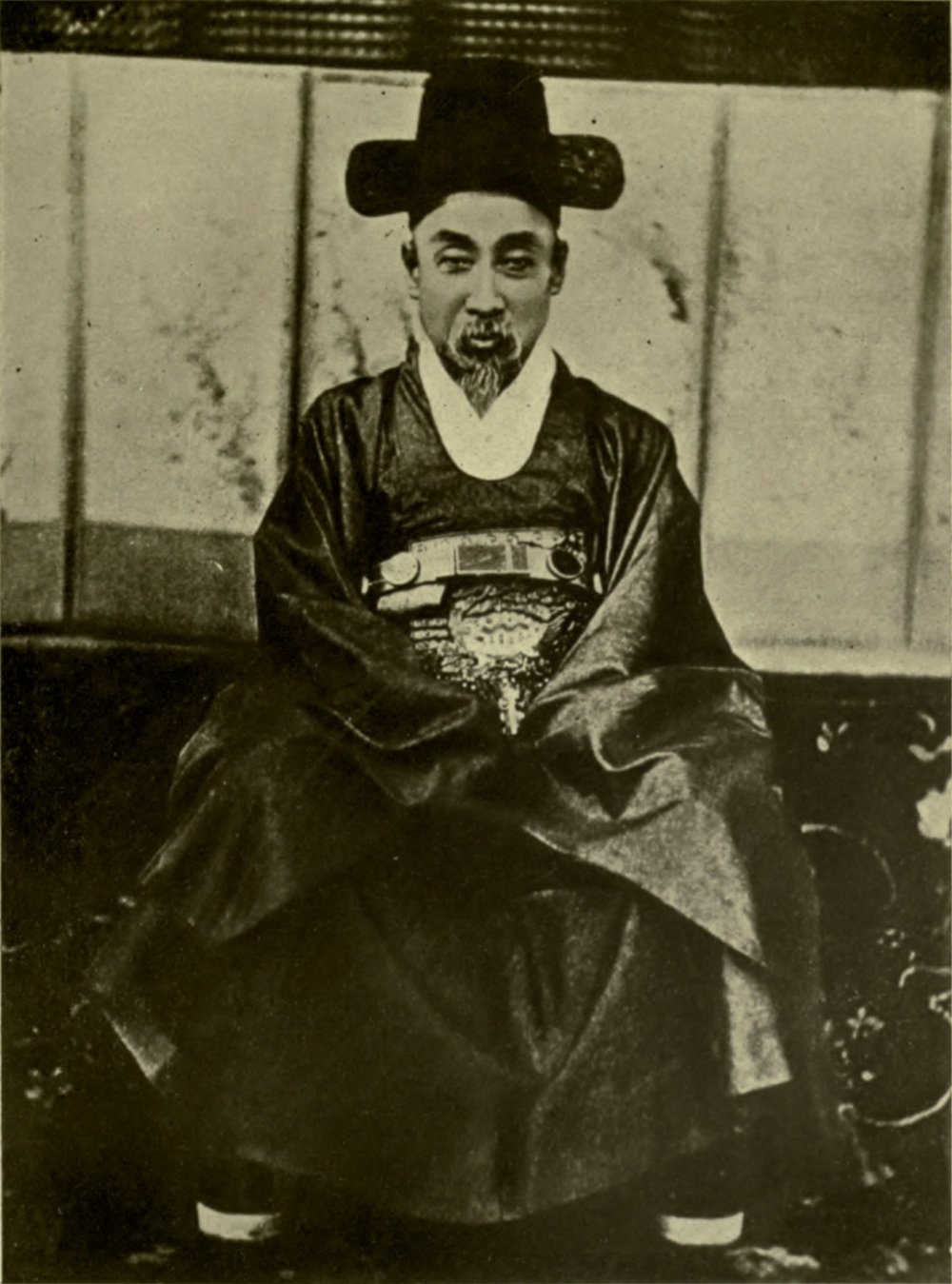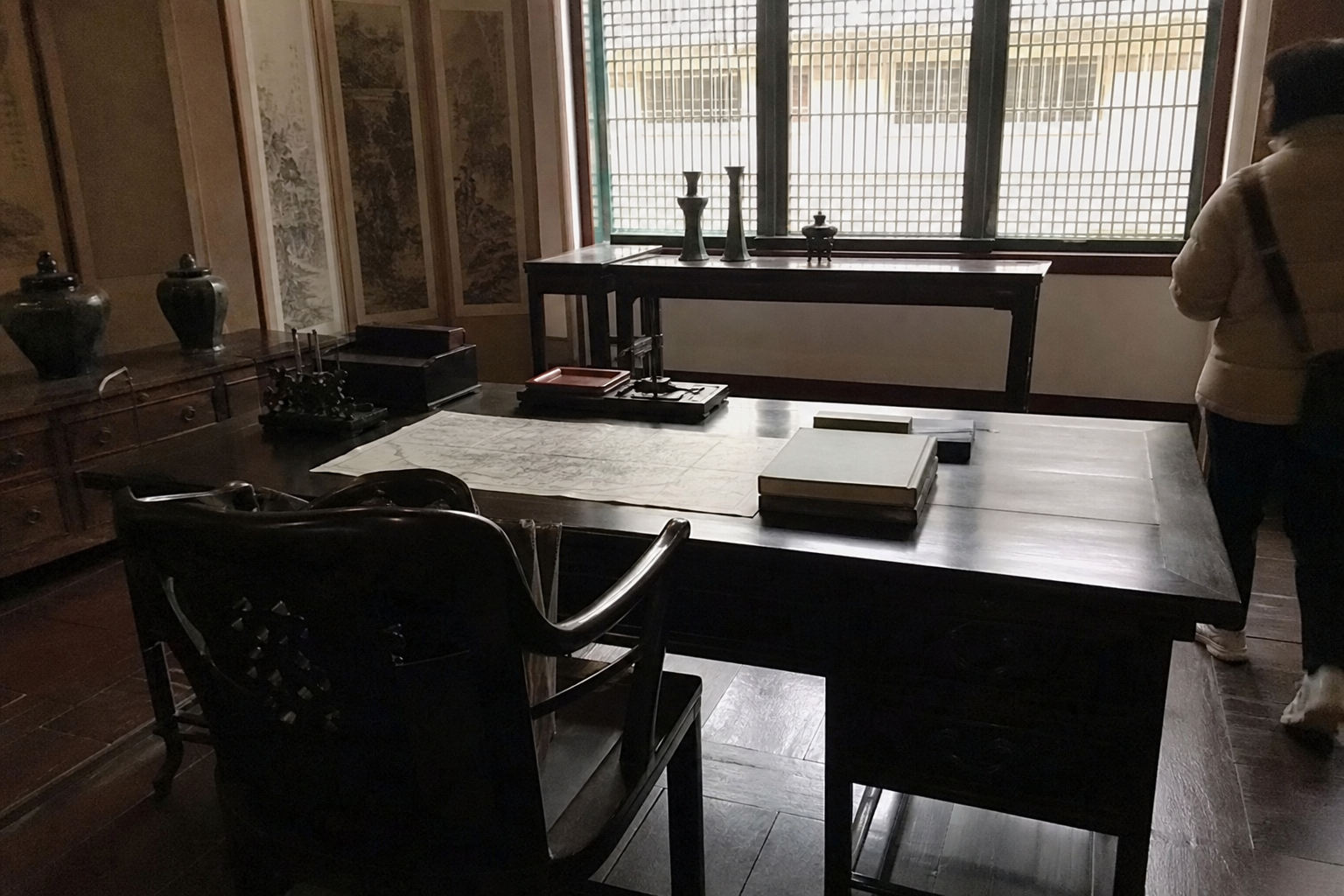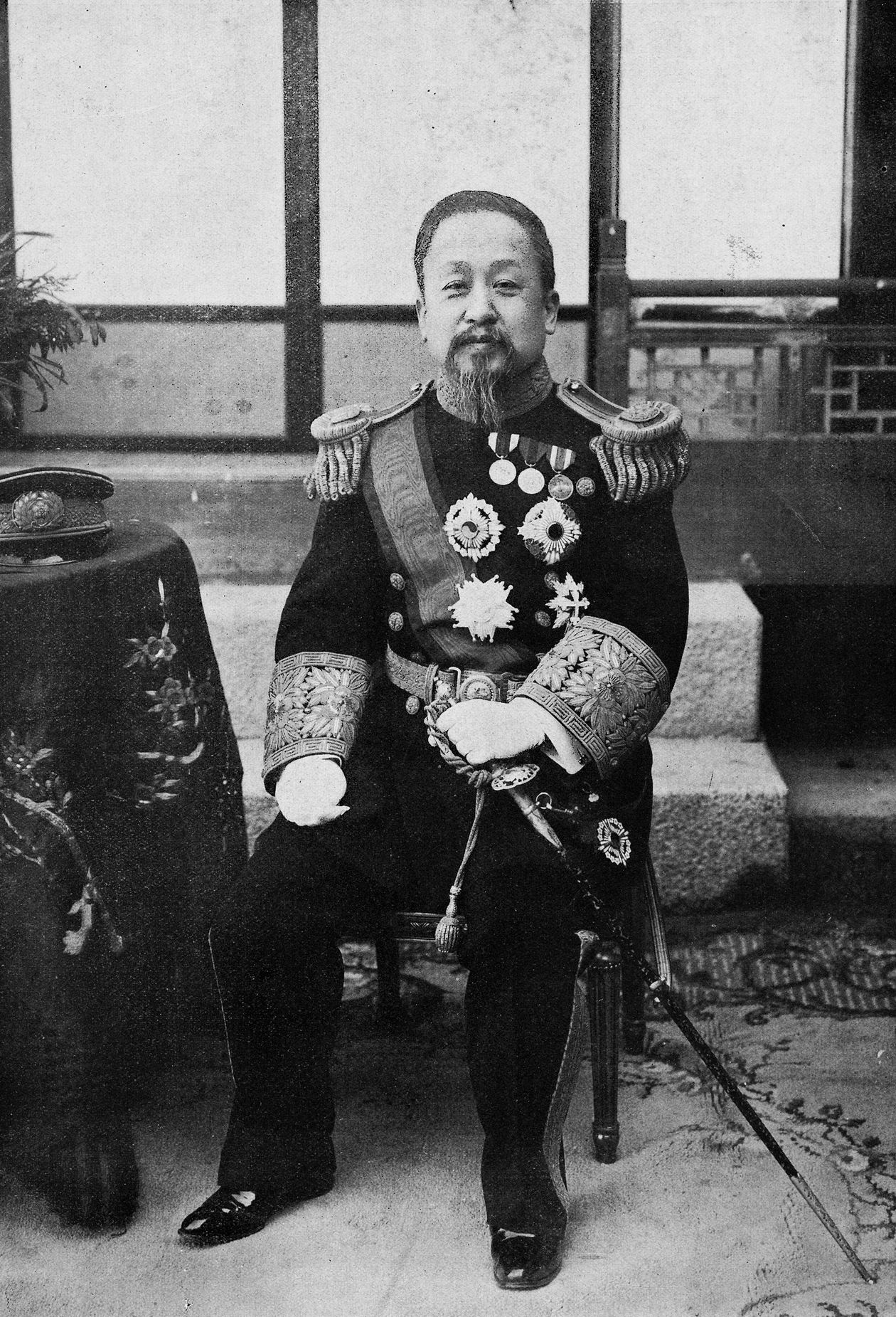
Gojong (Korean: 고종; Hanja: 高宗; 8 September 1852 – 21 January 1919), personal name Yi Jaehwang, later changed to Yi Hui, also known as the Gwangmu Emperor, was the penultimate Korean monarch. He ruled Korea for 43 years, from 1864 until his forced abdication in 1907, initially as the 26th king of Joseon, and then as the first emperor of the Korean Empire. His wife, Queen Min (commonly known as Empress Myeongseong), played an active role in politics until her assassination carried out by the Japanese. Gojong oversaw the bulk of the Korean monarchy's final years. He was born into a distant branch of the ruling House of Yi (a descendant of Grand Prince Inpyeong, the third son of King Injo), and ascended to the throne at the age of 11, upon the death of his nominal uncle, the heirless King Cheoljong. His biological father, Grand Internal Prince Heungseon (widely known as Heungseon Daewongun), acted as regent until he reached the age of majority, although he continued holding power until 1874. At this time, Korea was under policies of strict isolationism. By contrast, Japan had been rapidly modernizing under the Meiji Restoration. In 1876, Japan forcefully opened up Korea and began a decades-long process of moving the peninsula into its own sphere of influence. For the following few decades, Korea was highly unstable, and subjected to a number of foreign encroachments. Events such as the 1882 Imo Incident, the 1884 Kapsin Coup, the 1894–1895 Tonghak Peasant Revolution, and the 1895 assassination of Gojong's wife occurred during his reign. All of these events were related to or involved foreign powers. All the while, Gojong attempted to consolidate control, seek foreign support, and modernize the country in order to keep Korea independent. He initiated the Gwangmu Reform, which sought to improve the military, industry, and education, to some amount of success. These reforms were seen as insufficient by some parts of the Korean literati, especially the Independence Club, which Gojong at first tolerated but eventually abolished in 1898. After Japan defeated China in the 1894–1895 First Sino-Japanese War, China lost its suzerainty over Korea, which it had held for centuries. In 1897, shortly after returning from his internal exile in the Russian legation in Seoul, Gojong proclaimed the establishment of the independent Korean Empire, and became its first emperor. Gojong's actions drew the ire of Japan.
Read the fixed source
Follow the exact revision used for this summary, or open its history to see the contributors and later changes.
Text source & license
Adapted and shortened by SEOULIAN from the linked fixed revision; no change in factual meaning is intended. Source: Wikipedia contributors. This adapted summary is shared under CC BY-SA 4.0.
Image attribution
Title: Gojong of the Korean Empire 02
Author: This photo was taken in 1907.
Source: Wikimedia Commons
License: Public domain
Wikimedia thumbnail downloaded and displayed without editorial alteration.