Traditional-looking is not a material history
Gomusin are Korean rubber shoes. The National Folk Museum of Korea’s clothing encyclopedia places them within the history of changing footwear and modern production. The Academy of Korean Studies describes a low profile and broad toe, relating the shapes to earlier forms of Korean shoes.
For a visitor, the key distinction is between shape and substance. A familiar outline can carry earlier design references while the material belongs to a different manufacturing story. Calling an object traditional should not erase that change or imply that every part of it remained unchanged for centuries.
Look at the opening and the sole
SEOULIAN suggests examining a pair through three features: the opening around the foot, the toe’s outline and the relationship between upper and sole. Those observations make it easier to compare rubber footwear with sewn or otherwise constructed shoes without ranking one as more authentic.
The museum’s account also describes changes in color over time. Do not treat one color in a display or illustration as the only legitimate form. A specific pair’s date, maker and intended use are questions for its record, not facts that can be confidently recovered from a thumbnail.
For wearing, check the actual product
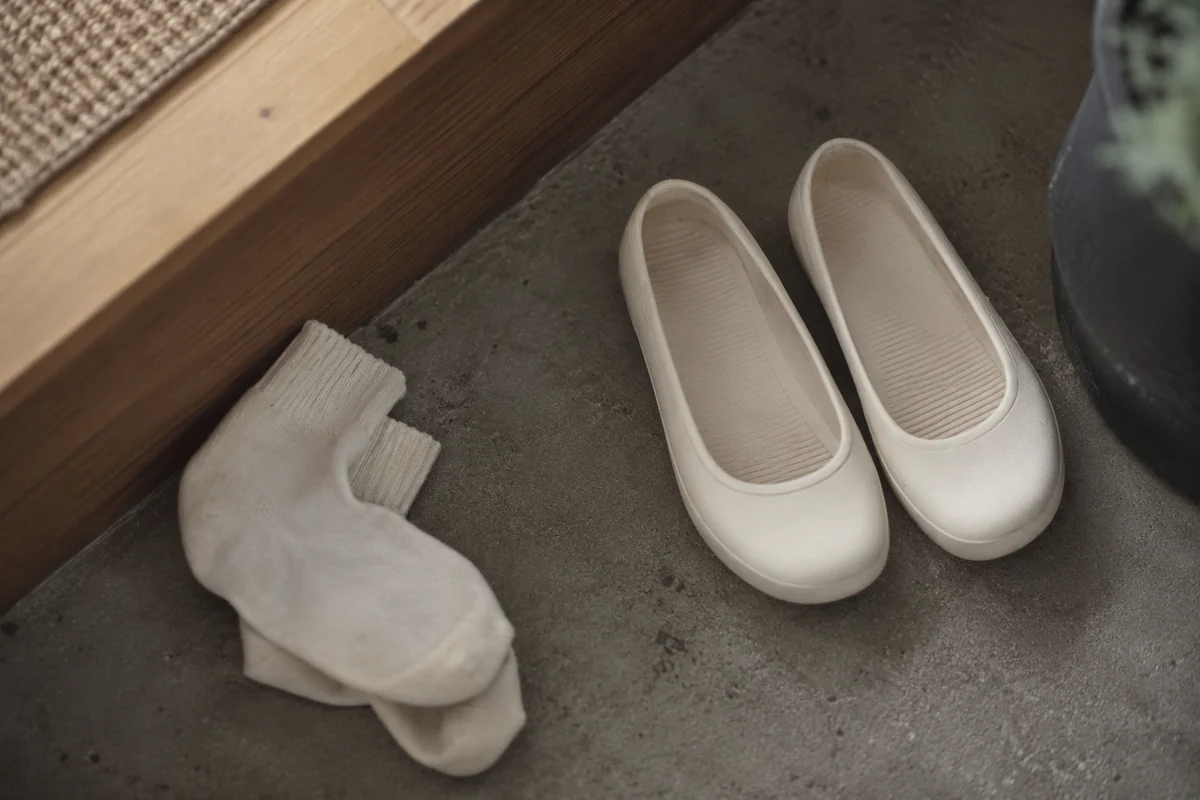
If you are considering a contemporary pair, ask about size, material composition, care and suitability for the use you intend. A historical category does not guarantee modern performance, comfort or fit. The conceptual image here represents the general idea of low rubber footwear, not a tested product.
Gomusin offer an approachable way to think about clothing history as adaptation rather than a frozen costume. The most revealing question is not whether the shoes look old-fashioned. It is how a recognizable form changed when a different material and production system became available—and what the documented pair, rather than a broad label, can tell you.
THE SEOULIAN SIGNAL · EDITORIAL INTERPRETATION
Why this matters
SEOULIAN editorial reading: Recognizing modern material within Korean dress history. This is a practical interpretive angle, not a popularity claim.
SOURCE DESK · RESEARCH RECORDS
Research used for this analysis
- Encyclopedia of Korean Clothing: gomusin entry National Folk Museum of Korea · Rubber shoes, changing colors and modern production
- Gomusin encyclopedia entry Academy of Korean Studies · Low profile, broad toe and relationship to earlier shoe shapes
Original synthesis & image rights
Original English synthesis by SEOULIAN from independently checked factual sources. No source prose, third-party photographs, artwork or recordings reproduced. Targets and reported usage remain attributed to the city and are not presented as independently verified outcomes.
Image disclosure
Credit: SEOULIAN · Created with ChatGPT Image Generation.
Creator: SEOULIAN with ChatGPT Image Generation
Source type: SEOULIAN imagegen editorial photo
Disclosure: AI-generated editorial illustration; not documentary evidence. A generic rubber-shoe still life, not a museum pair or a branded product. SEOULIAN · Created with ChatGPT Image Generation.
License: Original SEOULIAN AI-generated editorial image