Two layers occupy the same route
Gyeongam-dong Railroad Village in Gunsan is associated with a railway that connected a paper factory and the city’s station. Gunsan City explains the neighborhood’s formation around that line and separately describes today’s retro-oriented visitor activities. Those are two layers to notice, not one timeless scene.
The national tourism organization’s guide also presents the close relationship between tracks, housing and nostalgia businesses. The practical interest is spatial: infrastructure once passed through an inhabited environment, and that same narrow setting now shapes how visitors move and look.
Look before trying the experience
SEOULIAN suggests beginning with the route itself. Observe how the railway relates to walls, doorways and the width of the lane. Then consider the contemporary shops or optional activities on their own terms. A uniform rental or retro snack can be enjoyable without becoming proof of precisely how the neighborhood once lived.
That distinction helps avoid treating every current display as an original historical feature. If a date, object or story interests you, look for interpretation that documents it. The photograph you make today records today’s visit, including its businesses and visitors; it is not a reconstruction of an earlier period.
Leave room for the neighborhood
Keep entrances and passageways clear, and ask before photographing people or entering a space that is not plainly open to visitors. These are SEOULIAN’s visitor-etiquette suggestions, not a statement about a particular resident or a newly announced local rule.
Check the actual price and availability of any optional activity rather than relying on an older guide’s transport estimate or shop description. The appeal need not depend on recreating a past you did not experience. A careful visit can simply reveal how a railway, ordinary buildings and contemporary leisure share a small piece of city space.
THE SEOULIAN SIGNAL · EDITORIAL INTERPRETATION
Why this matters
SEOULIAN editorial reading: Reading an industrial neighborhood and its contemporary nostalgia businesses. This is a practical interpretive angle, not a popularity claim.
SOURCE DESK · RESEARCH RECORDS
Research used for this analysis
- Gyeongam-dong Railroad Village Gunsan City · Railway linked a paper factory and station; neighborhood and retro activities
- Korea travel guide: Gyeongam-dong Railroad Village Korea Tourism Organization · Independently presented visitor description of housing, shops and nostalgia experiences
Original synthesis & image rights
Original English synthesis by SEOULIAN from independently checked factual sources. No source prose, third-party photographs, artwork or recordings reproduced. Targets and reported usage remain attributed to the city and are not presented as independently verified outcomes.
Image disclosure
Credit: SEOULIAN · Created with ChatGPT Image Generation.
Creator: SEOULIAN with ChatGPT Image Generation
Source type: SEOULIAN imagegen editorial photo
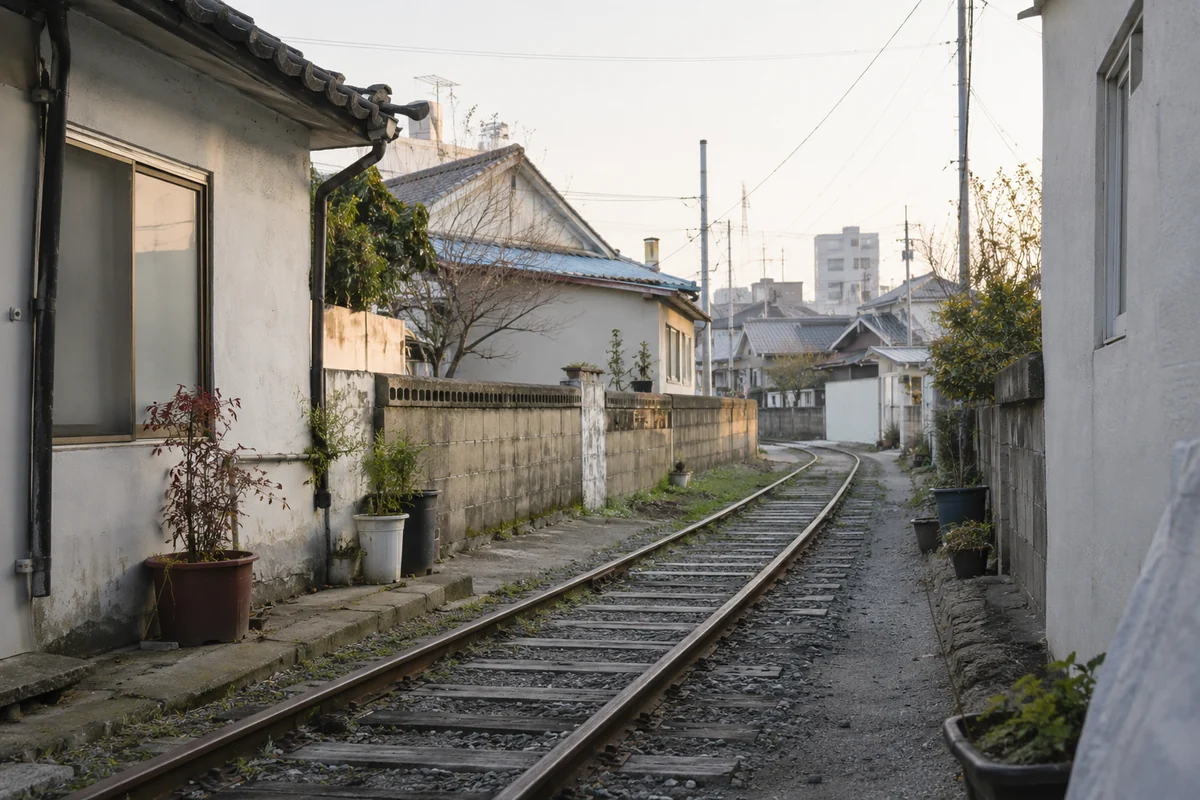
Disclosure: AI-generated editorial illustration; not documentary evidence. An imagined neighborhood railway scene, not actual Gyeongam-dong or a documentary view. SEOULIAN · Created with ChatGPT Image Generation.
License: Original SEOULIAN AI-generated editorial image