VERIFIED CONTEXT · A savory dish, not a dessert
An egg dish can be the least dramatic thing on a Korean table and still deserve a little attention. Beside a grill, stew or bowl of rice, gyeranjjim offers another texture to notice. Start with the name rather than expecting a Western omelet, sweet custard or baked souffle.
Korean Bapsang explains gyeran as egg and jjim as a steamed dish; dalgyaljjim is another name you may see. The Korea Tourism Organization describes eggs mixed with water and salt and cooked in a pot, with anchovy broth as an alternative. That is a useful base description, not a complete ingredient list for every restaurant serving.
LOOK AT THE VESSEL · There is more than one presentation
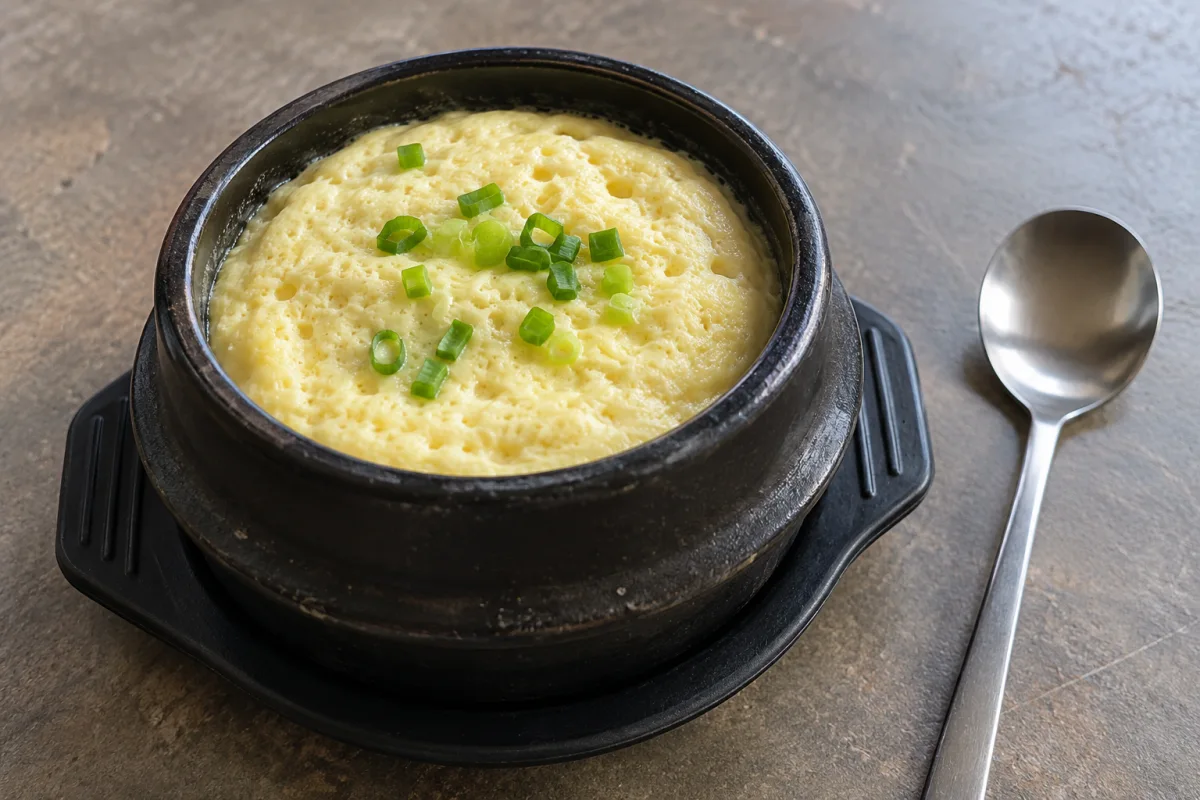
My Korean Kitchen documents versions made in a ttukbaegi earthenware pot, individual bowls in a steamer and small bowls in a microwave. Its comparison is a reminder that the same dish name can lead to different vessels and results. A tall, airy-looking potful is not the only presentation to expect.
SEOULIAN's suggested first-taste exercise is simple: notice whether your serving looks loose or set, airy or smooth, then take a small spoonful after allowing it to cool. Compare the egg with a bite of the rice or main dish you already ordered. This is an invitation to pay attention, not a quality ranking or a claim that we have tasted your restaurant's version.
ASK ABOUT THE BROTH · Egg is only the beginning
The recipes we checked do not share one fixed seasoning formula. Korean Bapsang lists water or broth options and salt, salted shrimp or fish sauce as possible seasonings. My Korean Kitchen's version uses kelp-infused water and anchovy sauce. Those examples explain why a pale color or simple menu name cannot establish what is inside.
If you avoid fish or shellfish, tell the restaurant the specific ingredient you need to avoid and ask about broth, seasoning and additions. Do not infer vegetarian suitability from the absence of visible meat. If an allergy is involved, rely on the restaurant's ingredient and preparation confirmation, not this general explainer or the cover image.
BEFORE ORDERING · Included, separate or shared?
My Korean Kitchen describes some Korean barbecue restaurants offering steamed egg with a rice order after barbecue, but that is not a promise about another restaurant's menu. The tourism organization also describes it as an appetizer. Rather than trying to turn these contexts into one rule, use them to recognize that the serving's role can change.
Our suggested ordering questions are: Is gyeranjjim included in this meal, or ordered separately? What size is the portion? Is it intended for the table or for one person? Check the current menu price before adding it. Calling a dish a side dish does not establish that it is complimentary, refillable or the right quantity for your group.
TRY ONE COMPARISON · Keep the explanation small
You do not need a cooking demonstration to make a first encounter worthwhile. At the next Korean meal, identify the dish, ask the ingredient question that matters to you, and notice what its texture adds beside the other food. The useful comparison is between sensations on your own table, not between a restaurant and an imagined national standard.
If you want to cook later, follow the linked authors' own instructions on their sites. SEOULIAN has not reproduced their quantities, methods, timings, photographs or nutrition calculations. This is a menu-reading and first-order guide, not a tested recipe, a health claim or a review of a named restaurant.
Fact check: October 2, 2026, Los Angeles time. The Korea Tourism Organization's dish entry was published in 2023; the two independently authored cooking explanations are dated resources. They support the dish's identity and documented variation, not today's restaurant prices, ingredient guarantees or a claim about nationwide popularity.
THE SEOULIAN SIGNAL · EDITORIAL INTERPRETATION
Why this matters
Ask about the liquid and seasoning, not only the egg. A pale-looking dish does not tell you whether its broth contains seafood.
SOURCE DESK · RESEARCH RECORDS
Research used for this analysis
- Steamed Eggs (계란찜 / Gyeranjjim) · October 19, 2023 Korea Tourism Organization · Primary public food reference on egg/water/salt base, optional anchovy broth and appetizer use. No popularity or nutritional assertion reproduced.
- Gyeranjjim (Korean Steamed Eggs) · updated July 7, 2020 Korean Bapsang · Hyosun · Independent author's nomenclature and documented broth/seasoning variations. Factual comparison only; no recipe quantities, instructions, photographs or nutrition copied.
- Korean Steamed Egg (Gyeran Jjim) · updated May 13, 2019 My Korean Kitchen · Sue · Third independently authored explanation: earthenware, steamer and microwave presentations; particular seafood-seasoned formulation; some restaurants' conditional serving practice, not a universal complimentary policy.
Original synthesis & image rights
Original English synthesis and menu-reading guidance by SEOULIAN from three independent publishers. No recipe quantities, method sequence, source expressions, photographs, restaurant branding or food styling from the sources are reproduced. The unique cover is an AI-generated illustration of a generic imagined serving, not documentary evidence, a tested recipe, an ingredient guarantee or a restaurant endorsement. Targets and reported usage remain attributed to the city and are not presented as independently verified outcomes.
Image disclosure
Credit: SEOULIAN · Created with ChatGPT Image Generation.
Creator: SEOULIAN with ChatGPT Image Generation
Source type: SEOULIAN imagegen editorial photo
Disclosure: AI-generated editorial illustration; not documentary evidence. Imagined generic steamed-egg serving, not a restaurant photograph, tested recipe or ingredient guarantee. SEOULIAN · Created with ChatGPT Image Generation.
License: Original SEOULIAN AI-generated editorial image