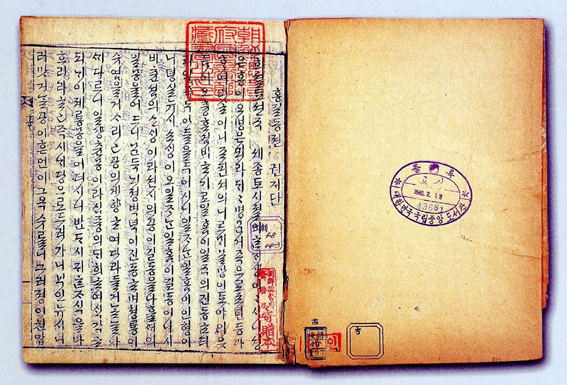
Hong Gildong jeon (Korean: 홍길동전; Hanja: 洪吉童傳) is a Korean novel, often translated as The Biography of Hong Gildong, written during the Joseon period. The novel is considered an iconic piece of Korean literature and culture. Its authorship has traditionally been attributed to Joseon statesman, Hŏ Kyun, though recent scholarship has called this into question. Hong Gildong, an illegitimate son of a nobleman and his lowborn concubine, is the main character of the story. Gifted with supreme intelligence and supernatural abilities, he steals from rich and corrupt aristocrats. Historical sources point to the existence of a bandit named Hong Kiltong who was arrested in 1500, but the historical inspiration for the character was the Korean bandit and folk hero Im Kkeokjeong, who lived in the early 16th century. "During the 15th year of King Sejong's reign in the nation of Joseon, there was only one prime minister outside of the doors of Hong Hee-mun; his surname was Hong and his given name was Mun..." This is the first sentence of the novel, introducing the main character's (Hong Gil-dong's) father. It is the beginning of the complete 36-chapter edition of Hong Gildong-jeon. This opening sentence leads off the version most widely used in academia. The original version was written much earlier than this different version (이본/異本). Hong Gildong jeon can also be referred to as just 'Hong Gil-dong', abbreviating the word jeon (전/傳), meaning 'novel' or 'story' in Hanja.
Read the fixed source
Follow the exact revision used for this summary, or open its history to see the contributors and later changes.
Text source & license
Adapted and shortened by SEOULIAN from the linked fixed revision; no change in factual meaning is intended. Source: Wikipedia contributors. This adapted summary is shared under CC BY-SA 4.0.
Image attribution
Title: Honggildongjeon
Author: Heo Gyun (d. 1618)
Source: Wikimedia Commons
License: Public domain
Wikimedia thumbnail downloaded and displayed without editorial alteration.