START WITH THE FISH · The name records a change
An English menu can translate both hwangtae and bugeo as dried pollock and leave the interesting part unexplained. The two Korean words are not announcing two different fish species. They tell you about what has happened to the fish before it reaches the kitchen.
Korea Tourism Organization's food reference places bugeo, 북어, under dried pollock and hwangtae, 황태, under its yellow, winter-dried form. It also distinguishes frozen dongtae and half-dried kodari. For a first encounter, resist memorizing every name at once. Start with one question: am I reading the fish's preserved form, or the dish made from it?
HWANGTAE · Winter is part of the preparation
In Korea Foundation's Koreana, food writer Jeong Jae-hoon explains hwangtae through repeated freezing and thawing during outdoor drying. His account connects this process with the mountain climate of Gangwon and identifies Daegwallyeong as a well-known drying area. The result is described as porous flesh that separates along its fibers.
Independent recipe author Sue Pressey of My Korean Kitchen likewise connects hwangtae with winter freeze-thaw cycles and a springy, spongy texture after rehydration. The useful distinction is a preparation method, not simply a darker or more expensive-looking piece of fish. A photograph alone cannot establish how a particular product was made.
Our interpretation: preservation is part of the food's character, not merely a pause before cooking begins. If you encounter a packet of dry strips and later a bowl of soup, think about the change between those two states. The ingredient has a history before the cook adds a seasoning.
BUGEOGUK · A soup name can be broader than a product name
Pressey's explanation makes a helpful distinction for menus: bugeoguk is used for dried-pollock soup, while hwangtaeguk specifies hwangtae. Her own soup includes radish, tofu and egg. That is one documented preparation, not a rule requiring every restaurant's bowl to contain the same additions.
Do not treat bugeo and hwangtae as two sealed boxes that never overlap in everyday dish naming. If the particular drying method matters to you, ask which dried fish the kitchen uses. If you mainly want soup, the finished dish may be the more useful part of the name to recognize.
SEOULIAN's suggestion for a first order is to ask what comes in the bowl and whether rice is included. This avoids turning a short translation into an entire imagined meal. Save the Korean menu wording alongside the English description if you want to recognize the dish again.
HWANGTAEGUI · The same ingredient, another meal
Hwangtae does not automatically mean soup. KTO's separate hwangtaegui entry describes dried pollock coated with a spicy red-chili sauce and grilled. Koreana also describes seasoned and grilled uses. The preserved fish supplies the starting material; the preparation supplies another layer of flavor and texture.
For ordering, distinguish the questions. Is it soup or grilled fish? What seasoning is used? Is this an individual dish or part of a set? Ask the restaurant for the current serving and price rather than assuming that two dishes sharing hwangtae will arrive in the same form.
At a grocery shop, match the product description to the recipe you intend to use. A name is not a complete ingredient list or a set of preparation instructions. This guide explains terminology; it does not prescribe drying, storage or cooking procedures.
WHAT WE CHECKED
Checked September 18, 2026 (UTC). We compared KTO's food references, Jeong's independently authored Koreana essay and Pressey's cooking account. The two KTO pages count as one institution. This is a food-literacy guide, not a restaurant review, a new trend report or a firsthand tasting.
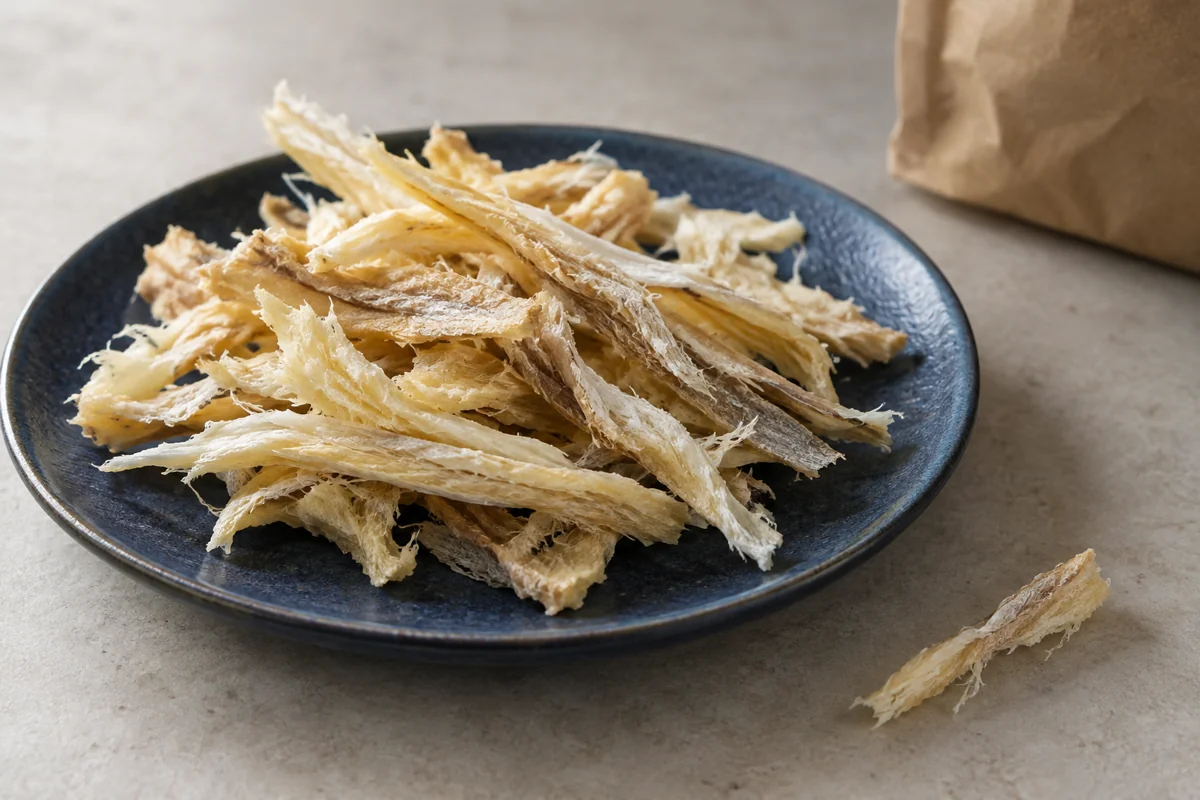
The cover is an invented ingredient still life, not a maker's product or evidence of a standard color, cut or portion. The simplest takeaway is also the most portable: learn the preserved form, then read what the kitchen does with it.
THE SEOULIAN SIGNAL · EDITORIAL INTERPRETATION
Why this matters
SEOULIAN interpretation: read the preserved ingredient and the finished dish as two separate parts of the same menu name.
SOURCE DESK · RESEARCH RECORDS
Research used for this analysis
- Grilled Dried Pollack (Meoktaegui) · food terminology reference Korea Tourism Organization · Public tourism food reference distinguishing dried bugeo, winter-dried yellow hwangtae, frozen dongtae and half-dried kodari. No historical price, popularity, medical or current supply claims adopted.
- Pollack: A Versatile Fish Jeong Jae-hoon · Korea Foundation, Koreana · Independently authored food essay: freeze-thaw drying, porous texture, Gangwon and Daegwallyeong context, and seasoned/grilled uses. No health claims, ritual material, fisheries forecasts, exact universal drying duration, source prose or licensed photographs reproduced.
- Dried Pollack Soup (Bugeoguk) · updated March 5, 2024 Sue Pressey · My Korean Kitchen · Independent first-person cooking source corroborating freeze-thaw preparation and rehydrated texture; explanation of soup names and one example containing radish, tofu and egg. Recipe steps, quantities, photos and health claims are not reproduced.
- Grilled Dried Pollack (Hwangtaegui) Korea Tourism Organization · Primary public food reference for the seasoned grilled dish. Same institutional lineage as the first KTO source; not counted as independent corroboration.
Original synthesis & image rights
Original SEOULIAN English synthesis of linked factual references with separately identified editorial guidance. No source prose, recipe sequence, photograph or packaging reproduced. Unique built-in Imagegen cover is a fictional ingredient illustration, not documentary evidence or a product photograph. Targets and reported usage remain attributed to the city and are not presented as independently verified outcomes.
Image disclosure
Credit: SEOULIAN · Created with ChatGPT Image Generation.
Creator: SEOULIAN with ChatGPT Image Generation
Source type: SEOULIAN imagegen editorial photo
Disclosure: AI-generated editorial illustration; not documentary evidence. Invented dried-pollock ingredient study, not a real product, restaurant serving or standard for color, cut or portion.
License: Original SEOULIAN AI-generated editorial image