SEOULIAN INTERPRETATION · Paper need not stay flat
A paper object is easy to imagine as a folded sheet or a box covered with decorative layers. Jiseung (지승) asks you to imagine an extra step: paper becomes cord, and that cord becomes an object. In this Korean craft, twisting and weaving change not just the outline of the material but the way it holds a shape.
The useful distinction is between a material and a method. Hanji is Korean paper; jiseung describes a way of working it. For an English-speaking reader encountering unfamiliar craft labels, that difference opens a more precise question than simply asking whether something is handmade.
VERIFIED CONTEXT · Three routes from paper to object
Horim Museum's past exhibition With Paper separates several approaches. In jijang, paper layers cover a thick-paper or wooden structure. Jiho uses torn paper mixed with rice glue, shaped on molds and dried. Jiseung instead works with paper strings that are woven together. These names describe different construction methods, not three grades of quality.
Horim also records the reuse of old book and document pages in paper craft. That history does not prove that a particular contemporary piece contains reclaimed paper. It gives you something concrete to ask its maker, rather than a sustainability claim to infer from its appearance.
ONE DOCUMENTED OBJECT · A case with a purpose
The Seoul Museum of Craft Art holds a manggeon, a headband used to secure the hair when arranging a topknot, together with its jiseung storage case. Record CR-AP-00-004483 describes a cylindrical case and lid made from closely twisted paper, with a coating over the surface. The museum classifies the pair within the late nineteenth to first half of the twentieth century.
This is a helpful counterweight to the idea that paper craft is only surface decoration. Here, paper forms a container for another object. Read the record alongside its photographs on the museum's own page; a collection entry is not confirmation that the piece is currently on display.
CONTEMPORARY EXAMPLES · Beyond the storage case
Seoul Museum of Art documented Lee Youngsoon's use of jiseung in contemporary objects and interiors in an exhibition running from November 18, 2014, to February 22, 2015. Its account includes objects made with a coiling technique. This is an archived example of an artist expanding the craft, not a current exhibition recommendation.
A different scale appears in Homo Faber's record for Eunhee Cho's My Nature I: a necklace made from hanji using woven, twisted paper cords. The entry identifies rice paste as its finish. That information belongs to this particular work; it is not a universal recipe for jiseung.
Set those examples beside the storage case and a useful question emerges: what changes when the same craft vocabulary moves from protecting an object to furnishing a room or being worn? You can compare purpose and construction without ranking one use as more authentic than another.
TRY IT · Read the method, then the material
Start with the linked online records. Notice whether a description identifies a cord, a supporting frame, a coating or a molded body. Keep those documented details separate from what a photograph merely suggests. A woven surface alone cannot establish its fiber, maker or age.
If considering a piece for everyday use, ask the maker what paper and finish were used, what the object is intended to hold, and how to clean and store it. Do not infer washable, waterproof or food-safe from the word jiseung. This is a set of questions, not a product assessment.
Sources were checked on September 18, 2026 (UTC). No current stock, workshop place or museum display is promised. The starting point needs no booking: learn to distinguish a sheet, a cord and a structure, then look again at what paper can become.
THE SEOULIAN SIGNAL · EDITORIAL INTERPRETATION
Why this matters
Hanji names the paper; jiseung points to what a maker does with it. Ask how the material becomes a structure before treating all paper craft as one technique.
SOURCE DESK · RESEARCH RECORDS
Research used for this analysis
- 망건과 지승망건통 — collection record CR-AP-00-004483 Seoul Museum of Craft Art · Municipal museum's own collection record: jiseung definition, headband and cylindrical coated paper case, catalogue period. Checked September 18, 2026 UTC. KOGL Type 4 media and expression not reused; factual research and link only. No current-display claim.
- With Paper — past exhibition Horim Museum · Independently maintained museum interpretation distinguishing jijang, jiho and jiseung and noting reuse of old pages. Checked September 18, 2026 UTC. No exhibition schedule, photographs, artist designs or wording reused.
- Lee Youngsoon's jiseung exhibition — The New Like The Old, The Old Like The New Seoul Museum of Art · Official archive confirms paper-cord construction, contemporary interior applications and November 18, 2014–February 22, 2015 exhibition dates. Checked September 18, 2026 UTC. Same municipal family as SeMoCA, not counted as a separate institutional lineage; no media or wording reused.
- My Nature I by Eunhee Cho Homo Faber · Michelangelo Foundation · Contemporary craft record identifies this necklace's hanji, jiseung construction and rice-paste finish. Checked September 18, 2026 UTC. No claim of current stock or endorsement, and no photograph, jewelry design or source wording reproduced.
Original synthesis & image rights
Original SEOULIAN English synthesis, not a translation, craft tutorial or first-person handling report. Linked records support facts; their wording, photographs and artists' designs are not reproduced. The Seoul Museum of Craft Art record carries KOGL Type 4 restrictions; no licensed text or image from it is reused. The cover is an invented conceptual paper-cord object made with built-in ChatGPT Image Generation, not a museum artifact, named artist's work or product listing. AI-generated editorial illustration; not documentary evidence. Targets and reported usage remain attributed to the city and are not presented as independently verified outcomes.
Image disclosure
Credit: SEOULIAN · Created with ChatGPT Image Generation.
Creator: SEOULIAN with ChatGPT Image Generation
Source type: SEOULIAN imagegen editorial photo
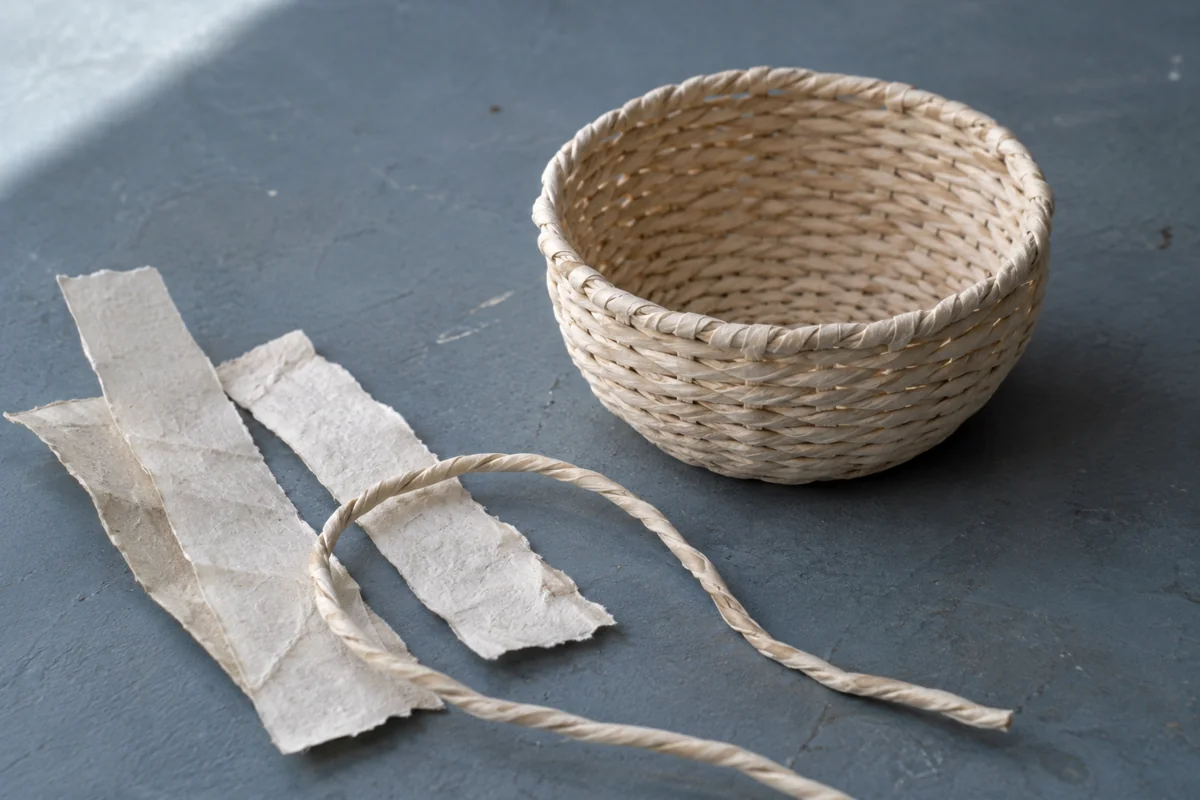
Disclosure: AI-generated editorial illustration; not documentary evidence. An invented contemporary paper-cord bowl and material study, not a museum artifact, named artist's work, product listing or craft tutorial.
License: Original SEOULIAN AI-generated editorial image