SEOULIAN INTERPRETATION · Start with the leaf, not the grill
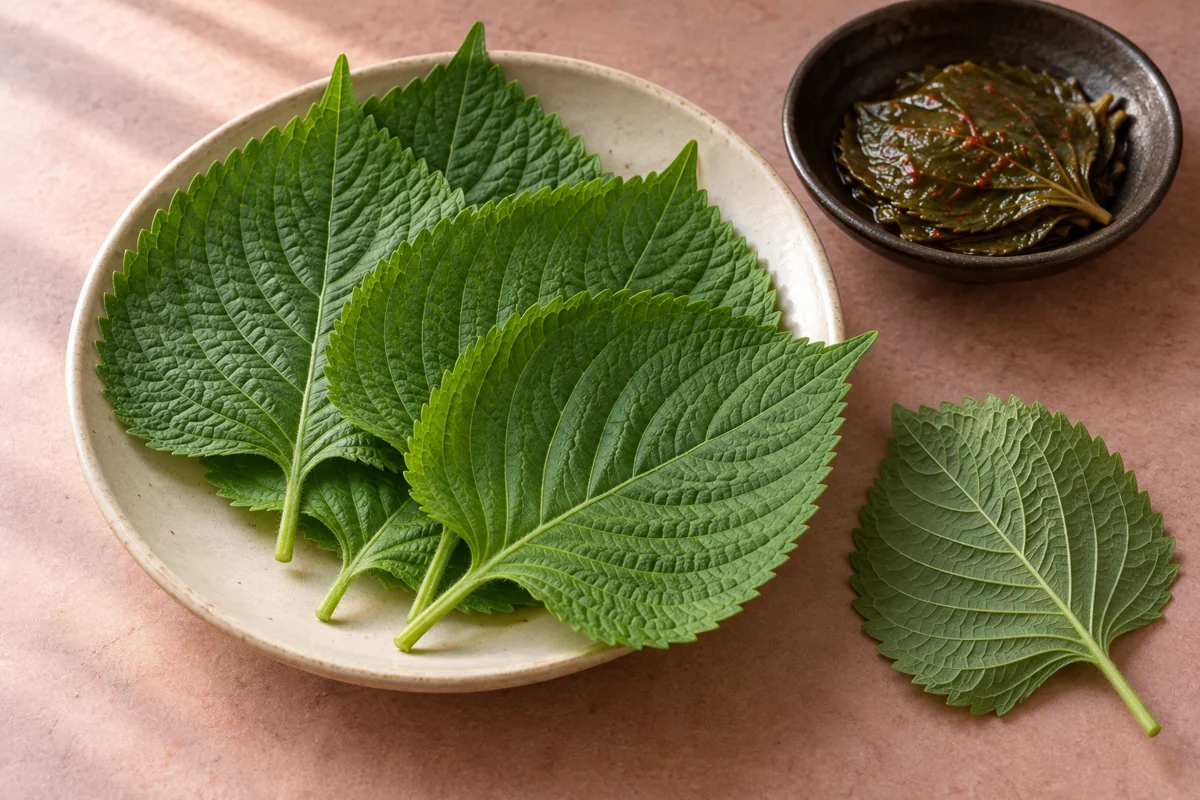
A plate of green leaves beside Korean barbecue can look like an invitation to do just one thing: wrap the meat. But follow one of those leaves away from the grill and a different food story opens up. Kkaennip can arrive fresh, as a seasoned side dish or enclosing a filling in a pan-fried parcel. Learning to ask which version you are looking at is more useful than memorizing a single way to eat it.
For a first encounter, make the leaf the subject of the meal for a moment. What changes when it is plain, dressed or cooked? You do not need to order all three versions at once. A small comparison across a few meals can turn something you initially treated as an accessory into an ingredient you recognize.
VERIFIED CONTEXT · Perilla, not the sesame plant
Kkaennip is written 깻잎. It refers here to Korean perilla leaves, not leaves from the sesame plant, even though English labels sometimes use the name sesame leaves. KOREA magazine's April 2025 feature explains that distinction. The independent cooking publisher Korean Bapsang also identifies Korean perilla as belonging to the mint family.
Keep the Korean name with your shopping note. It is a better question to bring to a produce counter than a request for any green leaf that looks similar. Ask the seller to identify the culinary ingredient you want. This is not a guide to identifying wild plants or a claim about health benefits.
THREE FORMS · Wrapper, side dish, filled jeon
Fresh leaves are one option for ssam, the small leaf wraps described in Korea Tourism Organization's food guide. Lettuce is another. Perilla may accompany meat and ssamjang, while KOREA magazine also describes wrapping rice or fish. Our suggestion is to begin with a modest filling: leave yourself room to notice the leaf instead of hiding it under everything on the table.
Preserved or seasoned leaves offer a different starting point. The magazine describes a soy-sauce-based pickled preparation, and Korean Bapsang documents both perilla jangajji and perilla kimchi. These names should not be treated as one fixed recipe. At a prepared-food counter, ask how the particular batch is seasoned and how it is intended to be served. A small portion beside rice makes a useful comparison with a fresh wrapping leaf.
Kkaennipjeon changes the structure again. VISITKOREA describes folded perilla leaves containing a filling, coated with flour and egg and pan-fried. Meat, tofu and vegetables are typical filling ingredients in its account. The green exterior therefore does not mean the dish is simply a fried vegetable. If ingredients matter to you, ask what is inside as well as what coats the outside.
TRY THIS · Ask one precise question
At a restaurant, try: are these fresh leaves for wrapping, or a seasoned side dish? At a grocery counter, ask whether the item is ready to eat or needs preparation. For jeon, ask about the filling. Those questions are deliberately separate. A familiar ingredient name cannot tell you everything about what a kitchen has done to it.
If you are tasting with someone, compare your impressions without looking for a correct answer. Did you notice the aroma before the seasoning? Was the leaf the container, part of the filling or the main thing you were eating? These are optional prompts for paying attention, not rules of Korean etiquette or a claim that we tasted a particular restaurant's version.
Before buying, check the current price, portion and ingredient information on the actual menu or package. This guide recommends no business and assumes no universal recipe. Its useful souvenir is a more specific food memory: not just the green leaf beside the barbecue, but the form you tried and what you would like to try next. Sources were checked on September 18, 2026 (UTC).
THE SEOULIAN SIGNAL · EDITORIAL INTERPRETATION
Why this matters
Ask which form of the leaf you are ordering: a fresh wrapping leaf, a seasoned side dish or a filled jeon. The same ingredient does not mean the same preparation.
SOURCE DESK · RESEARCH RECORDS
Research used for this analysis
- Pan-fried Battered Perilla Leaves (Kkaennipjeon) — September 11, 2025 Korea Tourism Organization · VISITKOREA · Official food description: perilla leaves folded around a filling, flour-and-egg coating and pan-frying; typical meat, tofu and vegetable filling. Rechecked September 18, 2026 UTC. No recipe proportions, procedure sequence or photograph reproduced.
- About Korean Food — ssam and the Korean table Korea Tourism Organization · VISITKOREA · Official context for perilla and lettuce used in ssam with meat and ssamjang. Rechecked September 18, 2026 UTC. Same institution as the other VISITKOREA page, not counted twice as independent evidence. No health claims adopted.
- The Origin: Korean perilla leaves — April 2025 KOREA magazine · Ministry of Culture, Sports and Tourism · Tim Alper · Cultural context for perilla versus sesame, fresh rice/fish/meat wraps and soy-seasoned preserved leaves. Rechecked September 18, 2026 UTC. Gardening, origin speculation, storage-duration and health claims are excluded. No recipe, photos or wording reproduced.
- Kkaennip Kimchi (Perilla Kimchi) — updated September 8, 2021 Korean Bapsang · independent Korean cooking publisher · Independent culinary corroboration of the Korean name, mint-family classification and use as fresh wraps, jangajji and kimchi. Rechecked September 18, 2026 UTC. Only ingredient context is used; recipe proportions, instructions, gardening advice and photographs are not reproduced.
Original synthesis & image rights
Original SEOULIAN English synthesis, not a translation, copied recipe, restaurant review or eyewitness account. Sources support the stated ingredient and preparation facts; their wording and images are not reproduced. The cover was created with built-in ChatGPT Image Generation and shows an imagined unbranded serving. AI-generated editorial illustration; not documentary evidence. Targets and reported usage remain attributed to the city and are not presented as independently verified outcomes.
Image disclosure
Credit: SEOULIAN · Created with ChatGPT Image Generation.
Creator: SEOULIAN with ChatGPT Image Generation
Source type: SEOULIAN imagegen editorial photo
Disclosure: AI-generated editorial illustration; not documentary evidence. An imagined unbranded serving of perilla leaves, not a restaurant photograph, product or tested recipe.
License: Original SEOULIAN AI-generated editorial image