START HERE · Two addresses need not mean two places
You have chosen a small gallery or a cooking class. One listing gives a road and a number; another gives a neighborhood and a pair of numbers. Before assuming that the venue has moved, check which address system each listing is using.
Korea Post's English postcode service still provides separate searches for road-name and land-lot addresses. The Institute for Basic Science, which publishes a living guide for international staff, explains how the two formats differ. Understanding that distinction is useful before a journey, even when you intend to follow a map.
VERIFIED FACT · Find the road first
A road-name address identifies a road and a building number. Common road endings include -daero, -ro and -gil. An older land-lot address instead identifies a neighborhood and a parcel; its numbers are not a sequence to follow along a street.
The IBS guide also distinguishes the broad-to-narrow order used in Korean addresses. Do not mistake a change of writing order or romanization for a different destination. Compare the actual location and its component parts.
VERIFIED FACT · The building is not the room
There is another layer after locating the building: the detailed address. IBS explains apartment-block and unit notation using dong and ho, and identifies cheung as a floor. Dong can appear in different roles, including a neighborhood name or an apartment-block designation; read it in context.
For a visitor, our practical distinction is simpler: one set of details gets you to the building, and another tells you where inside to go. Keep both. Do not drop a floor or unit from the venue's instructions just because the road address looks complete.
USE THE TOOL · Choose the matching lookup
Korea Post's road-name lookup has regional and road-selection fields; its separate land-lot page provides the alternative search. Both show result columns for postcode, address and Korean text. The service describes the current postcode as five digits.
Start with the search that matches the address you have. If you have only a venue nickname, first obtain the full address from its own website or booking confirmation. A nickname is not a substitute for the information requested by an address form.
When the result appears, compare it with the venue's published location before saving it. Keep any leading zero in a postcode. A postcode helps with the postal address; it does not tell you which door to enter. The linked service is a lookup resource, not a promise that any particular parcel will be delivered or that a venue is open.
SEOULIAN INTERPRETATION · Make one useful arrival note
Our suggestion is to save one compact note before leaving: the venue's Korean name, its full Korean address, the English version when useful, and the floor or unit. Add the entrance instructions from the venue itself. Keep a map link alongside the note, not in place of it.
If two listings disagree, do not combine half of each into a new address. Ask the venue which is current, especially for a class, temporary exhibition or appointment. A clear question about the entrance is more useful than guessing from a familiar-looking building.
For a shared outing, send that same venue note to your companion and agree on the meeting point. Leave private home addresses and access codes out of public posts. The aim is modest: spend less of the afternoon decoding an address, and more of it doing the thing you came for. Source pages and lookup interfaces were checked on September 15, 2026.
THE SEOULIAN SIGNAL · EDITORIAL INTERPRETATION
Why this matters
Keep the destination's Korean name and full address together, then add the floor or unit and the entrance instructions supplied by the venue. A building address is not the whole arrival plan.
SOURCE DESK · RESEARCH RECORDS
Research used for this analysis
- Road-name address and postcode lookup · checked September 15, 2026 Korea Post · Current postal-operator interface: road-name search, bilingual result columns and five-digit postcode explanation. Used for the service's own visible capabilities, not delivery guarantees.
- Land-lot address lookup · checked September 15, 2026 Korea Post · Current alternate lookup corroborates that the operator accepts a separate land-lot search. Same organization as the road-name service, not independent reporting.
- Old and New System · checked September 15, 2026 Institute for Basic Science · Living in Korea · Separately authored international-staff reference explains the address formats, writing order, and building, unit and floor notation. Only stable descriptive facts used; rollout dates, generalized apartment examples and reproduced government signage are not reused.
- Romanization and Zip Codes · checked September 15, 2026 Institute for Basic Science · Living in Korea · Independent staff guidance links readers to Korea Post's official lookup. Same institutional source as the address explanation; not counted as a third organization. Old interface directions are not assumed current.
Original synthesis & image rights
Original SEOULIAN synthesis of limited factual information from Korea Post's current road-name and land-lot lookup interfaces and the Institute for Basic Science's independently authored international-staff guide. These are two separately responsible organizations, not four independent reports. The address-saving checklist is SEOULIAN editorial advice, not a tested itinerary, housing or immigration advice, or a guarantee of navigation, entry or delivery. No source wording, screenshots, address-sign designs, photographs, private addresses or personal details are reproduced. The unique built-in Imagegen cover is an AI-generated editorial illustration; not documentary evidence. It shows a fictional entrance, not an actual destination. Original PNG, optimized WebP, exact prompt and SHA-256 hashes are retained. Targets and reported usage remain attributed to the city and are not presented as independently verified outcomes.
Image disclosure
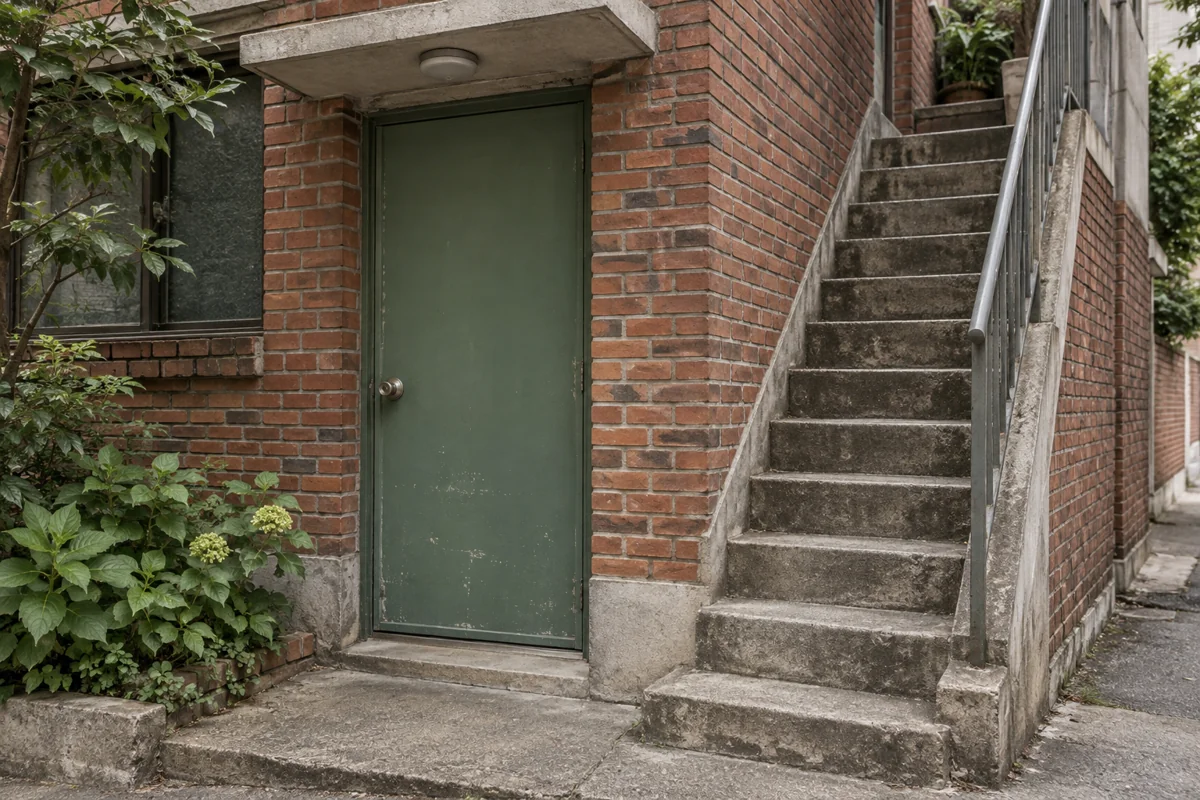
Credit: AI-generated editorial illustration; not documentary evidence. A fictional neighborhood entrance, not a photograph of an actual building, address or destination. SEOULIAN · Created with ChatGPT Image Generation.
Creator: SEOULIAN with ChatGPT Image Generation
Source type: SEOULIAN imagegen editorial photo
Disclosure: AI-generated editorial illustration; not documentary evidence. A fictional neighborhood entrance, not a photograph of an actual building, address or destination. SEOULIAN · Created with ChatGPT Image Generation.
License: Original SEOULIAN AI-generated editorial image