Look through the material
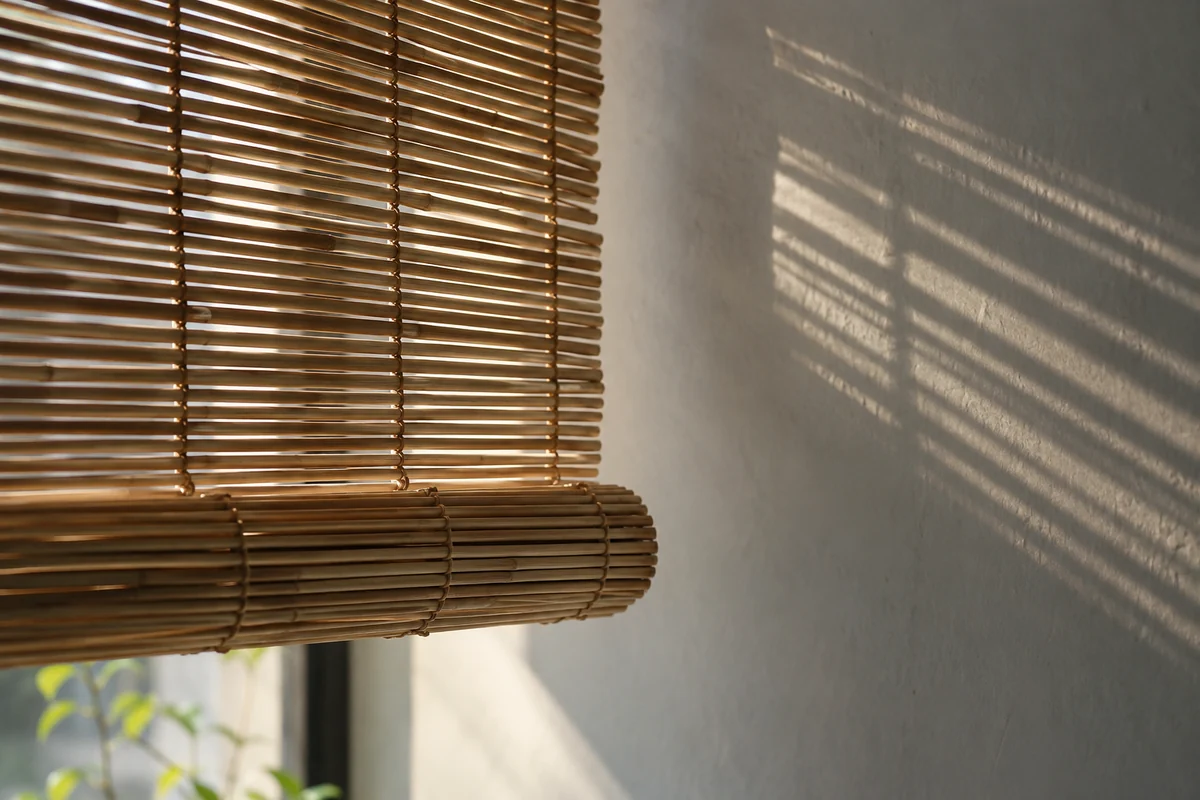
Bal are screens associated with bamboo or reed construction. The Academy of Korean Studies describes their use at openings and as partitions. The Seoul Museum of Craft Art’s bamboo example records fine slivers bound with thread, giving a specific object to compare with that broader category.
The construction invites a different kind of looking from a solid panel. You can attend to what the screen interrupts and what remains perceptible through the spaces. SEOULIAN’s suggested starting point is the relationship between the material and the light, not a decorative motif.
The thread is part of the structure
A screen’s outline can seem simple from a distance, but the ties organize many small pieces into one hanging surface. Follow a line of thread and notice how it repeats. Then look at the edges and hanging details identified in the collection record.
Do not assume that every bal has the same edging, decoration or method of suspension. Those details belong to a specific object and its maker. A decorated museum screen also does not provide permission to reproduce its pattern in a new product or illustration; the generic cover deliberately contains no such motif.
A useful distinction for contemporary rooms
A filter for light is not automatically a blackout covering or a privacy guarantee. If considering a contemporary screen for a room, ask the maker about the actual dimensions, installation and care. The historical name alone does not establish suitability for an exposed window or any particular household condition.
For a museum visitor, no purchase is needed to appreciate the idea. Notice how many narrow pieces create a flexible boundary and how visible gaps become part of the object’s effect. Bal can make a small architectural question tangible: how can an opening be moderated without being turned into a completely solid wall?
THE SEOULIAN SIGNAL · EDITORIAL INTERPRETATION
Why this matters
SEOULIAN editorial reading: Reading bamboo screens through slivers, thread and light. This is a practical interpretive angle, not a popularity claim.
SOURCE DESK · RESEARCH RECORDS
Research used for this analysis
- Bamboo bal collection record Seoul Museum of Craft Art · Fine bamboo slivers tied with thread; edges and hanging details
- Bal encyclopedia entry Academy of Korean Studies · Screens used at openings and as partitions
- Yeomjang encyclopedia entry Academy of Korean Studies · Craft of making fine bamboo screens
Original synthesis & image rights
Original English synthesis by SEOULIAN from independently checked factual sources. No source prose, third-party photographs, artwork or recordings reproduced. Targets and reported usage remain attributed to the city and are not presented as independently verified outcomes.
Image disclosure
Credit: SEOULIAN · Created with ChatGPT Image Generation.
Creator: SEOULIAN with ChatGPT Image Generation
Source type: SEOULIAN imagegen editorial photo
Disclosure: AI-generated editorial illustration; not documentary evidence. An original unpatterned screen detail, not the museum’s decorated collection object. SEOULIAN · Created with ChatGPT Image Generation.
License: Original SEOULIAN AI-generated editorial image