A knot is a path
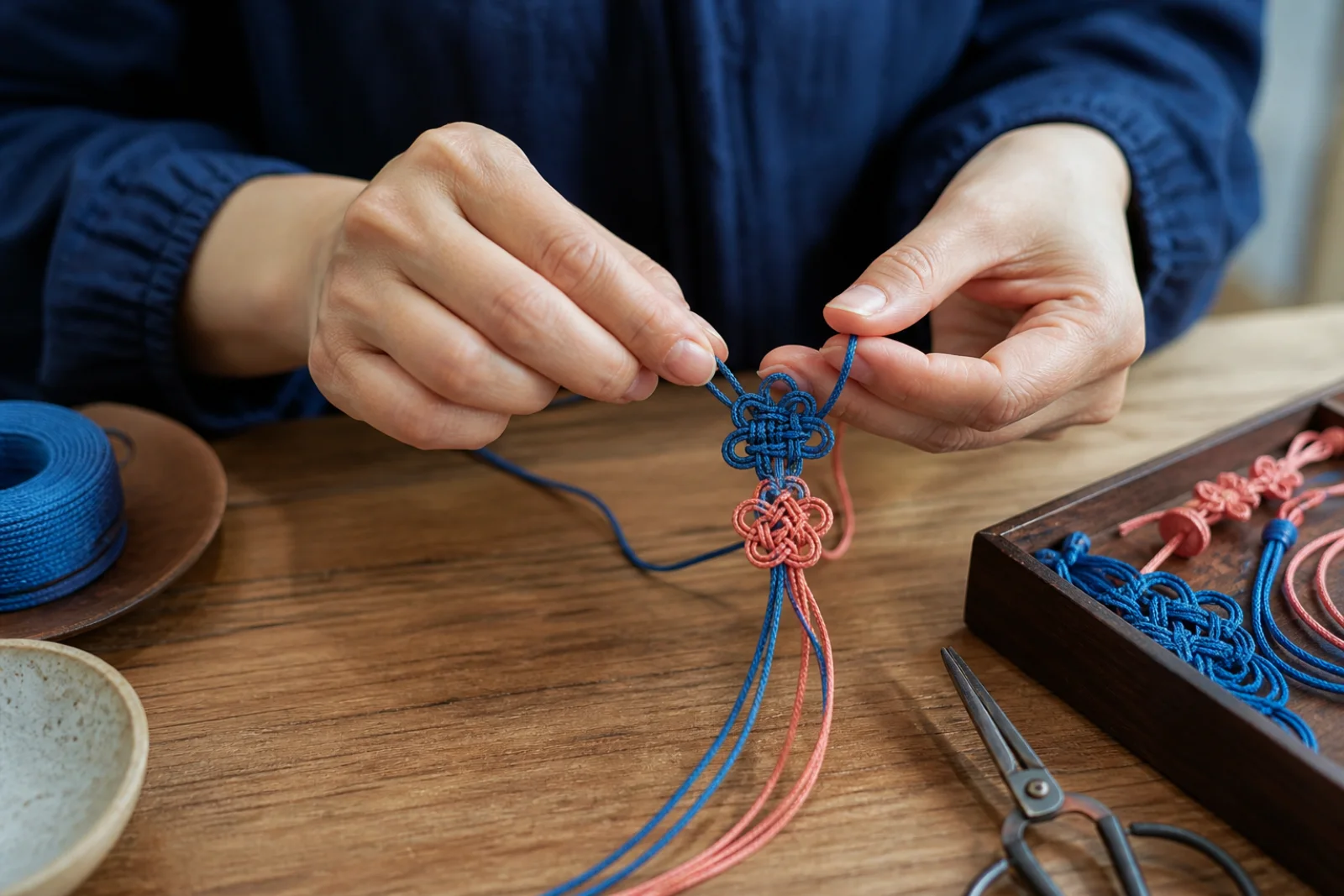
Traditional Korean decorative knotting, commonly called maedeup, builds forms through repeated sequences in cord. Many designs are symmetrical, but that visible balance depends on tension being distributed through the entire path. Pulling one section carelessly can distort parts that seemed finished.
Scale makes skill visible
Small work leaves little room to hide an uneven loop. Cord material, twist, color, tassel construction, and intended attachment all affect the object. Museum examples and living makers connect knots to clothing accessories, pouches, instruments, household decoration, and contemporary jewelry without claiming every form had one timeless use.
Learn by undoing
A beginner quickly discovers that knotting is also controlled correction. Makers loosen, trace, and retighten rather than forcing the final shape. A workshop is valuable because hand position and tension are difficult to learn from a finished photograph. Credit the teacher or pattern when sharing the result.
THE SEOULIAN NOTE · EDITORIAL INTERPRETATION
The detail worth carrying forward
Maedeup turns patience into a visible structure: the finished object is compact, but the maker remembers every reversal hidden inside it.
SOURCE DESK · VERIFIED FACT TRAIL
Research used for this field note
- Visit Korean Heritage Korea Heritage Agency · Official heritage interpretation and visitor reference
- Republic of Korea: Elements on the Lists UNESCO Intangible Cultural Heritage · International safeguarding records for living heritage
Original synthesis, source trail attached
Original SEOULIAN synthesis. Facts are attributed through linked sources; source wording, photographs, logos, and entertainment assets are not reproduced. The article does not reproduce source expression, third-party photographs, logos, maps, or entertainment assets.
Image disclosure
Credit: SEOULIAN original editorial image
Creator: SEOULIAN with ChatGPT Image Generation
Source type: SEOULIAN imagegen editorial photo
Disclosure: AI-generated editorial illustration; not documentary evidence of a specific person, place, object, or event.