Korean literature is the body of literature produced by Koreans, mostly in the Korean language and sometimes in Classical Chinese. For much of Korea's 1,500 years of literary history, it was written in Hanja. It is commonly divided into classical and modern periods, although this distinction is sometimes unclear. There are four major traditional poetic forms: hyangga ("native songs"); byeolgok ("special songs"), or changga ("long poems"); sijo ("current melodies"); and gasa ("verses"). Other poetic forms that flourished briefly include the kyonggi-style, in the 14th and 15th centuries, and the akchang ("words for songs") in the 15th century. The most representative akchang is Yongbi och'on ka (1445–47; Songs of Flying Dragons), a cycle compiled in praise of the founding of the Yi dynasty. Korean poetry originally was meant to be sung, and its forms and styles reflect its melodic origins. The basis of its prosody is a line of alternating groups of three or four syllables, which is probably the most natural rhythm to the language. One famous earliest poetry or lyric song was the Gonghuin (Konghu-in) by Yeo-ok during Gojoseon.
Read the fixed source
Follow the exact revision used for this summary, or open its history to see the contributors and later changes.
Text source & license
Adapted and shortened by SEOULIAN from the linked fixed revision; no change in factual meaning is intended. Source: Wikipedia contributors. This adapted summary is shared under CC BY-SA 4.0.
Image attribution
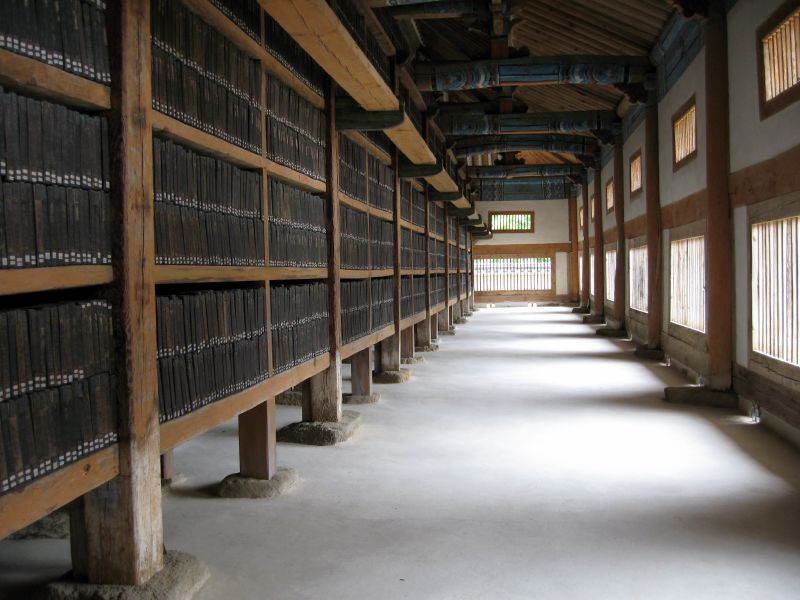
Title: Korea-Haeinsa-Tripitaka Koreana-01
Author: Lauren Heckler (the Flickr ID is malpuella) at Flicker
Source: Wikimedia Commons
License: CC BY 2.0
Wikimedia thumbnail downloaded and displayed without editorial alteration.