FIRST TEN MINUTES · Turn memory into four details
Write down the line or service, direction of travel, approximate time and the station or train location where you last remember the item. If you know the car or train number, add it. Metro9's current lost-property guidance specifically asks passengers to remember when and where they got off, the direction and service type, and the train number when available.
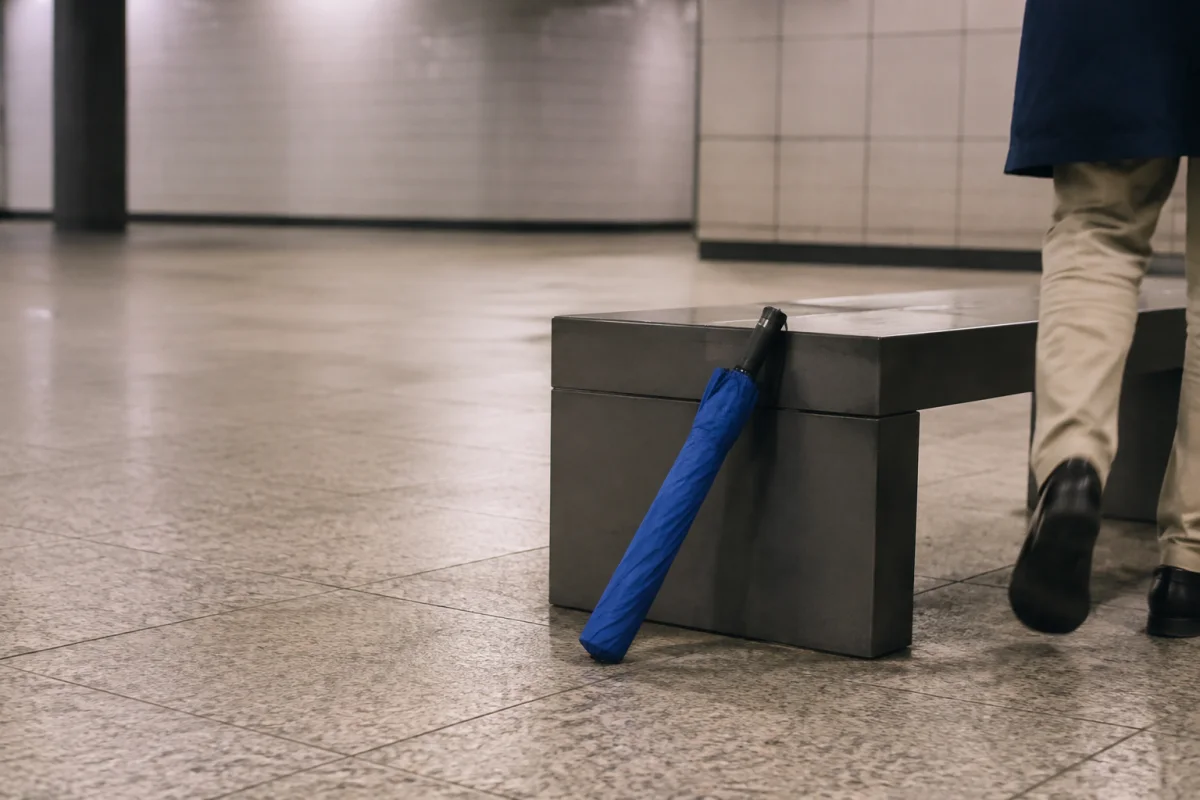
Do this before retracing the whole day. A short note such as ‘eastbound, left at 4:35 PM, third car, umbrella beside the door’ gives staff a route and time window. Describe the object with visible features—color, material, case and one non-sensitive mark—but keep passwords, card numbers and identity-document numbers out of a public search description.
RIGHT NOW · Tell the nearest station first
If you notice the loss immediately, speak to station staff before leaving the system. Show the four details on your phone or paper; precision is more useful than a long story. Seoul's 2026 English subway guide lists a network call center at 1577-1234 and groups lost-property centers by line, while the city's visitor service also publishes operator-specific contacts.
Seoul's metropolitan rail map includes services run by different organizations, so the correct contact may depend on the train and section rather than the nearest familiar station. Start with the operator shown on your route or ticket record. Because locations and contact arrangements can change, check the live operator or visitor page before traveling to a lost-property center.
LATER · Search and report through the police service
For an item that does not turn up immediately, Seoul's official visitor guidance points travelers to the Korean National Police lost-property system. The current Police Civil Service 24 guide provides an online lost-item report and an in-person route at a police station; it lists no application fee. Treat the report number as a reference, not a promise that an item will be found.
Search broadly enough to allow for delay. An item handed to station staff may be entered later or transferred onward, so the date it appears in a database may not match the moment you lost it. Use the same neutral description each time, and update your own notes when a staff member gives you a case or storage reference.
LANGUAGE BRIDGE · Use 1330 for interpretation
The Korea Tourism Organization's current 1330 service offers tourism information and interpretation by telephone and real-time chat. From within Korea, call 1330; from overseas, use +82-2-1330. It can help a visitor explain a route or understand where an operator is directing them.
1330 is a language and visitor-assistance bridge, not a substitute for a police report or an operator's custody record. Keep the operator name, line, direction, time, station, item description and any reference number together so the next conversation begins with the same facts.
ONE OBJECT, TWO TASKS · Recover it and protect access
A lost phone, wallet or passport creates two separate jobs. Continue the physical search, but also use the official issuer, carrier or account provider to protect whatever the object can unlock. Do not wait for a database match before taking the ordinary security steps offered by those providers.
Keep those security actions separate from the description you send to transit staff. A recovery report needs enough visual detail to distinguish the object, not the private information stored inside it. If an authority asks for proof of ownership, provide it through that authority's stated channel rather than a public comment or social post.
SEOULIAN INTERPRETATION · The route back is made of details
Lost-property systems are easy to imagine as one giant room. In practice, they are a relay among the person who notices, station staff, an operator and sometimes the police portal. The small courtesy of handing something in becomes useful only when the next person can match it to a precise journey and description.
That makes memory part of the city's shared infrastructure. Recording four facts takes less than a minute, yet it gives strangers enough common ground to help one ordinary object travel back in the opposite direction.
THE SEOULIAN SIGNAL · EDITORIAL INTERPRETATION
Why this matters
Before asking where the lost-property center is, identify the exact operator and write the line, direction, approximate time, boarding or exit station, car position and one non-sensitive visual detail.
SOURCE DESK · RESEARCH RECORDS
Research used for this analysis
- 2026 Seoul Subway Map and Visitor Guide Seoul Metropolitan Government · Primary current English city source for the subway call center and the existence and grouping of lost-property centers by line.
- Lost and Found Seoul Tourism Organization · Official visitor-facing cross-check for operator-specific transit contacts and the route from local transit inquiries to the national lost-property system.
- Lost Property Center Seoul Metro Line 9 Corporation · Primary operator source for the journey details passengers should remember and the instruction to search the national police lost-property system when the item is not immediately located.
- Police Civil Service 24 — Lost-Item Report Guide Korean National Police Agency · Primary current police source for online and in-person lost-item reporting, processing route and fee status.
- 1330 Korea Travel Helpline Korea Tourism Organization · Primary current multilingual assistance source for domestic and overseas phone access plus real-time chat and interpretation support.
Original synthesis & image rights
SEOULIAN independently synthesized the current lost-property route from Seoul's 2026 English visitor guide, the Seoul Tourism Organization's traveler page, the current Metro9 operator instructions, the Korean National Police civil-service guide and the Korea Tourism Organization's 1330 guidance. No source wording, station photograph, transit map, operator livery, interface, logo, passenger likeness or third-party image is reproduced. The cover is an original generic AI-generated editorial illustration made with built-in ChatGPT Image Generation and recorded with its source PNG, optimized WebP, full prompt, hashes and visible disclosure. Targets and reported usage remain attributed to the city and are not presented as independently verified outcomes.
Image disclosure
Credit: SEOULIAN · Created with ChatGPT Image Generation
Creator: SEOULIAN with ChatGPT Image Generation
Source type: SEOULIAN imagegen editorial photo
Disclosure: AI-generated editorial illustration created with ChatGPT Image Generation; illustrative and not documentary evidence of Seoul Metro, Seoul Metropolitan Government, Metro9, Korean National Police, Korea Tourism Organization, LOST112, any real station, operator, passenger, employee, lost item, recovery, service outcome, endorsement or transaction.
License: Original SEOULIAN AI-generated editorial image