START HERE · One ingredient, two destinations
A bottle of Korean plum syrup presents a small kitchen question: is it something to drink, or something to cook with? Maesil-cheong, 매실청, makes more sense when the answer is both. Rather than treating it as another unfamiliar bottle you need for one recipe, start by deciding which of those jobs you want it to do.
The Korea Tourism Organization describes an iced plum drink made by adding the sweet plum preparation to cold water. Hyosun's Korean Bapsang shows a different role for the syrup in a fresh cabbage dish. Read together, those references give an English-speaking shopper a useful starting point: the bottle is an ingredient, not necessarily a ready-to-drink beverage.
VERIFIED CONTEXT · Sweetness can belong at dinner
Maesil-cheong is made with maesil, commonly called green plums, and sugar. Korean plum syrup is a useful English name for it. Look for 매실청 alongside the English wording, then read the actual product instructions rather than assuming that every bottle is intended to be used in the same way.
One concrete savory example comes from Hyosun's Korean Bapsang. Her baechu geotjeori, a napa-cabbage kimchi intended to be eaten fresh, includes maesil-cheong for a fruity sweetness. She also says it can be left out. That distinction matters: the example shows a possible use, not a rule that this syrup is essential to every Korean kimchi.
A public food reference and a cooking author's own recipe provide different kinds of evidence: one explains a named drink, while the other demonstrates a particular kitchen use. Neither is a consumer survey. They do not establish which brand is best, how every household cooks, or whether a bottle will suit your taste.
TRY THIS · Learn the bottle before seasoning the bowl
SEOULIAN's suggestion is to begin with a finished, store-bought syrup and a small drink prepared according to its label. Start with plain water so you can notice the plum flavor without competing ingredients. Decide whether you would prefer it lighter or sweeter before making a second glass. This is a tasting prompt, not a recipe we have tested or a universal dilution ratio.
For the savory route, choose a recipe that already calls for maesil-cheong. The fresh-cabbage example is a useful place to see how the ingredient fits into a complete seasoning. Follow that author's instructions at the original link; we are not reproducing the recipe or suggesting that an arbitrary splash belongs in every dish.
If you are learning with someone else, compare a drink and a meal that use the ingredient. Ask a modest question: can you notice the fruit when it is part of a savory seasoning? Different answers are useful. The point is to identify your preference, not to pass an authenticity test.
BEFORE YOU BUY · A small pantry decision
Read the ingredient list, serving directions and storage instructions on the specific bottle. Check whether you are holding a concentrate or a prepared drink, and buy an amount that fits the uses you have in mind. This guide does not recommend a brand, promise local stock or quote an unverified price.
Our editorial takeaway is simple: learning what an ingredient does can be more helpful than collecting a long shopping list. If you want only the drink, that is enough reason to explore it. If you want to cook, one clearly explained recipe is a better first step than changing several unfamiliar ingredients at once.
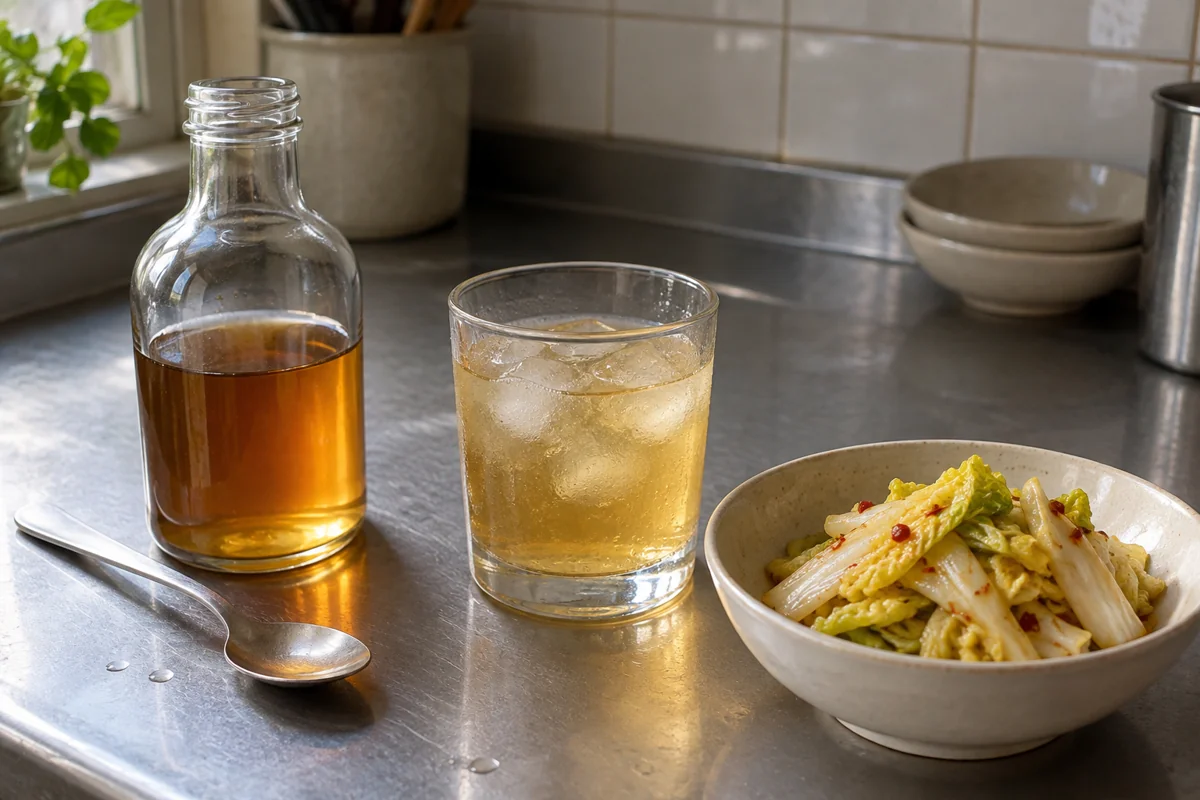
This article covers culinary use of a finished food product, not home preservation or health benefits. Source pages were checked on September 14, 2026. The accompanying image is a conceptual illustration, not a photograph of a meal or product that SEOULIAN prepared or tested.
THE SEOULIAN SIGNAL · EDITORIAL INTERPRETATION
Why this matters
Read 매실청 as an ingredient with more than one use: first check the bottle's directions, then choose a drink or an existing savory recipe.
SOURCE DESK · RESEARCH RECORDS
Research used for this analysis
- Iced Green Plum Tea (Maesillaengcha), October 19, 2023; checked September 14, 2026 Korea Tourism Organization · Public-authority food reference corroborating plum-and-sugar preparation and its use in iced water. Harvest timing and health assertions are not adopted; no recipe, wording or photograph reproduced.
- Baechu Geotjeori (Fresh Kimchi), June 1, 2015; updated January 30, 2025; checked September 14, 2026 Korean Bapsang · Hyosun · Separately authored practical example: optional maesil-cheong supplies fruity sweetness in a fresh napa-cabbage kimchi. No recipe quantities, method, text, video or images reproduced; no claim of national household prevalence.
Original synthesis & image rights
Original SEOULIAN synthesis of Korea Tourism Organization food information and Hyosun's independently authored Korean Bapsang cooking reference. No source expression, recipe steps or quantities, photographs, video, testimonials or commercial imagery reproduced. Optional tasting and shopping prompts are editorial suggestions, not tested recipes or medical advice. A unique built-in Imagegen cover is explicitly conceptual and non-documentary; no sponsorship or product test is claimed. Targets and reported usage remain attributed to the city and are not presented as independently verified outcomes.
Image disclosure
Credit: AI-generated editorial illustration; not documentary evidence. A fictional ingredient still life, not a photograph of a product or recipe tested by SEOULIAN.
Creator: SEOULIAN with ChatGPT Image Generation
Source type: SEOULIAN imagegen editorial photo
Disclosure: AI-generated editorial illustration; not documentary evidence. A fictional ingredient still life, not a photograph of a product or recipe tested by SEOULIAN.
License: Original SEOULIAN AI-generated editorial image