VERIFIED CONTEXT · A name for more than a rainbow
A band of bright colors is easy to notice and easy to flatten into decoration. Saekdong gives the English-speaking reader a more specific starting point: a Korean multicolored stripe pattern with uses that extend beyond the sleeve of a child's jacket. The interesting question is not simply which colors appear, but what the cloth is doing.
The Korea Saekdong Museum describes saekdong clothing in first-birthday and holiday contexts, alongside uses in pouches, wrapping cloths and bedding. Those examples are documented contexts, not instructions that every Korean family follows or a rule that every striped textile should be called saekdong.
VERIFIED OBJECT · A length of fabric, not a finished outfit
Saint Louis Art Museum catalogs an object titled Length of Fabric with Design of Square Compartments. It identifies the material as silk (saekdong), places its making in South Korea, and dates it to the late 1950s–early 1960s. At our check, the record marked it not on view.
That entry changes the scale of the discussion. The cataloged object is a length of fabric, rather than a complete garment that fixes one occasion or wearer. SEOULIAN's interpretation is that naming the object matters as much as naming its colors: cloth, sleeve, pouch and bedding invite different questions about function. This one record is not evidence that all saekdong is silk or made in that period.
SEOULIAN INTERPRETATION · Follow the use, not one color formula
For a child's celebration garment, you might ask how the bands sit beside the rest of the clothing. For a pouch, you might ask where the colors appear when it is held or closed. For a textile length, you might ask what the catalog tells you before imagining a finished object. These are looking questions, not findings about an object we have handled.
Avoid treating a palette as an automatic dictionary of meaning. This guide does not assign a fixed message to each hue, require a particular sequence, or give the pattern one unchanging origin story. An object's label, maker's account and documented use are more useful than an interpretation based only on a colorful photograph.
BEFORE A PURCHASE · Separate appearance from the claim
If you encounter a contemporary item described as saekdong-inspired, ask the seller what that description refers to: the color arrangement, the construction, the intended use, or a specific tradition. Ask separately about fiber content and care. A familiar-looking pattern does not establish that an item is silk, handmade, antique or connected to a museum.
Our suggested comparison is not a ranking of authenticity. Keep the evidence attached to the claim: a material label for the material, a maker's description for the design, and reliable documentation for a historical attribution. We are not recommending a particular shop, validating a seller's provenance or providing textile-conservation instructions.
START WITH THE RECORDS · Two useful kinds of evidence
The Seoul specialist museum's explanation supplies a range of uses; the Saint Louis collection record supplies a particular object, material and date. Read them together without making either stand for every Korean textile. You can begin online, even when a museum object is not physically on display.
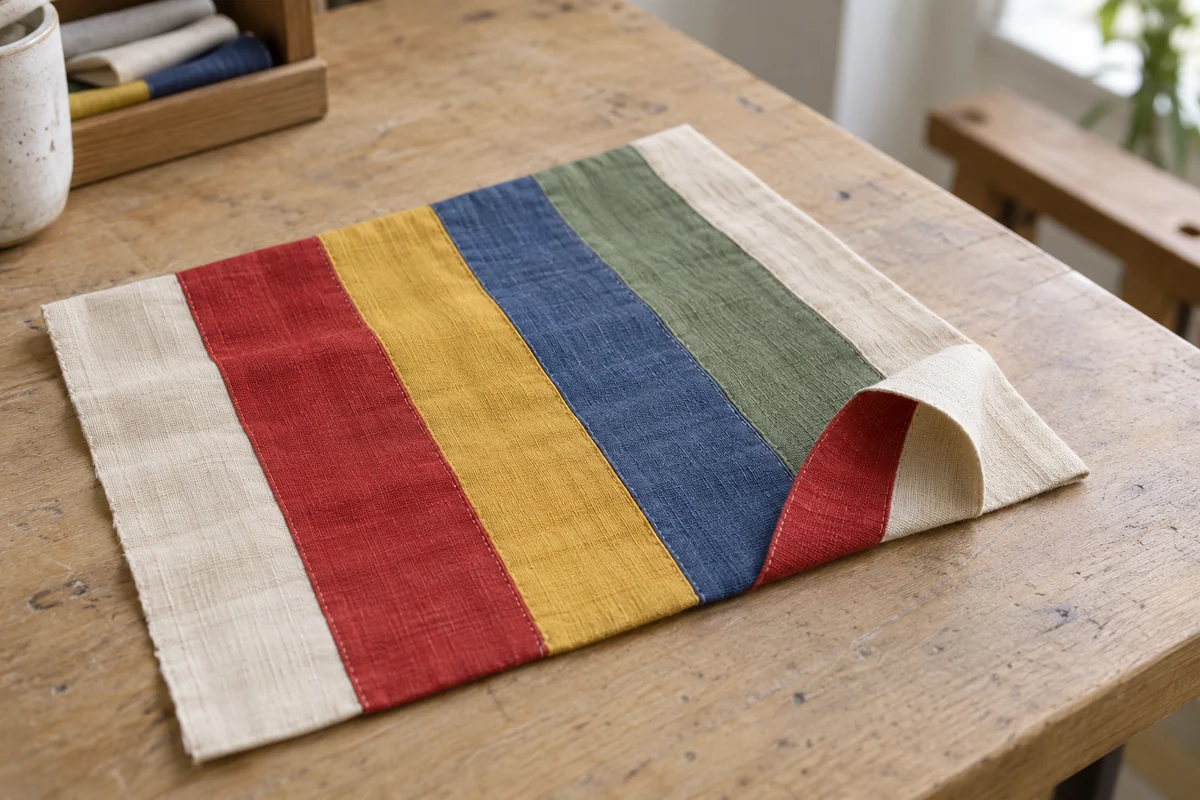
Fact check: October 3, 2026, Los Angeles time. This is an independently written introduction based on two separate museum institutions. It is not a review of a current exhibition, a promise about opening hours or an appraisal. No collection photograph, source passage or historical garment has been reproduced. The cover shows an invented contemporary teaching sample, not the cataloged object.
THE SEOULIAN SIGNAL · EDITORIAL INTERPRETATION
Why this matters
Ask what the colored cloth became. The pattern alone does not tell you an object's material, date, maker or occasion.
SOURCE DESK · RESEARCH RECORDS
Research used for this analysis
- Length of Fabric with Design of Square Compartments · object 350:2023 Saint Louis Art Museum · Primary collection record: Korean standalone fabric length, late 1950s–early 1960s, South Korea, silk (saekdong), not on view at checking. No object photograph reused.
- 한국의 색동 · institutional explanation Korea Saekdong Museum · Independent specialist museum's description of stripe pattern and uses in first-birthday/holiday clothing, pouches, wrapping cloths and bedding. Origin, philosophical and popularity assertions not adopted; no images or prose reused.
Original synthesis & image rights
Original English synthesis and clearly labeled editorial guidance by SEOULIAN. Institutional descriptions and published reporting are used for factual checking only; no source sentences, images, maps, designs or promotional artwork are reproduced. The unique AI cover is illustrative, not documentary evidence, an endorsement or a verified historical object. Targets and reported usage remain attributed to the city and are not presented as independently verified outcomes.
Image disclosure
Credit: SEOULIAN · Created with ChatGPT Image Generation.
Creator: SEOULIAN with ChatGPT Image Generation
Source type: SEOULIAN imagegen editorial photo
Disclosure: AI-generated editorial illustration; not documentary evidence. Invented contemporary teaching sample, not a historical garment, collection photograph or material-authenticity guarantee. SEOULIAN · Created with ChatGPT Image Generation.
License: Original SEOULIAN AI-generated editorial image