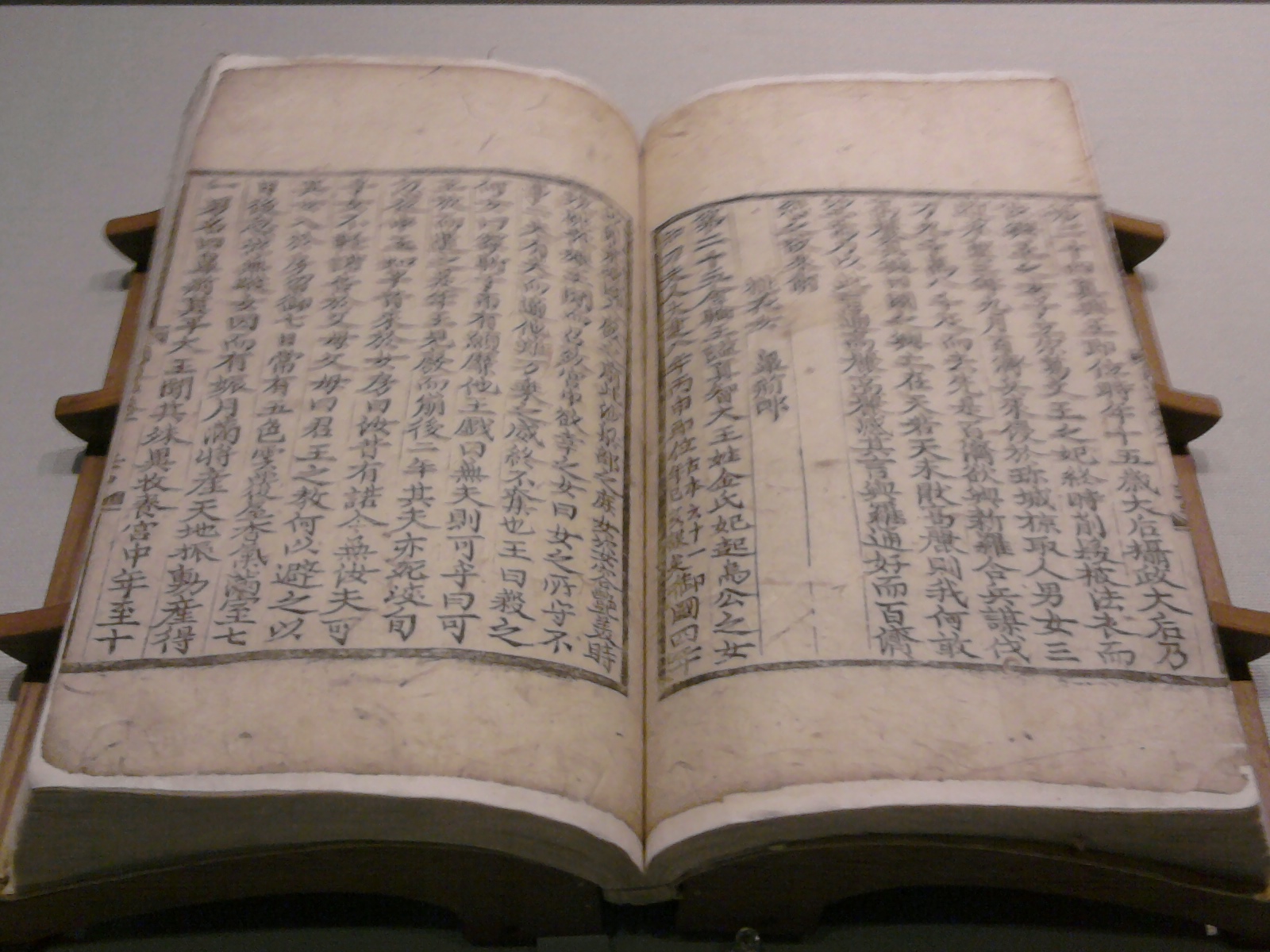
Samguk yusa (Korean: 삼국유사; Hanja: 三國遺事; lit. 'Memorabilia of the Three Kingdoms') Korean pronunciation: [sʰam.ɡuk̚.ju.sa]) is a collection of legends, folktales, and historical accounts relating to the Three Kingdoms of Korea (Goguryeo, Baekje, and Silla), as well as to other periods and states before, during, and after the Three Kingdoms period. It was compiled by the Buddhist monk Il-yeon in the late Goryeo dynasty, around 1280, and was originally written in Classical Chinese. It is the earliest extant record of the Dangun legend, which records the founding of Gojoseon as the first Korean nation. Samguk yusa is National Treasure No. 306. Samguk yusa is a history record composed of five volumes divided into nine parts. It documents various tales and legends which are categorized into two parts: historical events and Buddhist narratives. The text contains various historical narratives such as tales of the Three Kingdoms period, myths, legends, genealogies, histories, and Buddhist tales, which have helped maintain folklore from medieval Korea. "Yusa" is a term used to describe a text that is supplementary to an earlier work. Samguk yusa is intended to provide additional information to texts such as the Samguk sagi. The beginning of Samguk yusa describes Dangun Wanggeom, a mythological ancestor of all Koreans, founding the first nation of Korea, named Gojoseon. The text also contains several well-known tales such as "Choshin's Dream" and "Lady Suro".
Read the fixed source
Follow the exact revision used for this summary, or open its history to see the contributors and later changes.
Text source & license
Adapted and shortened by SEOULIAN from the linked fixed revision; no change in factual meaning is intended. Source: Wikipedia contributors. This adapted summary is shared under CC BY-SA 4.0.
Image attribution
Title: Memorabilia of the Three Kingdoms in museum
Author: Salamander724
Source: Wikimedia Commons
License: Public domain
Wikimedia thumbnail downloaded and displayed without editorial alteration.