LOOK AGAIN · The word greens can hide the cooking
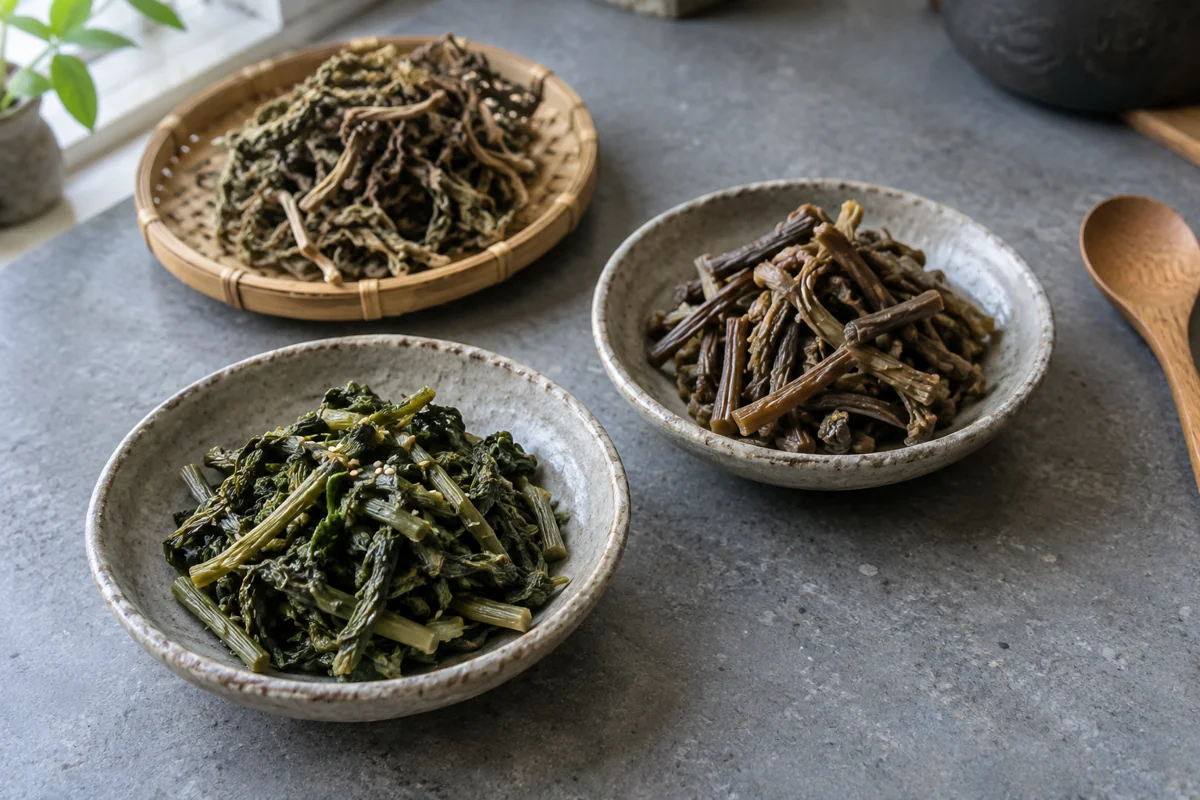
A menu promising mountain vegetables may suggest a bowl of newly picked leaves. At the table, however, a dark leafy mound or a dish of brown stems can be just as important to understanding the meal. The color is not the whole story. Ask what the ingredient is and what happened to it before it reached the plate.
Sanchae, written 산채, means mountain vegetables. Korea Tourism Organization places the term within the broader world of namul and highlights Pyeongchang in Gangwon as a place to explore it. That is a useful regional starting point, not proof that every item on a particular menu was gathered nearby.
VERIFIED CONTEXT · Ingredient and preparation are different questions
A 2020 review in the Journal of Ethnic Foods, by researchers affiliated with the Korea Food Research Institute and Jeonbuk University, explains that namul can name both edible plant ingredients and the seasoned dishes made from them. Its discussion includes leaves, roots, stalks and sprouts, rather than only leafy greens.
The paper distinguishes raw, seasoned preparations from cooked ones. It also describes vegetables dried for storage, then soaked and cooked for the table. KTO's Pyeongchang food guide independently describes drying mountain vegetables for use when fresh greens are harder to obtain.
These descriptions suggest a more useful question than simply asking whether a dish is fresh: was this prepared from a fresh ingredient or a dried one? The finished plate alone may not tell you. This is a guide to asking about food served by a kitchen, not to identifying or gathering wild plants.
READ THE MENU · One bowl or a wider meal?
Sanchae bibimbap (산채비빔밥) brings mountain vegetables together with rice. KTO's dish entry names aster leaves, bracken, bellflower root and deodeok among its examples, with red chili paste for mixing. Treat that list as an introduction, not a checklist that every restaurant must satisfy.
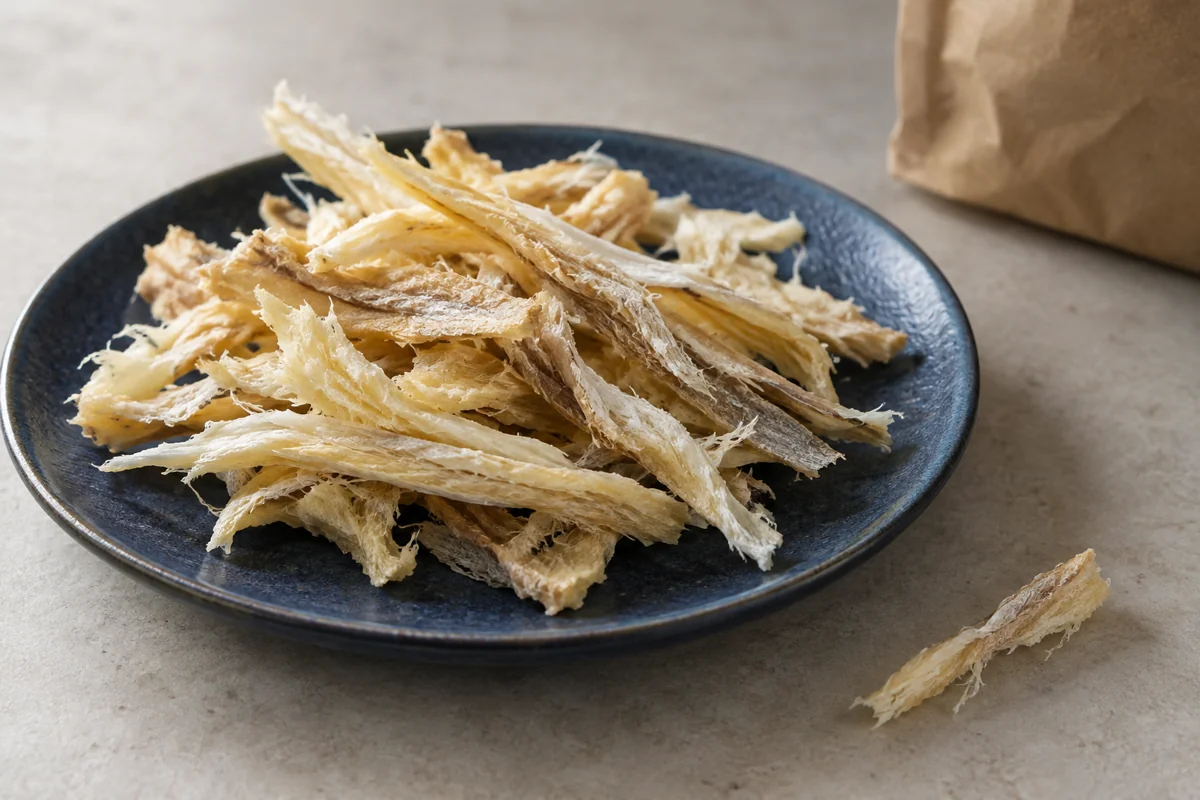
Sanchae jeongsik (산채정식) names a set meal. KTO's regional guide describes a broader selection of vegetable dishes and notes that some versions come with other foods, including grilled dried pollack. A vegetable-centered name therefore does not establish the contents of the whole order.
SEOULIAN's practical suggestion: before ordering, ask whether you are choosing a single rice bowl or a set, what comes with it, and which items cost extra. If you want to learn the vegetables' names, ask which dishes the kitchen can identify for you. A long row of plates is less useful as a memory than one ingredient you can recognize on the next menu.
AT THE TABLE · Notice the preparation, not just the palette
The scholarly review describes seasonings including soy sauce, soybean paste, red pepper paste and sesame or perilla oil. Different preparations can start with the same vegetable. Do not assume that two similar-looking portions will be seasoned alike, or that every green dish will taste mild.
Our suggested comparison is about texture rather than a prescribed eating order. Notice whether you are eating a leaf, a root or a stem; then ask whether the kitchen began with a dried ingredient. You might remember a pliable stem more clearly than the plate's overall color. There is no correct tasting sequence to perform.
Keep questions about ingredients separate from questions about style. If you need to avoid a food, explain that to the kitchen and ask about seasonings and accompaniments as well as the main vegetables. This article does not certify dietary suitability or offer a universal recipe.
TAKE IT WITH YOU · A small vocabulary, not a restaurant ranking
Save the Korean menu terms with your trip notes. The linked KTO guide offers Pyeongchang context, while the dish entry gives a compact example of sanchae bibimbap. Use them to decide what you want to ask, then check the current menu and price with the actual operator. We make no claim about today's availability at a named restaurant.
Sources were checked on September 18, 2026 (UTC). The cover is a conceptual AI illustration, not a record of a meal or a reliable way to identify a plant. The useful takeaway is a distinction: mountain vegetables describe an ingredient world; drying, cooking and seasoning help explain the food in front of you.
THE SEOULIAN SIGNAL · EDITORIAL INTERPRETATION
Why this matters
SEOULIAN interpretation: the most useful distinction at a sanchae table is not green versus brown, but which plant, which preparation and which meal format.
SOURCE DESK · RESEARCH RECORDS
Research used for this analysis
- Wild Vegetable Bibimbap (산채비빔밥 / Sanchaebibimbap) · October 19, 2023 Korea Tourism Organization · Official dish description for rice, example vegetables and red chili paste. No universal recipe, health claim or source image adopted.
- K-LOCAL FOOD TRIP 33 · Wild Vegetables, pages 104–105 Korea Tourism Organization · Official regional food context for sanchae, Pyeongchang, bibimbap versus jeongsik and dried vegetables. No travel times, current restaurant prices, foraging advice or health claims adopted. Same institutional lineage as the dish entry, not an additional independent institution.
- Namul, the driving force behind health and high vegetable consumption in Korea · May 14, 2020 Soon-Hee Kim, Dae Young Kwon and Donghwa Shin · Journal of Ethnic Foods · Independently authored scholarly review used only for food terminology, raw/cooked/dried distinctions and seasoning. Authors affiliated with Korea Food Research Institute and Jeonbuk University. No health, longevity, political or religious claims, figures or source prose reproduced.
Original synthesis & image rights
Original SEOULIAN English synthesis of linked factual sources, not a translation or adaptation of their prose. Editorial suggestions are identified separately. No source photographs, recipe instructions or figures are reproduced. The unique built-in Imagegen cover is an invented editorial illustration, not documentary evidence, a plant-identification guide or a documented restaurant meal. Targets and reported usage remain attributed to the city and are not presented as independently verified outcomes.
Image disclosure
Credit: SEOULIAN · Created with ChatGPT Image Generation.
Creator: SEOULIAN with ChatGPT Image Generation
Source type: SEOULIAN imagegen editorial photo
Disclosure: AI-generated editorial illustration; not documentary evidence. Invented dried-and-cooked vegetable arrangement, not a documented meal, recipe, botanical identification or named restaurant.
License: Original SEOULIAN AI-generated editorial image