VERIFIED FACT · It is an umbrella season
Seoul Autumn Festa 2026 runs from September 18 through November 29 across indoor and outdoor venues around the city. Seoul Foundation for Arts and Culture, the organizer, presents it as a common platform for performing-arts festivals and productions rather than a single gated event at one address.
Current organizer materials describe 38 festivals, 478 performances, 245 participating works and 558 individual program entries. Those numbers use different counting units, so they should not be added together. The useful conclusion is simpler: the Festa is a long season with many separately scheduled choices, not one itinerary that a visitor is expected to complete.
THE FIRST FILTER · Choose a date before a title
Start with the evening or afternoon you can actually protect. A 73-day season is easier to navigate when the calendar removes most of the list for you. Then choose a district you can reach without turning the performance into a race across Seoul. A compelling title is not useful if its venue, start time or return journey makes the night fragile.
The opening performance is scheduled for September 18 at 7:30 PM at Ttukseom Hangang Park, according to the organizer and an independent report. It is one visible entry point, not the definition of the whole season. Visitors arriving later still have weeks of theater, dance, music and interdisciplinary work to explore.
THE SECOND FILTER · Decide what kind of attention you want
Choose the form after the date: a seated production, an outdoor encounter, a concert-length commitment or a shorter discovery. This is a better question than asking which program is objectively best. The right choice depends on whether you want to follow language, movement, sound, visual rhythm or the social energy of a public space.
For an English-speaking visitor, language access is a separate filter. The presence of an English festival overview does not establish that every participating production offers English surtitles, interpretation or an English ticket flow. Confirm the individual production's language, running time, age guidance, accessibility details and booking channel before paying or traveling.
THE HUMAN SHORTCUT · Use the Daehakro desk
Visit Seoul currently lists an integrated Festa information space on the first floor of the Seoul Foundation for Arts and Culture Daehakro Center at 122 Dongsung-gil. Its visitor page gives an operating period of September 1 through November 29 and says it closes on Mondays and public holidays. The page also describes an on-site preference kiosk and participation activities.
Use the desk as a discovery stop, not as proof that every ticket is sold there. Bring three facts: your available date, preferred district or travel radius, and whether you need a performance that can be followed without Korean. Ask for current options, then verify the final venue and purchase conditions on the production's own live page. Event details can change after this September 4 fact check.
A FOUR-CHECK BOOKING CARD · Date, place, form, access
Before booking, write four lines in your notes app: DATE, PLACE, FORM and ACCESS. Under ACCESS, record language support, step-free information if needed, ticket source and the latest cancellation rule. Under PLACE, record the exact venue rather than only the district. This small card prevents a citywide program from becoming a citywide guessing game.
Prices and operating hours vary by performance, according to Visit Seoul. Do not treat the Festa as one universal pass, one timetable or one admission policy. If a listing is incomplete, contact the organizer at the current number published by both SFAC and Visit Seoul, +82-2-758-2037, or wait for a clearer update rather than filling the gap with an assumption.
SEOULIAN INTERPRETATION · The innovation is navigation
The most promising part of Seoul Autumn Festa is not the size of its program. Seoul has long had many independent stages; the new value is a shared season that can help an unfamiliar audience find one door. The information center, combined calendar and preference tools matter because they reduce the social risk of choosing something you do not already know.
That is also a generous way to visit a cultural city. Instead of collecting events as proof of having seen Seoul, choose one work, arrive with time, and let the evening continue in the neighborhood around it. A single well-chosen performance can make a large festival feel personal without demanding that the visitor master the entire system.
THE SEOULIAN SIGNAL · EDITORIAL INTERPRETATION
Why this matters
Treat Seoul Autumn Festa as a search layer, not one destination. Filter first by your fixed date, then travel radius, art form and confirmed language or accessibility needs; verify the individual production page before booking.
SOURCE DESK · RESEARCH RECORDS
Research used for this analysis
- 2026 Seoul Autumn Festa Seoul Foundation for Arts and Culture · Primary organizer source for the September 18 to November 29 dates, 73-day duration, citywide scope, platform purpose, opening performance and official contact.
- 2026 Seoul Autumn Festa Visit Seoul · Official English visitor source for variable performance hours and fees, Daehakro information-center address and operating period, closure days, preference kiosk and participation activities.
- 2026 Seoul Autumn Festa: A 73-Day Performing-Arts Season Seoul Foundation for Arts and Culture Magazine · Official detailed program source for the separate counts of festivals, performances, participating works and individual program entries, plus the opening schedule and integrated information-center concept.
- Seoul Turns Citywide Stage for 558-Program Autumn Arts Festival Seoul Economic Daily · Independent report used to cross-check the festival dates, opening time and venue, and the separate scale figures for festivals, performances, works and detailed program entries.
Original synthesis & image rights
SEOULIAN independently synthesized and checked the festival dates, organizer, citywide scope and platform purpose against Seoul Foundation for Arts and Culture; the distinct program-counting units against the Foundation's own magazine; visitor-facing operating details for the Daehakro information center against Visit Seoul; and the program scale, opening date and opening venue against an independent Seoul Economic Daily report. The article keeps the organizer's distinct counting units separate and does not imply that every program has English support. No source wording, performance text, choreography, music, poster, ticket, venue photograph, artist likeness, logo or third-party visual is reproduced. The cover is an original generic AI-generated editorial illustration made with built-in ChatGPT Image Generation and recorded with its source PNG, optimized WebP, prompts, hashes and visible disclosure. Targets and reported usage remain attributed to the city and are not presented as independently verified outcomes.
Image disclosure
Credit: SEOULIAN · Created with ChatGPT Image Generation
Creator: SEOULIAN with ChatGPT Image Generation
Source type: SEOULIAN imagegen editorial photo
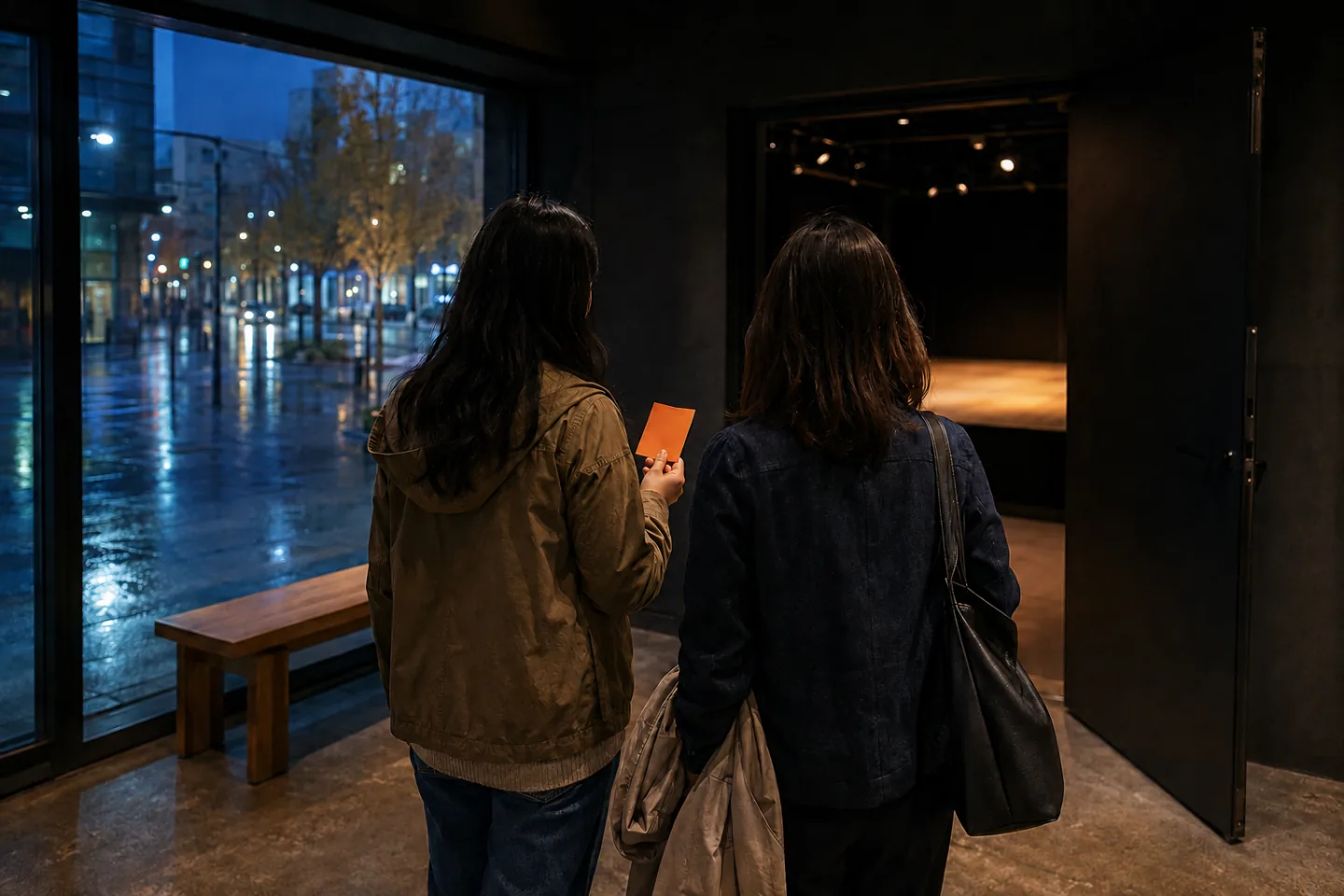
Disclosure: AI-generated editorial illustration; not documentary evidence of Seoul Autumn Festa 2026, any participating performance, theater, ticket, visitor, schedule, accessibility service or venue condition.
License: Original SEOULIAN AI-generated editorial image