A park with an industrial memory
At Oil Tank Culture Park in Seoul’s Mapo district, the useful question is not simply what an old tank has become. Ask how much of the old structure remains visible. That shifts a visit from collecting architectural photographs to reading the choices behind a public place.
The Seoul Metropolitan Government describes different treatments of the former tanks. T3 preserves a tank, while T6 is a newer building that incorporates steel from T1 and T2. Those are not interchangeable forms of reuse: keeping an object intact and moving its material into another building tell different stories.
Three ways to look
SEOULIAN’s suggested approach is to compare a preserved shell, a converted space and a newer structure. Look at the relationship between wall, roof and opening. A window or entrance can change how a once-enclosed volume meets the outside without erasing every trace of its earlier purpose.
You do not need to identify every engineering detail. Choose one feature you can describe without a label—an edge, a curve or the way light enters—and then read the site’s interpretation. Separating what you noticed from what you learned makes the visit more attentive, especially if architectural vocabulary is unfamiliar.
Plan for rooms, not just the grounds
The tourism listing distinguishes access to the grounds from the hours of indoor facilities. An open park is therefore not a promise that an exhibition, café or tank interior is available. Check the park’s current notices before building a visit around a specific room or program.
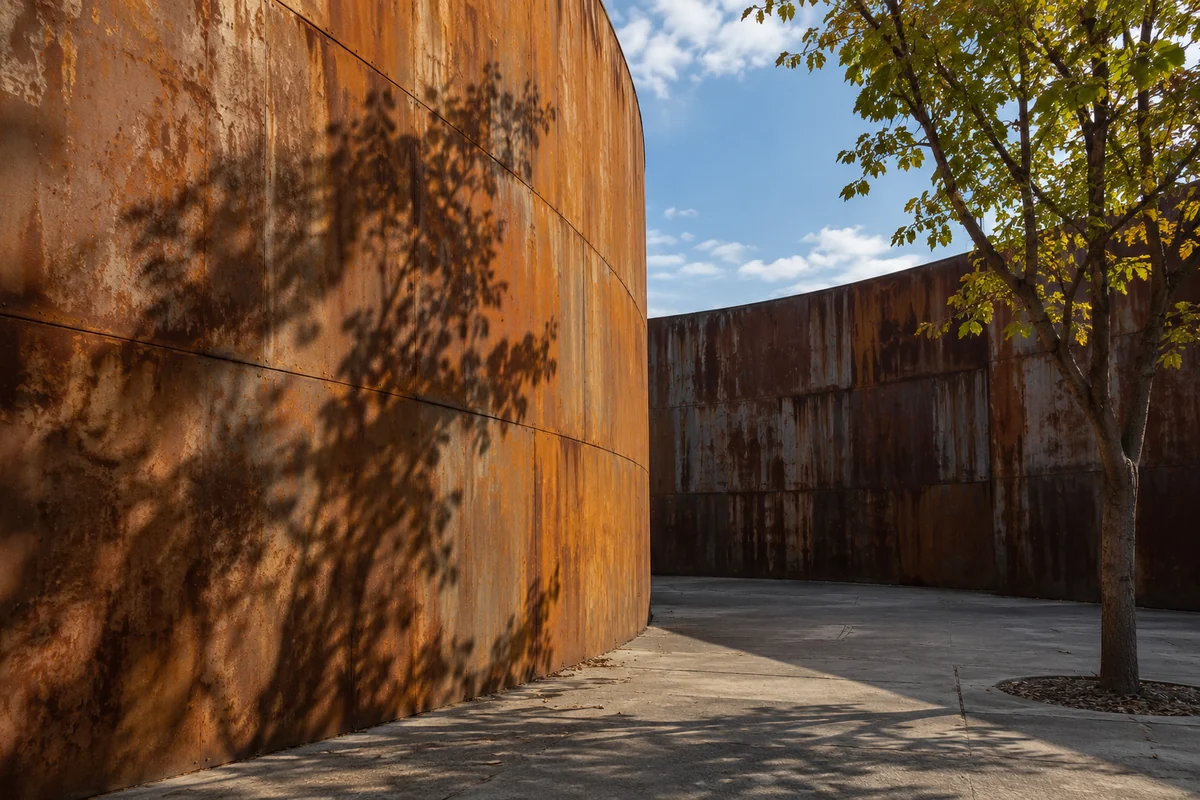
This is a good choice for readers interested in how a city reuses infrastructure, rather than those expecting a conventional museum with every object on display. Let the landscape form part of the visit, but make access decisions from current signs and staff guidance. The conceptual cover accompanies that idea; it does not document the site’s construction or present condition.
THE SEOULIAN SIGNAL · EDITORIAL INTERPRETATION
Why this matters
SEOULIAN editorial reading: Reading industrial reuse in Mapo. This is a practical interpretive angle, not a popularity claim.
SOURCE DESK · RESEARCH RECORDS
Research used for this analysis
- Oil Tank Culture Park introduction Seoul Metropolitan Government · Transformation of tank spaces and reused steel
- Oil Tank Culture Park visitor listing Korea Tourism Organization · Park location and distinction between grounds and indoor facilities
Original synthesis & image rights
Original English synthesis by SEOULIAN from independently checked factual sources. No source prose, third-party photographs, artwork or recordings reproduced. Targets and reported usage remain attributed to the city and are not presented as independently verified outcomes.
Image disclosure
Credit: SEOULIAN · Created with ChatGPT Image Generation.
Creator: SEOULIAN with ChatGPT Image Generation
Source type: SEOULIAN imagegen editorial photo
Disclosure: AI-generated editorial illustration; not documentary evidence. An imagined steel-and-landscape detail, not a photograph of Oil Tank Culture Park. SEOULIAN · Created with ChatGPT Image Generation.
License: Original SEOULIAN AI-generated editorial image