Look at what connects the wrestlers
A first encounter with ssireum can become a blur if you wait only for someone to fall. Give your eyes a smaller job: find the cloth belt. Called a satba, it wraps around the waist and one thigh, and the wrestlers hold one another's belts. It is part of the contest, not simply a costume detail.
The Korea Tourism Organization describes official ssireum as a contest on sand, combining strength with technique. Its 2026 Chuseok guide also includes the sport among the holiday's traditional cultural activities. That offers a timely reason to become familiar with it, without assuming a match will take place at every festival or museum.
Know the basic question, not every rule
Which wrestler can bring the other's body above the knee to the ground first? That is the basic winning condition explained both in Korea Foundation's Koreana and in KOREA magazine's January 2023 interview with wrestler Kim Minjae. It gives a newcomer something concrete to follow.
This is an introduction to watching, not a competition rulebook. Round length, match format, weight categories and disputed decisions need the rules of the particular event. A short explanation cannot tell you how an official will resolve every exchange, so leave the final call to the referee.
Watch a change of balance
In that 2023 interview, Kim describes a sport involving strategy and psychology as well as strength. He also discusses counters: initiating an attack does not guarantee winning the exchange. Those are an athlete's observations, not a promise about any upcoming bout.
SEOULIAN's viewing suggestion is to follow one wrestler for a complete exchange. Notice where the feet are, whether the torso turns, and when the opponent has to adjust. You do not have to name the technique. On a replay, ask one question: what changed immediately before the fall? On the next viewing, follow the other wrestler. This is a way to direct attention, not instruction for attempting a throw.
The people around the sand matter too
Koreana's account places ssireum within a long tradition of communal holiday gatherings, with people taking part as competitors or spectators. It also discusses Kim Hong-do's eighteenth-century painting of a wrestling match, where the surrounding audience helps tell the story. The article is linked below; we have not reproduced the artwork.
Our interpretation is that watching belongs inside the cultural experience. A newcomer need not arrive with a favorite athlete or a vocabulary of techniques. Following the contest with another person, then comparing what each of you noticed, can be a satisfying first step.
A simple plan for your first viewing
Choose a complete bout from an organizer or authorized broadcaster when one is available, rather than starting with an isolated dramatic finish. First identify the two competitors. Next follow the belts and feet through the same exchange. Finally, check the result against the referee's decision. Pause or replay if the service allows it; speed is not a test you have to pass.
For an in-person outing, check a current organizer page for the exact venue, session, admission cost and spectator access. Watching a demonstration, entering a competition and joining a supervised introductory class are different activities. Do not infer permission to participate from an open spectator event. This guide confirms no particular booking, free admission, broadcast availability or drop-in class.
What we checked
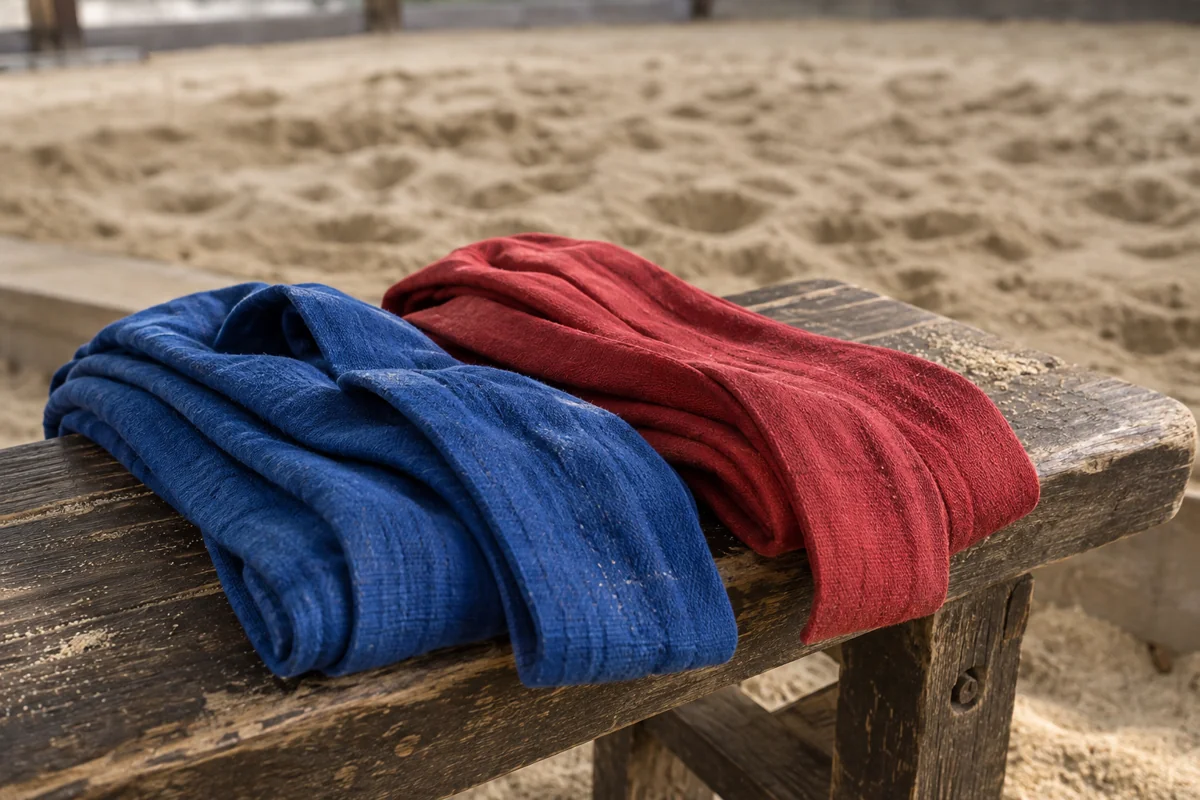
Sources were reviewed on September 18, 2026. We compared the tourism authority's heritage and current holiday guidance, a first-person athlete interview published by KOREA magazine, and Korea Foundation's separately authored cultural essay. Older sources are identified by their dates and used for basic context, not a current tournament schedule. The cover is an imagined arrangement of cloth sashes, not a photograph of an athlete's equipment or an actual practice session.
THE SEOULIAN SIGNAL · EDITORIAL INTERPRETATION
Why this matters
SEOULIAN perspective: follow the connection between the wrestlers before looking for a spectacular finish. The belt makes a useful visual anchor when names and commentary are unfamiliar.
SOURCE DESK · RESEARCH RECORDS
Research used for this analysis
- Intangible Cultural Heritage of Humanity List — Ssireum Korea Tourism Organization · Satba, sand and traditional holiday context; association-attributed heritage information, not a 2026 competition schedule.
- K-sports: Ssireum Wrestler Kim Minjae — January 2023 KOREA magazine / KOCIS · First-person athlete explanation of satba, basic winning condition, strategy and counters; dated interview, not current team or rules reporting.
- Ssireum Becomes UNESCO Heritage of Humanity — Summer 2019, Park Hong-soon Korea Foundation / Koreana · Independent authored cultural account: corroborates basic contest and communal spectatorship; painting discussed but not reproduced. Political and religious portions not used.
- 2026 Chuseok Holiday Travel Guide Korea Tourism Organization · Current cultural relevance: ssireum included in the holiday traditions overview. No specific match or bookable class inferred; same publisher as the first source, counted once.
Original synthesis & image rights
Original English synthesis by SEOULIAN, based on the linked sources and independently written viewing suggestions. Source wording, athlete photographs, competition footage and artwork are not reproduced. AI-generated editorial illustration; not documentary evidence. Fact-checked September 18, 2026. Targets and reported usage remain attributed to the city and are not presented as independently verified outcomes.
Image disclosure
Credit: SEOULIAN · Created with ChatGPT Image Generation.
Creator: SEOULIAN with ChatGPT Image Generation
Source type: SEOULIAN imagegen editorial photo
Disclosure: AI-generated editorial illustration; not documentary evidence. Imagined cloth sashes beside sand, not equipment photographed at an actual practice session or event.
License: Original SEOULIAN AI-generated editorial image