The shape explains the name on the menu
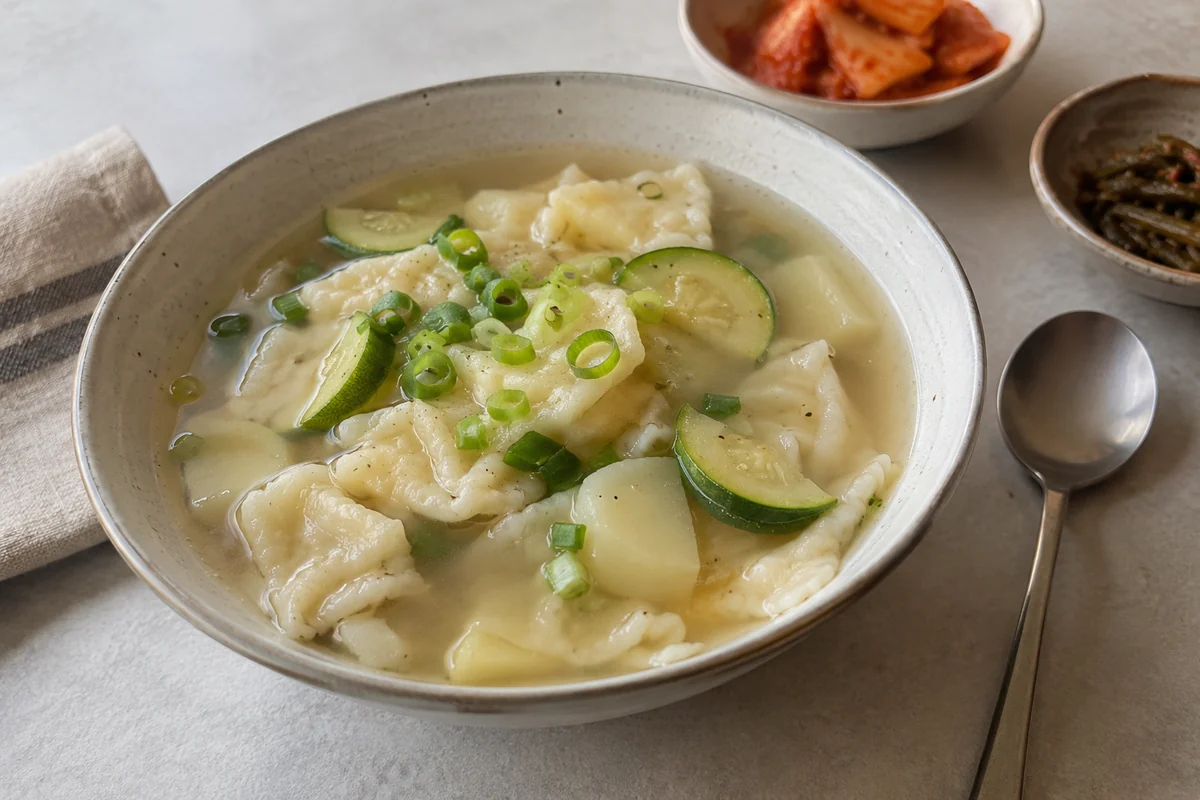
Sujebi is a soup in which pieces of flour dough are torn by hand and cooked in liquid. Korea.net’s recipe account describes that technique, while the tourism organization’s kaljebi entry distinguishes the torn pieces from knife-cut noodles. The important feature is the dough itself, not a hidden filling.
That gives an English-speaking diner a better starting point than the broad translation dumpling soup. A filled dumpling asks you to distinguish wrapper from contents. With sujebi, the irregular sheet of dough is the thing you are eating, and its thickness is part of the experience.
The broth is a separate decision
Korea.net documents a preparation using anchovy stock with vegetables including potato and zucchini. That is a useful example, not a rule that every restaurant uses exactly those ingredients. The visible dough does not tell you whether the stock contains fish or what other additions the kitchen uses.
SEOULIAN’s ordering advice is to ask two questions separately: what dough format is served, and what is in the broth? A menu combining hand-torn pieces with cut noodles may use the name kaljebi. Knowing that distinction helps when you want one texture or are curious about a mixed bowl.
Notice the pieces, not a perfection standard
A practical way to taste sujebi is to compare a thinner edge with the thicker middle of another piece after it has cooled enough to eat. Irregularity can make the mouthfuls different. That observation does not require claiming that handmade food is always better or that every variation is intentional.
This is a guide to recognizing a dish, not a reproduction of the cited recipe. No ingredient list here guarantees a kitchen’s allergen practices, and no broth description establishes suitability for a particular diet. Use the name to start the conversation, then let the actual serving and the kitchen’s answers supply the details.
THE SEOULIAN SIGNAL · EDITORIAL INTERPRETATION
Why this matters
SEOULIAN editorial reading: Recognizing hand-torn dough soup and its variations. This is a practical interpretive angle, not a popularity claim.
SOURCE DESK · RESEARCH RECORDS
Research used for this analysis
- Kaljebi food guide Korea Tourism Organization · Distinction between knife-cut noodles and hand-torn dough
- Korean recipes: Sujebi Korea.net · Hand-torn flour dough and a documented anchovy-stock preparation
Original synthesis & image rights
Original English synthesis by SEOULIAN from independently checked factual sources. No source prose, third-party photographs, artwork or recordings reproduced. Targets and reported usage remain attributed to the city and are not presented as independently verified outcomes.
Image disclosure
Credit: SEOULIAN · Created with ChatGPT Image Generation.
Creator: SEOULIAN with ChatGPT Image Generation
Source type: SEOULIAN imagegen editorial photo
Disclosure: AI-generated editorial illustration; not documentary evidence. An illustrative home-style sujebi bowl, not a photograph of a cited recipe or restaurant. SEOULIAN · Created with ChatGPT Image Generation.
License: Original SEOULIAN AI-generated editorial image