Not a national ranking: a guide to reading the table
A generous Korean meal can communicate something beyond delicious food: someone made an effort because you were coming. The interesting question is not simply which dish costs most, but what kind of attention it makes visible. A slow braise, carefully cut vegetables and a soup chosen with one person's preferences in mind can each do that differently.
This is SEOULIAN's editorial top ten, not the result of a survey or a claim that all Koreans feel the same way. The numbering is a reading order, not a measured league table. We selected dishes for the ways they can express occasion, preparation, abundance or personal care. Food descriptions and documented occasion links come from the sources below; the interpretations of hospitality are ours. Family habits, regional experience and individual tastes can change the answer completely.
1. Galbijjim · 갈비찜 — the occasion has been made special
Beef short ribs slowly braised with seasoning and vegetables make a substantial centerpiece. Korea Tourism Organization identifies galbijjim as a special-occasion dish and notes the work involved in preparing and cooking it. That gives it a stronger basis for this list than simply being an expensive order.
Our reading: a bowl placed in the middle of the table can feel like the host has upgraded an ordinary evening for you. For a first encounter, ask whether it is the sweet-savory version or a spicy variation. The name alone does not settle that question.
2. Hanwoo gui · 한우구이 — a deliberate treat
Grilled Korean beef offers a different kind of emphasis: the ingredient itself. KTO's Ilpum Hanwoo listing, for example, describes premium Korean-beef cuts offered for grilling. It illustrates the special-ingredient end of the spectrum; it does not establish what every Korean diner prefers.
SEOULIAN would choose this for someone who genuinely enjoys beef, not as a universal test of generosity. A considerate host also asks how the guest likes to eat and makes the meal feel unhurried. Paying more cannot substitute for that attention, and a guest should never feel obliged to match the spending.
3. Bulgogi · 불고기 — a welcome that is easy to join
Bulgogi uses thin slices of marinated beef; KTO describes a preparation with fruit and vegetables in the seasoning. It brings a different texture and serving style from the ribs above, despite both being beef dishes.
Our reason for including it is approachability. For a guest unfamiliar with the table, a host can begin with one small serving and an explanation instead of a challenge to eat something adventurous. Ask about the actual ingredients and seasoning rather than assuming that a familiar dish name guarantees a particular recipe.
4. Japchae · 잡채 — the effort is in the small things
Glass noodles, vegetables and often meat come together in japchae. KOREA magazine explicitly connects the dish with welcoming important guests; KTO also describes the separate preparation of its components. Here the hospitality connection is documented, not merely inferred from appearance.
For SEOULIAN, this is the dish that rewards noticing. Those neat vegetable strips did not arrange themselves. Thanking someone for the preparation can be more meaningful than calling the whole table impressive. A meat-free version may suit some guests, but the host should still check the seasonings and other ingredients.
5. Modumjeon · 모둠전 — one plate, many little attentions
An assortment of pan-fried jeon can combine vegetables, fish or meat in different small pieces. KTO places assorted jeon within holiday food traditions. The variety matters here more than the sheer size of the platter.
Our interpretation is that repeated, small acts of preparation can read as care. For hosting, label or explain the different pieces: two similar-looking bites may contain very different ingredients. Offer a serving utensil and let guests choose. A beautifully varied plate is less welcoming if someone has to guess what is inside it.
6. Bossam · 보쌈 — generosity without a formal script
Bossam pairs boiled pork with kimchi and leafy vegetables. KTO's restaurant description confirms that basic combination. The appeal for this list is the possibility of assembling a bite yourself rather than receiving a completely fixed mouthful.
SEOULIAN's hosting suggestion: keep the accompaniments distinct, demonstrate one possible wrap and then let people find their own balance. There is no need to turn the meal into an examination of technique. For a relaxed gathering, making room for different preferences can feel more generous than elaborate presentation.
7. Jeonbokjuk · 전복죽 — a quieter kind of attention
Abalone porridge brings sliced abalone and rice together in a soft dish. It belongs here as a contrast to the crowded, celebratory table: an individual bowl can make the welcome feel personal.
Our reading is not that porridge automatically signals luxury or that it provides a medical benefit. It is that choosing a less elaborate meal for someone who would actually enjoy it can show good listening. Ask first; shellfish is not suitable for everyone, and a food associated with care in one household may carry different memories in another.
8. Samgyetang · 삼계탕 — a whole dish for one person
A small chicken with glutinous rice, garlic, jujube and ginseng is simmered for samgyetang. Its composition is confirmed by KTO's food entry. The dish makes a useful counterpoint to the shared platters in this selection.
For SEOULIAN, its hospitality potential lies in the feeling of a complete meal set before one guest. Explain that the chicken contains bones and give the person time to eat comfortably. We are discussing the experience of being looked after, not claiming that the soup cures fatigue or improves health.
9. Gujeolpan · 구절판 — welcome as careful composition
Gujeolpan arranges finely cut ingredients around wheat crepes in a nine-part platter. The diner places fillings in a crepe to make a small wrap. That structure, rather than an unverified story about ancient origins, is what interests us here.
Our interpretation: the visible arrangement can make an invitation feel considered before anyone takes a bite. It also gives the host a natural opening to introduce the ingredients. Let guests choose their fillings; explaining the plate kindly is more useful than insisting on a perfect-looking wrap.
10. Sinseollo · 신선로 — the meal becomes a centerpiece
KTO describes sinseollo as a hot pot in which ingredients such as meat, seafood and vegetables cook in broth at the table. The dish is known in English as royal hot pot. Its composed presentation offers a more formal ending to this list.
SEOULIAN includes it for the sense of occasion, not because it is an everyday expectation of Korean hosting. If you encounter it, ask what is in that particular preparation and let the person serving explain the dish. You do not need a ceremonial-looking vessel at home to offer equally thoughtful hospitality.
The best answer may not be on an expensive menu
If you are planning a meal, do not treat these ten dishes as a shopping list for one enormous feast. Choose a centerpiece that your guests will enjoy, add a manageable number of accompaniments, and leave yourself enough time to sit with them. Bought food can be served thoughtfully too.
Ask about preferences and allergies before making decisions. Explain unfamiliar ingredients without making anyone feel awkward for asking, and do not pressure a guest to finish everything. Our editorial conclusion is simple: the most convincing sign of good hosting is that the meal fits the person, not that the person must fit the meal.
Fact-checked September 8, 2026. This is a cultural interpretation and food guide, not restaurant testing, a price comparison or a representative poll. The linked restaurant listings support dish descriptions only; inclusion is not a recommendation or paid placement.
THE SEOULIAN SIGNAL · EDITORIAL INTERPRETATION
Why this matters
SEOULIAN's reading of this table is that visible effort and good listening can carry as much meaning as a premium ingredient. Galbijjim and japchae have documented occasion or guest-welcoming contexts; the other choices broaden the editorial lens rather than claim a national consensus.
SOURCE DESK · RESEARCH RECORDS
Research used for this analysis
- 6 Signature Foods Made for Traditional Korean Holidays Korea Tourism Organization · Galbijjim's special-occasion context, assorted jeon and japchae preparation; checked September 8, 2026. Not a preference poll.
- Japchae, Shared Together for Double the Happiness — June 2018 KOREA magazine / KOCIS · Separate institutional publication explicitly links japchae to welcoming important guests; cross-checks the noodle and vegetable description.
- Ilpum Hanwoo — dish description Korea Tourism Organization · Example of premium Korean-beef grilling cuts; no restaurant rating, current price or hours claim.
- Bulgogi Korea Tourism Organization · Thinly sliced, marinated beef and seasoning description.
- Wonhalmeoni Bossam — dish description Korea Tourism Organization · Bossam's pork, kimchi and leafy-vegetable combination only; not a venue recommendation.
- Abalone Porridge Korea Tourism Organization · Rice and abalone composition; health and seasonal assertions are not adopted.
- Ginseng Chicken Soup Korea Tourism Organization · Samgyetang ingredients and preparation; no health-benefit claim.
- Platter of Nine Delicacies Korea Tourism Organization · Gujeolpan's nine-part arrangement and wheat-crepe serving format; no origin claim.
- Royal Hot Pot Korea Tourism Organization · Sinseollo's ingredients and table-cooked broth format.
Original synthesis & image rights
Original SEOULIAN editorial synthesis of linked factual sources. Hospitality interpretations and the numbered selection are editorial judgments, not survey findings. No source prose, recipes or photographs are reproduced. Built-in ChatGPT Image Generation created the unique conceptual cover; it is not documentary evidence. Targets and reported usage remain attributed to the city and are not presented as independently verified outcomes.
Image disclosure
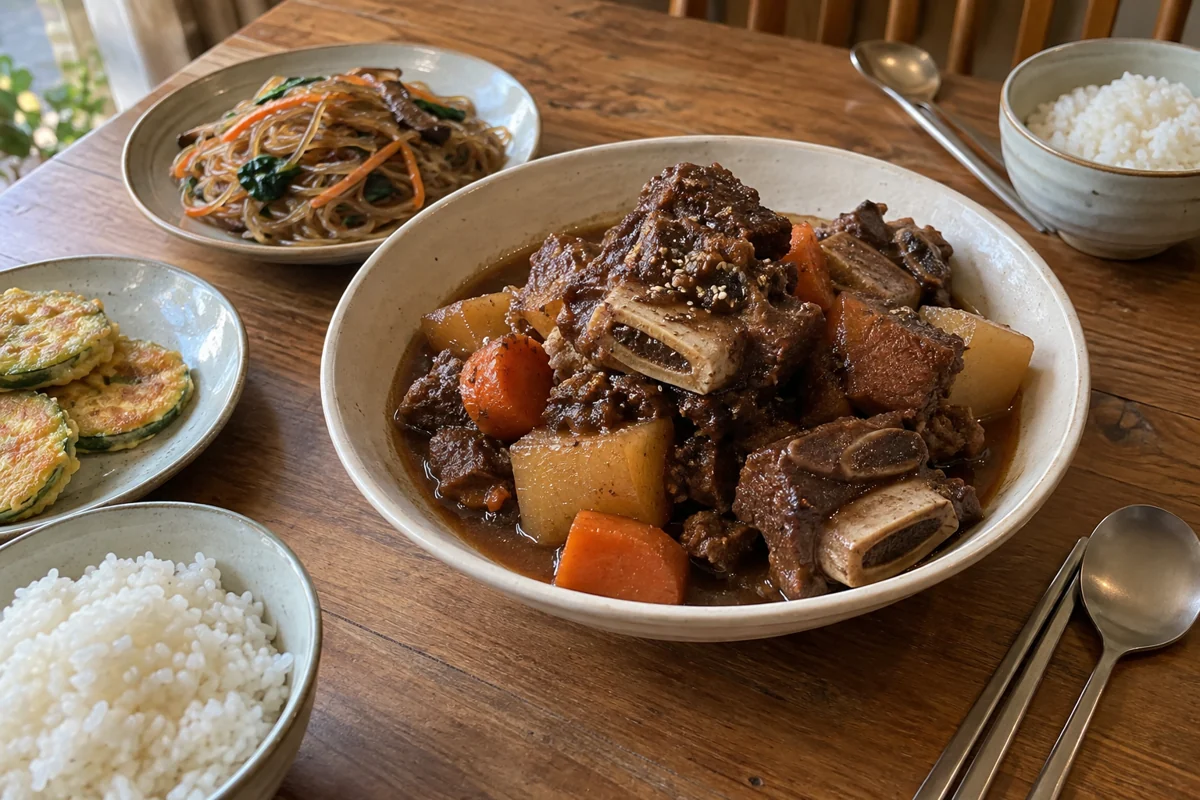
Credit: AI-generated editorial illustration; not documentary evidence. An imagined galbijjim dinner with japchae and jeon, not a real restaurant or surveyed meal.
Creator: SEOULIAN with ChatGPT Image Generation
Source type: SEOULIAN imagegen editorial photo
Disclosure: AI-generated editorial illustration; not documentary evidence. An imagined galbijjim dinner with japchae and jeon, not a real restaurant or surveyed meal.
License: Original SEOULIAN AI-generated editorial image