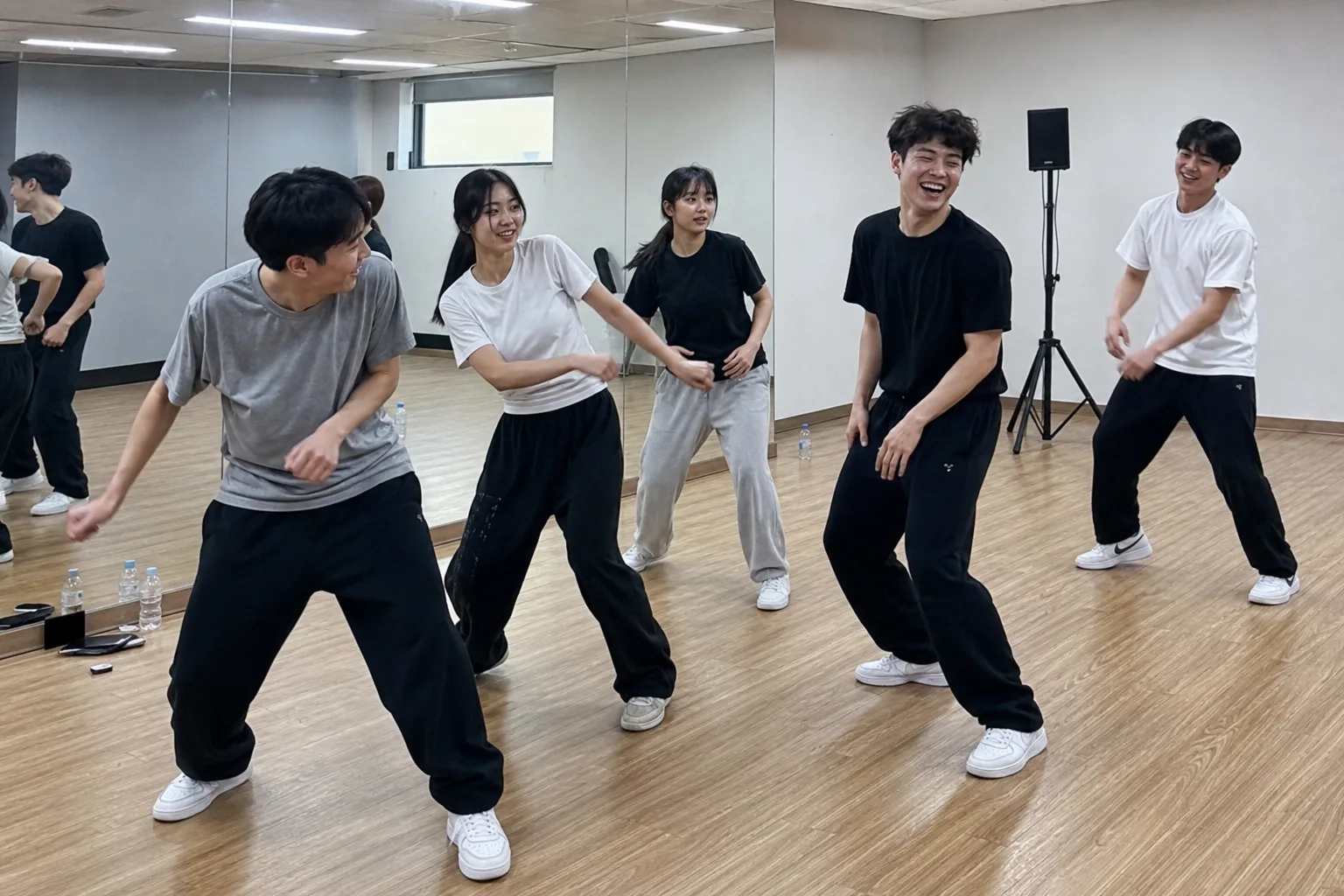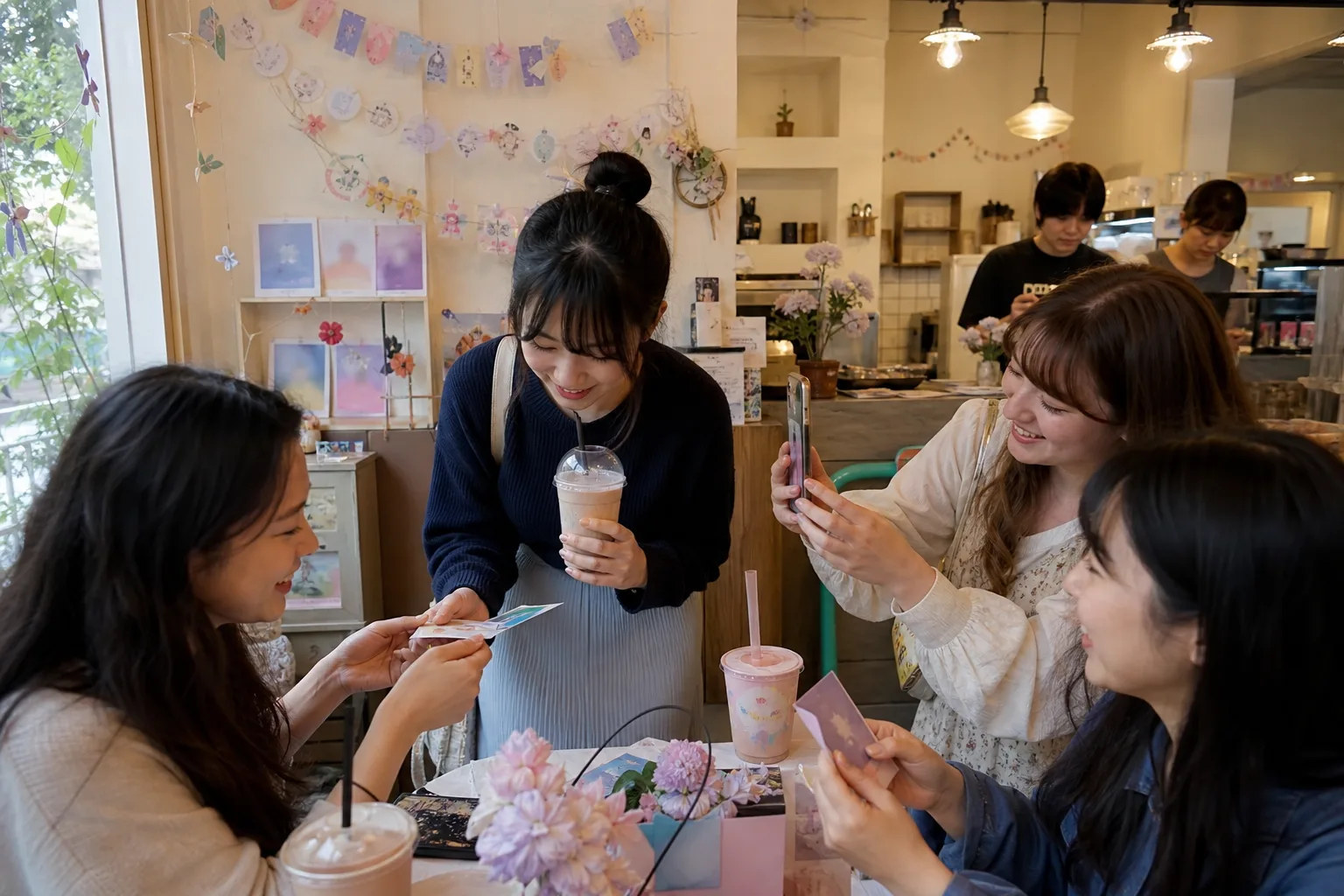
Before the app, there was a color
Korea Tourism Organization traces the modern cheering object back to the colored balloons that fan groups carried in the 1990s. A single color helped a large audience declare its identity from a distance. As the number of idol groups expanded, custom light sticks replaced that simpler signal with distinct shapes, colors, and designs associated with individual fandoms.
The Korean term eungwonbong literally joins support or cheering with stick. That plain name is useful: the object makes affection visible and repeatable. One person can hold a light; an arena can draw with it. The souvenir matters, but its most interesting function begins only when many strangers agree to use it at the same time.
The crowd becomes a lighting system
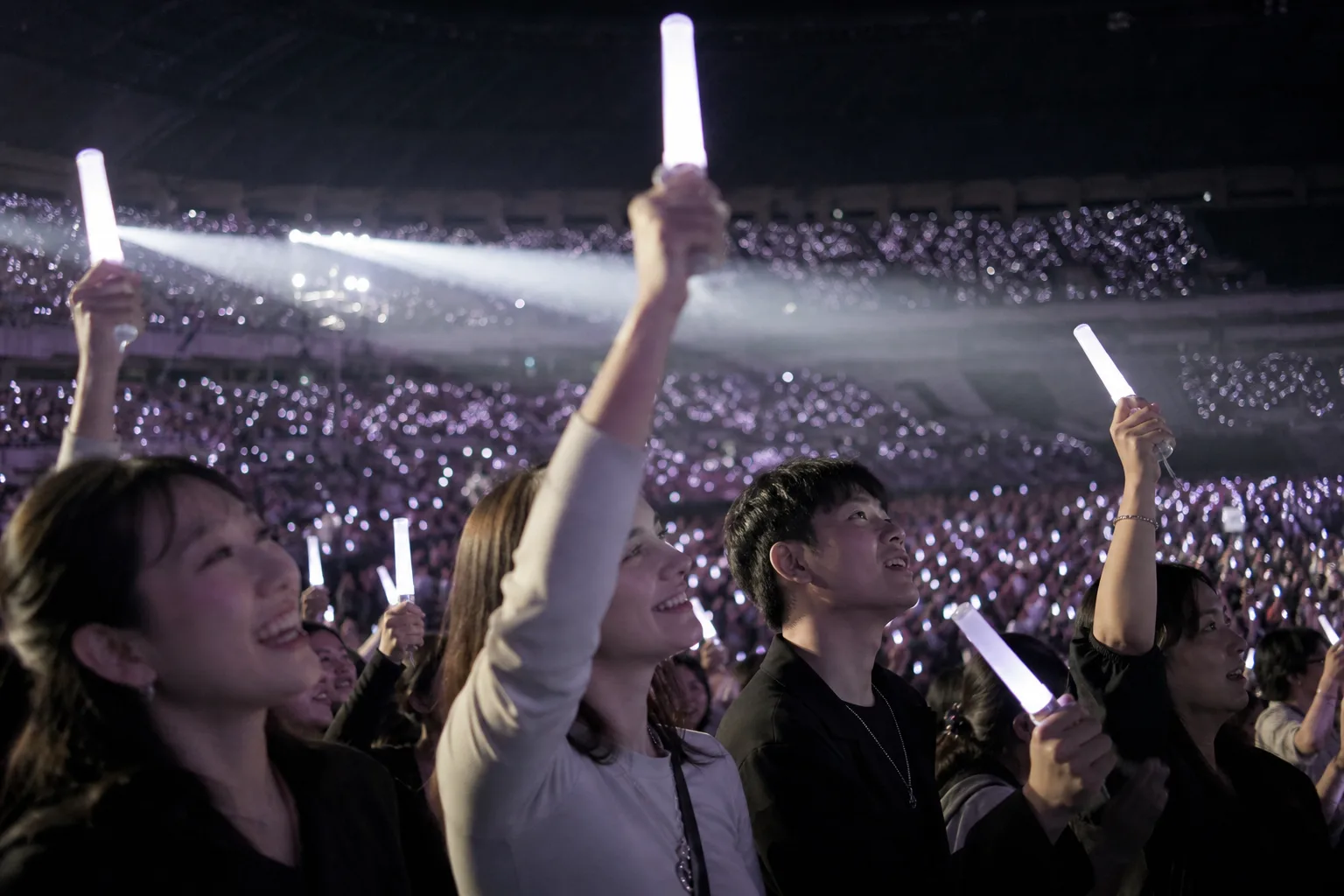
Korea.net’s public culture guide describes contemporary light sticks using Bluetooth synchronization so a venue can change colors across the audience together. The result is not merely a brighter crowd. It adds a second layer of staging: performers occupy the platform while the audience supplies a moving field of light around it.
The same guide places light sticks beside ttaechang, collective singing, and organized name chants in weekly music-show and concert culture. These practices do not erase individual reactions. They give those reactions a simple structure. A newcomer can follow one color change or one repeated name, then gradually understand the larger arrangement.
You do not need to own the room to join it
A first concert can look as if everyone else received instructions in advance. In practice, the lowest-pressure approach is to watch one full sequence before copying it. Keep the light inside your seat’s space, match the pace of the section, and let the people around you reveal when to lift, lower, clap, or rest. Owning an official light stick is never a substitute for considerate behavior.
Device pairing, batteries, permitted objects, recording, standing, and bag rules differ by event and venue. Check the organizer’s current notice rather than an old fan post, and do not assume another group’s device will synchronize. A phone flashlight may also be restricted or visually disruptive. The safest shared gesture is the one the event actually invites.
The real design is coordination
A light stick is often discussed as product design, but the larger Korean contribution is participation design. It gives an enormous audience a role that is visible, emotionally immediate, and simple enough to perform across languages. The object is memorable because it turns spectatorship into a small act of timing.
That is also why the culture travels. Fans do not have to reproduce the entire Korean music industry to carry the practice elsewhere. They need a room, a shared signal, and permission to respond together. The technology can be sophisticated; the human instruction remains wonderfully small: notice one another and move as a group.
THE IDOL CULTURE SIGNAL · EDITORIAL INTERPRETATION
What participation reveals
The light stick works because it gives every seat one manageable piece of the show. The happiness is not stored in the object; it appears when thousands of people use their small piece with attention to everyone else.
SOURCE DESK · VERIFIED FACT TRAIL
Research used for this feature
- Music Shows and Fan Support Culture Korea.net · Public cultural overview of eungwonbong, Bluetooth synchronization, ttaechang, and organized cheering.
- Fan Culture with Origins in K-pop Overtaking the World? Korea Tourism Organization · Official account of the transition from 1990s balloons to customized, connected light sticks.
- The Pop Culture We Loved and the Rise of the Korean Wave Ministry of Culture, Sports and Tourism · Official exhibition material documenting Korean idol cheering culture and connected light-stick technology.
Original synthesis, source trail attached
This article is SEOULIAN’s original synthesis. It reproduces no artist likeness, group or fandom mark, light-stick product design, song lyric, performance image, fan photograph, or source expression. The article does not reproduce source expression, third-party photographs, logos, maps, or entertainment assets.
Image disclosure
Credit: SEOULIAN · Created with ChatGPT Image Generation
Creator: SEOULIAN with ChatGPT Image Generation
Source type: SEOULIAN imagegen editorial photo
Disclosure: AI-generated editorial illustration created with ChatGPT Image Generation; illustrative and not documentary evidence.