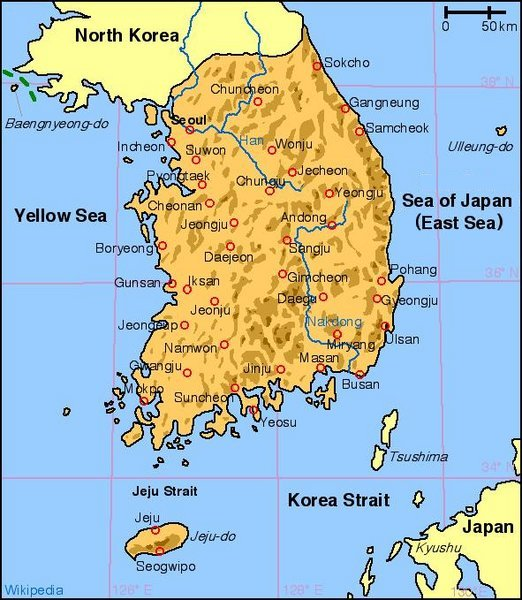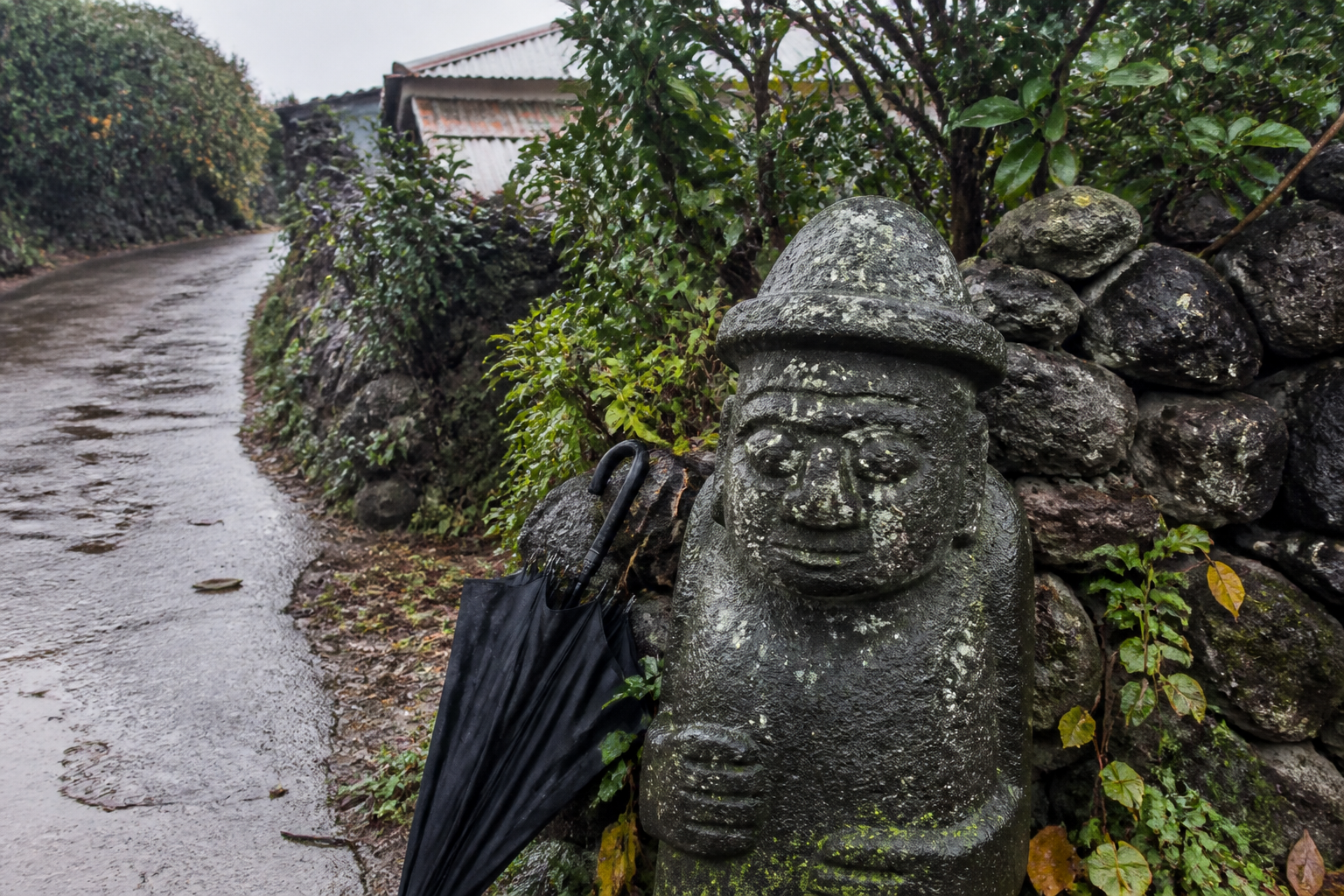
A dol hareubang (Jejuan: 돌하르방; lit. 'stone grandfather'), alternatively tol harubang, hareubang or harubang, is a type of traditional volcanic rock statue from Jeju Island, South Korea. It is not known when the statues first began to be made; various theories exist for their origin. They possibly began to be made at latest 500 years ago, since the early Joseon period. Most dol hareubang that can be seen are recent creations and not originals. There are either 47 or 48 original pre-modern statues that are known to exist; most of them are located on Jeju Island. The statues are traditionally placed in front of gates, as symbolic projections of power and as guardians against evil spirits. They were also symbols and ritual objects for fertility. The statues have been compared to jangseung, traditional wooden totem poles around Korea whose function was similarly to ward off bad spirits. They are now considered symbols of Jeju Island. Recreations of them in miniature and in full size have since been made.
Read the fixed source
Follow the exact revision used for this summary, or open its history to see the contributors and later changes.
Text source & license
Adapted and shortened by SEOULIAN from the linked fixed revision; no change in factual meaning is intended. Source: Wikipedia contributors. This adapted summary is shared under CC BY-SA 4.0.
Image attribution
Title: Dol hareubang — SEOULIAN Imagegen editorial photograph
Author: SEOULIAN with ChatGPT Image Generation
Source: SEOULIAN imagegen editorial photo
License: SEOULIAN AI-generated editorial image
AI-generated editorial illustration created with ChatGPT Image Generation; illustrative and not documentary evidence.