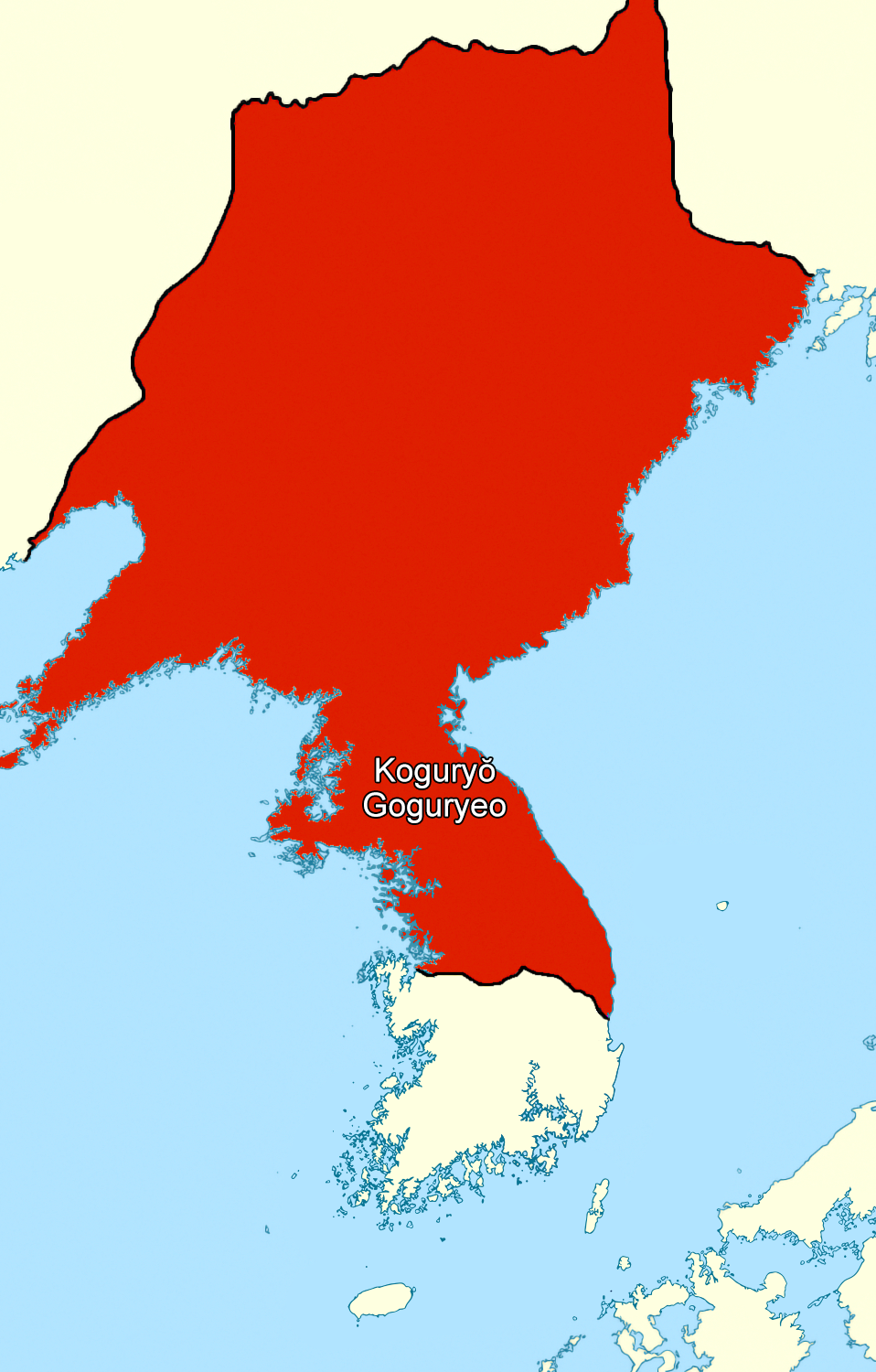
Goguryeo (37 BC – 668 AD) (Korean: 고구려; Hanja: 高句麗; RR: Goguryeo; lit. 'high castle'; Korean pronunciation: [ko̞.ɡu.ɾjʌ̹]; Old Korean: Guryeo) also later known as Goryeo (Korean: 고려; Hanja: 高麗; RR: Goryeo; lit. 'high and beautiful'; Korean pronunciation: [ko.ɾjʌ]; Middle Korean: 고ᇢ롕〮, kwòwlyéy), was a Korean kingdom which was located on the northern and central parts of the Korean peninsula and the southern and central parts of modern-day Northeast China (Manchuria). At its peak of power, Goguryeo encompassed most of the Korean peninsula and large parts of Manchuria, along with parts of modern-day Russia, while some claim that its territories extended into eastern Mongolia. Along with Paekche and Silla, Goguryeo was one of the Three Kingdoms of Korea. It was an active participant in the power struggle for control of the Korean peninsula and was also associated with the foreign affairs of neighboring polities in China and Japan. Goguryeo was one of the great powers in East Asia until its defeat by a Silla–Tang alliance in 668 after prolonged exhaustion and internal strife following the death of Yŏn Kaesomun. After its fall, its territory was divided between the Tang dynasty, Later Silla and Parhae. The name "Goryeo" (alternatively spelled "Koryŏ"), a shortened form of Goguryeo (Koguryŏ), was adopted as the official name in the 5th century, and is the origin of the English name "Korea".
Read the fixed source
Follow the exact revision used for this summary, or open its history to see the contributors and later changes.
Text source & license
Adapted and shortened by SEOULIAN from the linked fixed revision; no change in factual meaning is intended. Source: Wikipedia contributors. This adapted summary is shared under CC BY-SA 4.0.
Image attribution
Title: 5th century Goguryeo
Author: Asieon
Source: Wikimedia Commons
License: CC0
Wikimedia thumbnail downloaded and displayed without editorial alteration.