Silhouette begins with movement
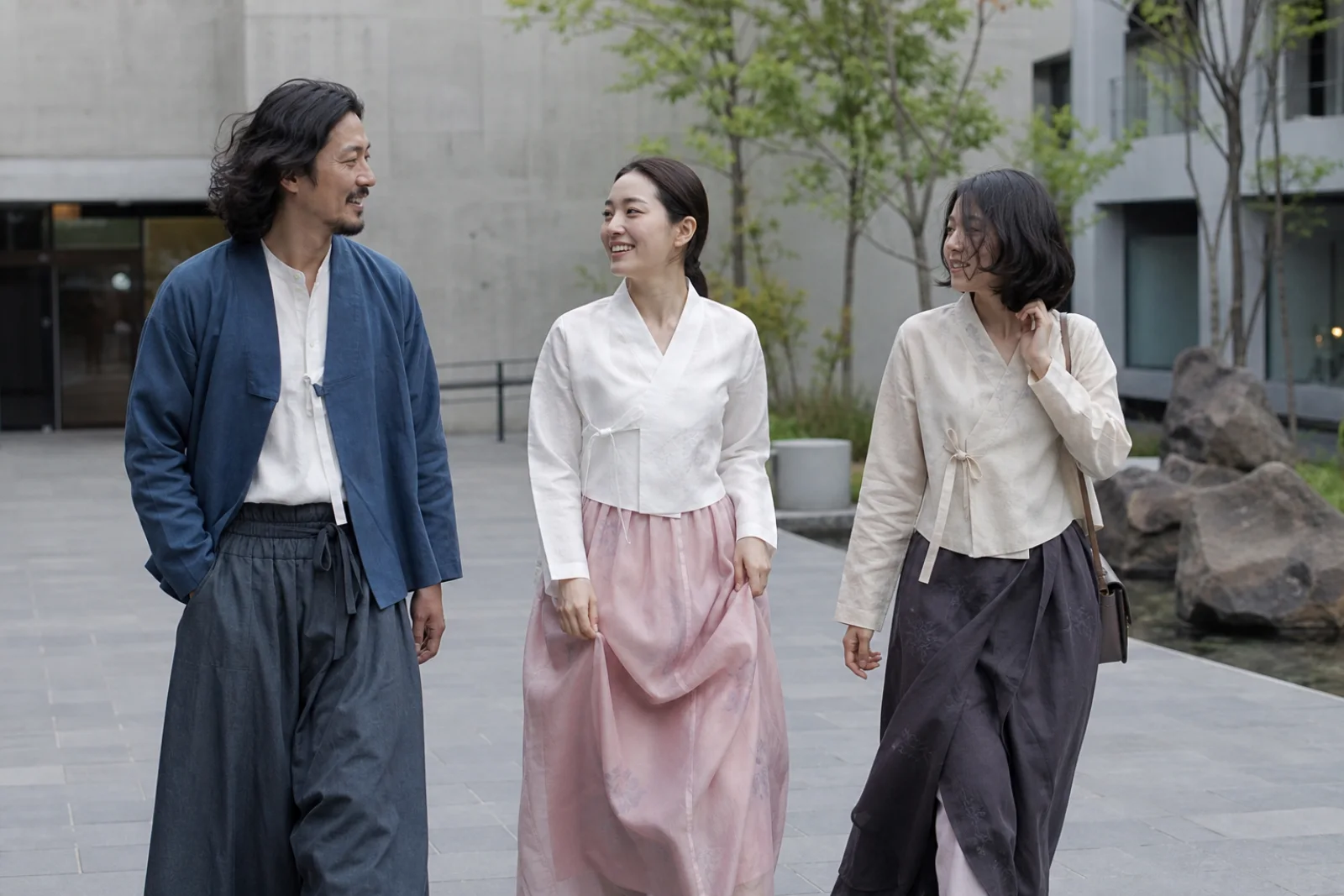
Hanbok is not one unchanging outfit. Historical period, region, gender convention, status, occasion, and garment type all matter. What many visitors first notice is the relationship between fitted and expansive forms: a short jacket or structured upper line meeting skirts or trousers that transform as the wearer walks.
Rental is an introduction, not a costume license
Wearing hanbok at a heritage site can be a meaningful encounter when garments fit safely and the wearer respects the place. Choose a reputable provider, ask how to tie and handle the clothing, and avoid caricature gestures. Contemporary styling and historical accuracy are different aims; neither should be mislabeled as the other.
Designers keep the grammar alive
Modern hanbok may simplify layers, change fabrics, adapt closures, or combine traditional proportions with daily wear. The strongest work does more than place a motif on a Western silhouette; it understands how the garment creates space around the body. Ask who designed it and what tradition or innovation is being referenced.
THE SEOULIAN NOTE · EDITORIAL INTERPRETATION
The detail worth carrying forward
Hanbok's identity survives change because it is a design grammar, not merely a fixed museum image.
SOURCE DESK · VERIFIED FACT TRAIL
Research used for this field note
- Korea Monthly: Hanbok Korean Culture and Information Service · Contemporary design and wearing context
- Visit Korean Heritage Korea Heritage Agency · Official heritage interpretation and visitor reference
Original synthesis, source trail attached
Original SEOULIAN synthesis. Facts are attributed through linked sources; source wording, photographs, logos, and entertainment assets are not reproduced. The article does not reproduce source expression, third-party photographs, logos, maps, or entertainment assets.
Image disclosure
Credit: SEOULIAN original editorial image
Creator: SEOULIAN with ChatGPT Image Generation
Source type: SEOULIAN imagegen editorial photo
Disclosure: AI-generated editorial illustration; not documentary evidence of a specific person, place, object, or event.