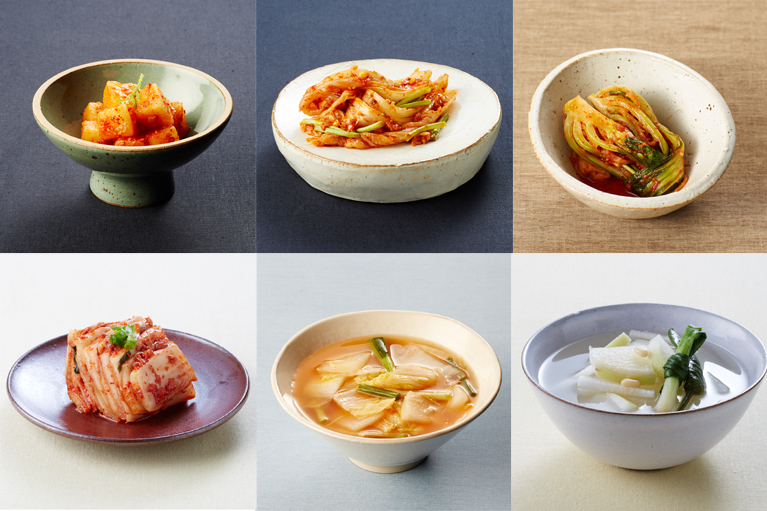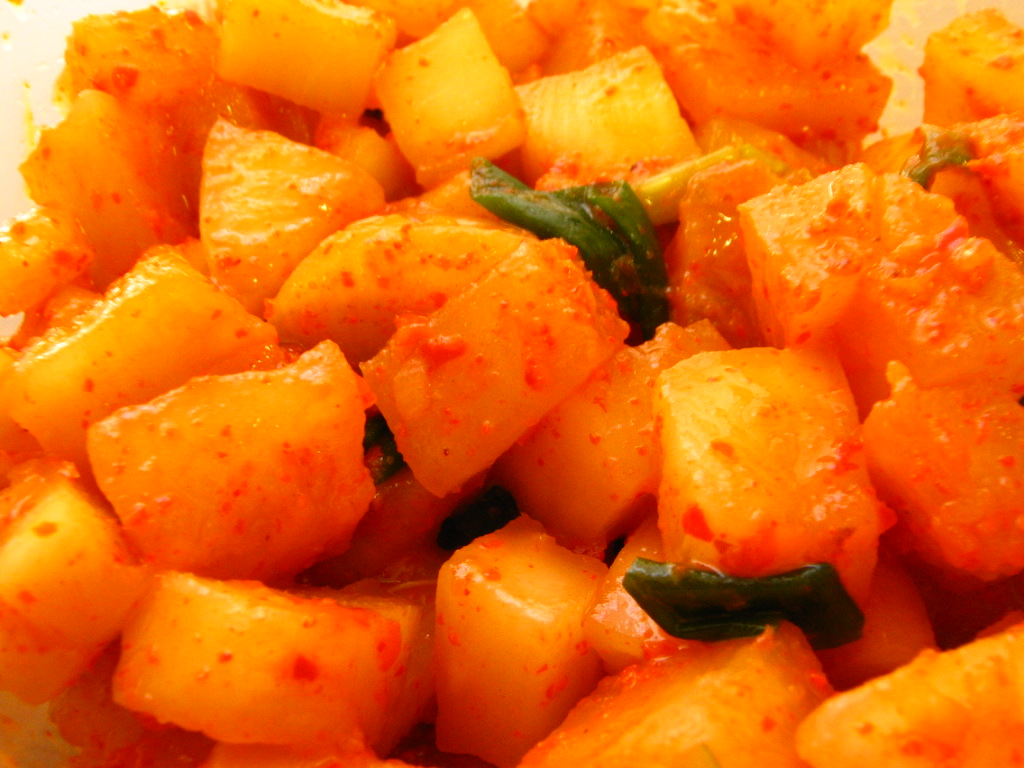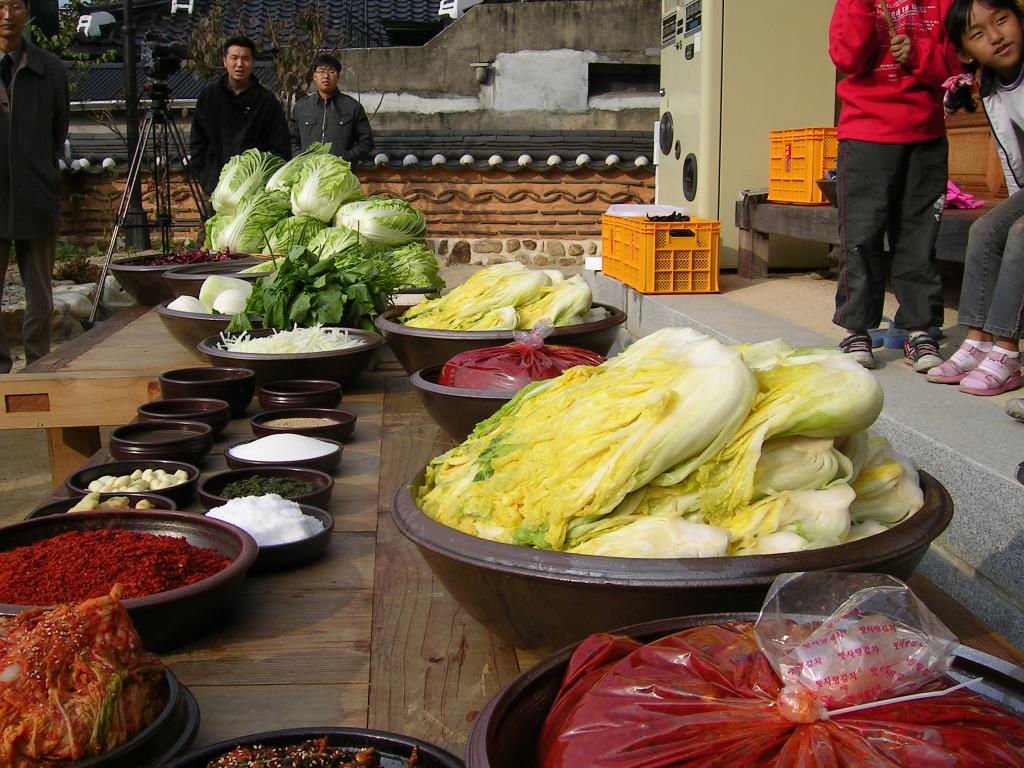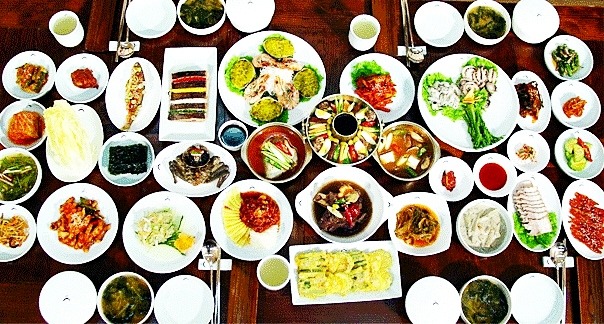
Korean cuisine is the set of foods and culinary styles which are associated with Korean culture. This cuisine has evolved through centuries of social and political change. Originating from ancient agricultural and nomadic traditions in Korea and southern Manchuria, Korean cuisine reflects a complex interaction of the natural environment and different cultural trends. Korean cuisine is largely based on rice, vegetables, seafood and (at least in South Korea) meats. Dairy is largely absent from the traditional Korean diet. Traditional Korean meals are named for the number of side dishes (반찬; 飯饌; banchan) that accompany steam-cooked short-grain rice. Kimchi is served at nearly every meal. Commonly used ingredients include sesame oil, doenjang (fermented bean paste), soy sauce, salt, garlic, ginger, gochugaru (pepper flakes), gochujang (fermented red chili paste) and napa cabbage. Ingredients and dishes vary by province. Many regional dishes have become national. Korean royal court cuisine once brought all of the unique regional specialties together for the royal family. Foods are regulated by Korean cultural etiquette. Kimjang, which refers to the process of making kimchi, is listed on the UNESCO Intangible Heritage List.
Read the fixed source
Follow the exact revision used for this summary, or open its history to see the contributors and later changes.
Text source & license
Adapted and shortened by SEOULIAN from the linked fixed revision; no change in factual meaning is intended. Source: Wikipedia contributors. This adapted summary is shared under CC BY-SA 4.0.
Image attribution
Title: Han-jeongsik
Author: TheDream 더 드림 더드림
Source: Wikimedia Commons
License: CC BY-SA 2.5
Wikimedia thumbnail downloaded and displayed without editorial alteration.