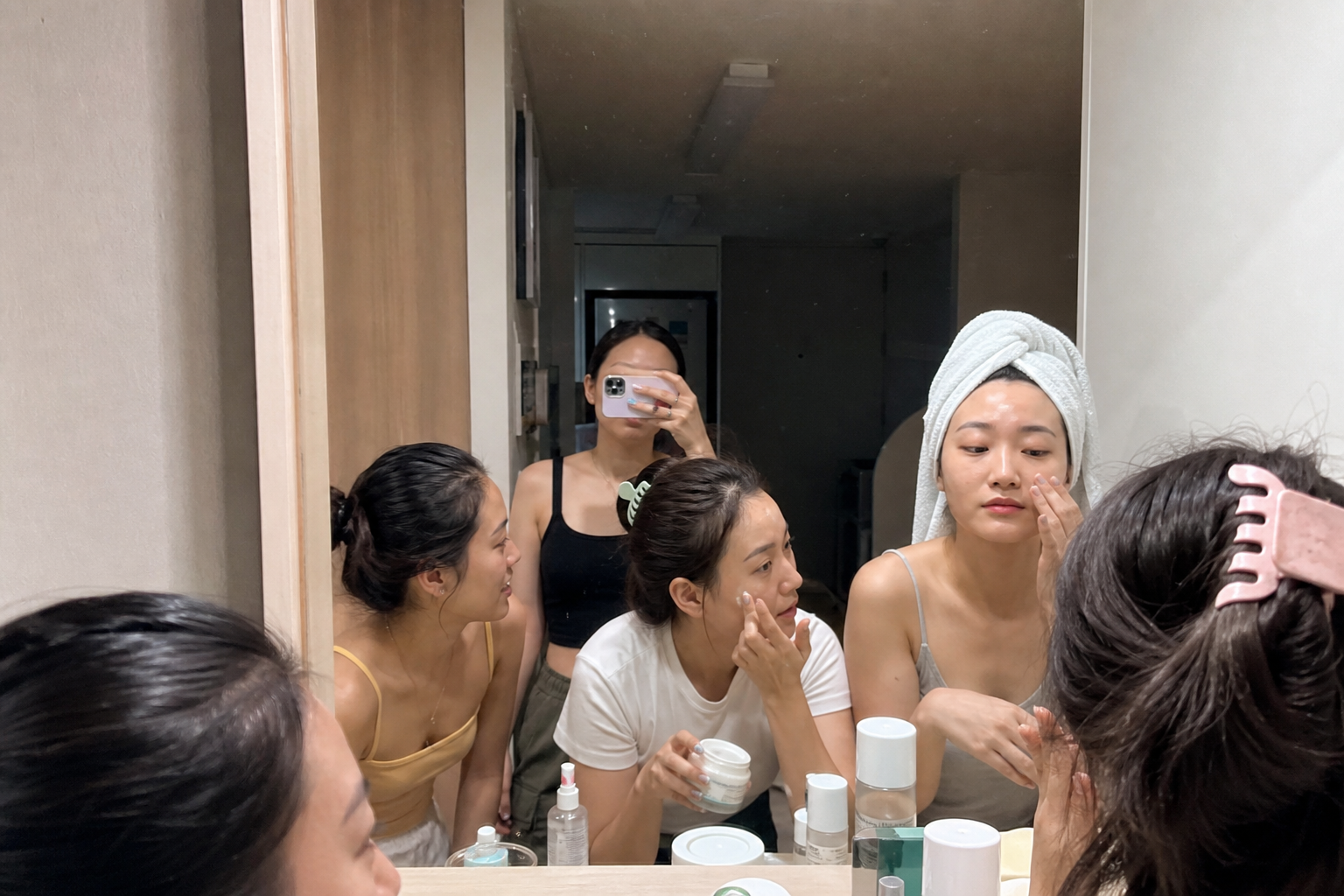
South Korean beauty standards prioritize maintaining a youthful appearance rather than looking mature. A combination of clear skin, an even skin complexion, a slim, V-shaped jawline, and pronounced puffy aegyo-sal (fatty, bag-like deposits under the eye—common in children; rare in adults) contributes to a desirable youthful aesthetic and personal presentation. Beauty is often associated with social and economic success in South Korea, particularly in areas such as employment. The increased influence of South Korean media, such as K-pop, Korean dramas, and advertisements throughout South Korea presents this softer appearance to the public as the desirable norm. Even among men, this softer, more androgynous appearance is preferred in romantic interests and is more evident in the media than among men with traditionally masculine features. In 2015, a global survey by the International Society of Aesthetic Plastic Surgeons placed South Korea in the top ten of countries who had the highest rate of cosmetic surgeries. South Korea has been described in international media as a "plastic surgery nation", although scholars argue that this idea has been shaped by media narratives and may oversimplify the reality of the industry.
Read the fixed source
Follow the exact revision used for this summary, or open its history to see the contributors and later changes.
Text source & license
Adapted and shortened by SEOULIAN from the linked fixed revision; no change in factual meaning is intended. Source: Wikipedia contributors. This adapted summary is shared under CC BY-SA 4.0.
Image attribution
Title: South Korean beauty standards — SEOULIAN Imagegen editorial photograph
Author: SEOULIAN with ChatGPT Image Generation
Source: SEOULIAN imagegen editorial photo
License: SEOULIAN AI-generated editorial image
AI-generated editorial illustration created with ChatGPT Image Generation; illustrative and not documentary evidence.