The Tonghak Peasant Revolution (Korean: 동학 농민 혁명) took place between 11 January 1894 and 25 December 1895 in Korea. The peasants were primarily followers of Donghak, a Neo-Confucian movement that rejected Western technology and ideals. The Revolution began in the province of Gobu-gun. In the early 1890s, Jo Byeong-gap, nominated magistrate of the gun in 1892, enforced harsh, oppressive policies upon the local peasant population. Correspondingly, in March 1894, a group of peasants led by Jeon Bong-jun and Kim Gae-nam began an uprising against local authorities. The initial revolt was suppressed under Yi Yong-tae, and Jeon Bong-jun fled to nearby Taein. Jeon gathered an army in Mount Paektu and recaptured Gobu in April. The rebels then defeated governmental forces in the Battle of Hwangtojae and the Battle of the Hwangryong River. Jeon then captured Jeonju Fortress and fought in a siege against Hong Gye-hun's government forces. In May, the rebels agreed on a truce through the Treaty of Jeonju. However, an unstable peace continued throughout the summer. The alarmed government requested the Qing dynasty for military intervention, to which the Qing responded with a deployment of 2,700 soldiers. Angered that the Qing government had not informed them before intervening (as promised in the Convention of Tientsin), Japan started the First Sino-Japanese War. The war resulted in an expulsion of Chinese influence in Korea and also signaled an end to the Self-Strengthening Movement in China itself. Growing Japanese dominance in the Korean Peninsula caused anxiety amongst the rebels. From September to October, the Southern and Northern leaders negotiated the plans for the future in Samrye. On 12 October, a coalition army of Northern and Southern Jeobs was formed, and the army, numbering 25,000–200,000 (records differ), attacked Gongju. After several battles, the rebel army was decisively defeated in the Battle of Ugeumchi, and the rebels were again overthrown in the Battle of Taein. Hostility continued deep into the spring of 1895. The rebel leaders were captured in various locations in the Honam Region, and most were executed by a mass hanging in March.
Read the fixed source
Follow the exact revision used for this summary, or open its history to see the contributors and later changes.
Text source & license
Adapted and shortened by SEOULIAN from the linked fixed revision; no change in factual meaning is intended. Source: Wikipedia contributors. This adapted summary is shared under CC BY-SA 4.0.
Image attribution
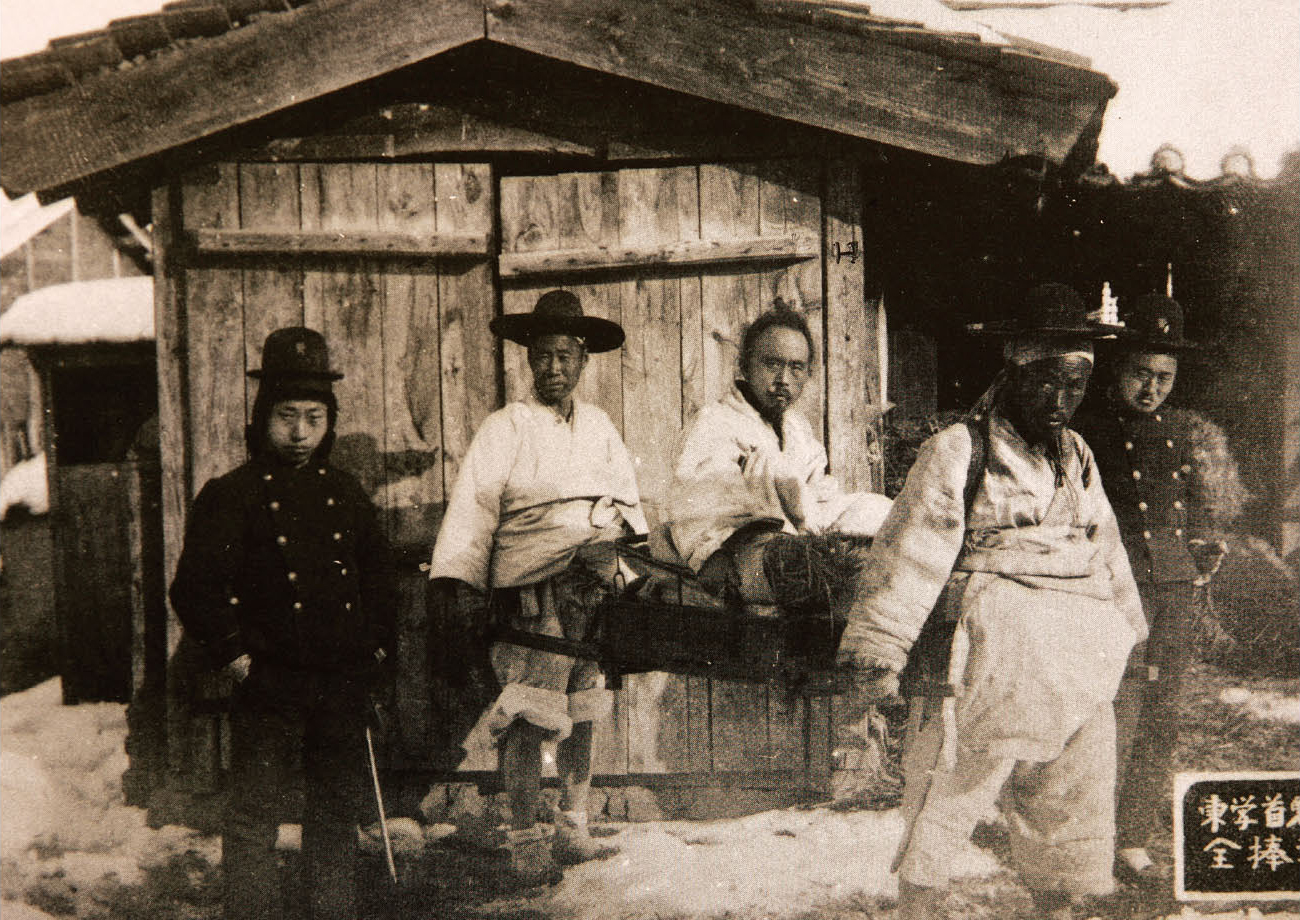
Title: Jeon Bong-jun under arrest (27 February 1895)
Author: Murakami Tenshin (村上天眞)
Source: Wikimedia Commons
License: Public domain
Wikimedia thumbnail downloaded and displayed without editorial alteration.