The game has a score; the crowd has an arrangement
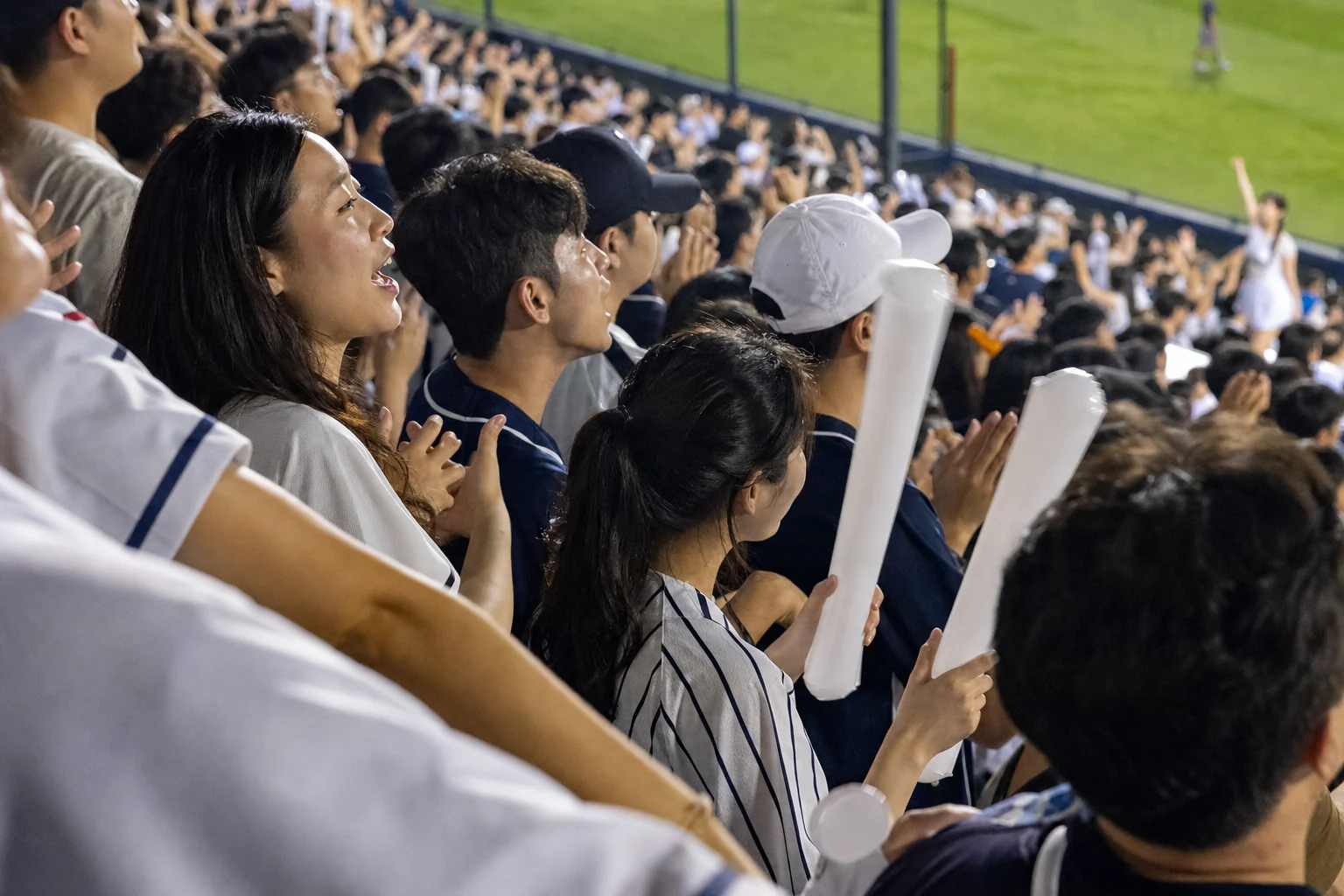
In a Korean professional baseball stadium, cheering is not saved for a home run. Teams have anthems, players have individual songs or chants, cheer leaders cue movements, and a batting sequence can produce a recognizable musical order. A first-time visitor may understand only the scoreboard yet still know exactly when the section wants a clap, a repeated name, or a rising chorus.
This structure is why the atmosphere is often compared with a concert, but the audience is not simply watching a stage. Fans supply much of the sound themselves. The Korea Tourism Organization describes synchronized singing and choreographed cheering as a defining KBO experience, while Korea.net cites survey evidence that many spectators attend because cheering itself is enjoyable.
Popularity follows the whole evening, not only the standings
KBO’s official record review put 2025 regular-season attendance at 12,312,519, after the league had already crossed ten million for the first time in 2024. Competitive seasons matter, but the stadium product is wider than results: songs, food, uniforms, photo cards, screen events, first pitches, and the chance to join a loud but legible group ritual.
The same infrastructure helps younger and newer fans enter. A person can begin with one player, a uniform design, a viral dance, a favorite concession, or the social promise of an evening with friends. Baseball knowledge can deepen later. This reverses the assumption that a spectator must first study the sport and only then earn the right to enjoy the stadium.
How to choose your first seat
If you want the full-volume version, look for the team’s cheering section when buying through its official ticket channel. If constant music or standing will be tiring, choose a section farther from the cheer platform. Stadium, team, opponent, and seat location all change the experience, so a general English guide should never replace the current team schedule and ticket notice.
Arrive early enough to find the gate, food area, restroom, and your section before the lineups begin. A jersey is optional. Watch one full player chant before trying it, follow the people around you rather than blocking the aisle for a video, and keep your own cheering tools inside your seat’s space. The easiest contribution is attention: clap when the section claps, make room when people pass, and let the rhythm teach you.
The cultural crossover is the point
Korean baseball absorbs habits from elsewhere and reorganizes them locally. The sport arrived from abroad; organized songs have regional histories across East Asian baseball; contemporary stadiums now borrow the circulation tools of pop fandom, including collectibles, short-form dances, customized clothing, and highly shareable fan moments. None of that makes the game secondary. It makes spectatorship a creative layer around it.
For an English-speaking visitor, the most useful comparison is not ‘KBO versus MLB.’ It is to notice what Korean fans expect from participation. Silence is available in some seats, but the central cultural offer is coordinated presence: thousands of strangers agree to carry the same player’s moment together, then reset for the next batter.
THE LIVING SEOUL SIGNAL · EDITORIAL INTERPRETATION
What ordinary use reveals
Korean baseball fandom lowers the threshold for belonging by giving the crowd a job. You do not need a personal story with the team before entering; singing one sequence correctly can make the stadium feel briefly shared.
SOURCE DESK · VERIFIED FACT TRAIL
Research used for this feature
- 2025 KBO League Major Records Korea Baseball Organization · Official 2025 final attendance and season record.
- Win or Lose, a Festival for Everyone: The Unique Korean Baseball Cheer Culture Korea Tourism Organization · Official visitor guide to songs, choreography, merchandise, and stadium events.
- Nation's Baseball Cheering Culture Raises Game to Fever Pitch Korea.net · Public account of player songs, team cheering, attendance, and spectator motivation.
Original synthesis, source trail attached
This article is SEOULIAN’s original synthesis. It reproduces no team marks, player likenesses, song lyrics, broadcast footage, fan photographs, choreography diagrams, or source expression. The article does not reproduce source expression, third-party photographs, logos, maps, or entertainment assets.
Image disclosure
Credit: SEOULIAN · Created with ChatGPT Image Generation
Creator: SEOULIAN with ChatGPT Image Generation
Source type: SEOULIAN imagegen editorial photo
Disclosure: AI-generated editorial illustration created with ChatGPT Image Generation; illustrative and not documentary evidence.