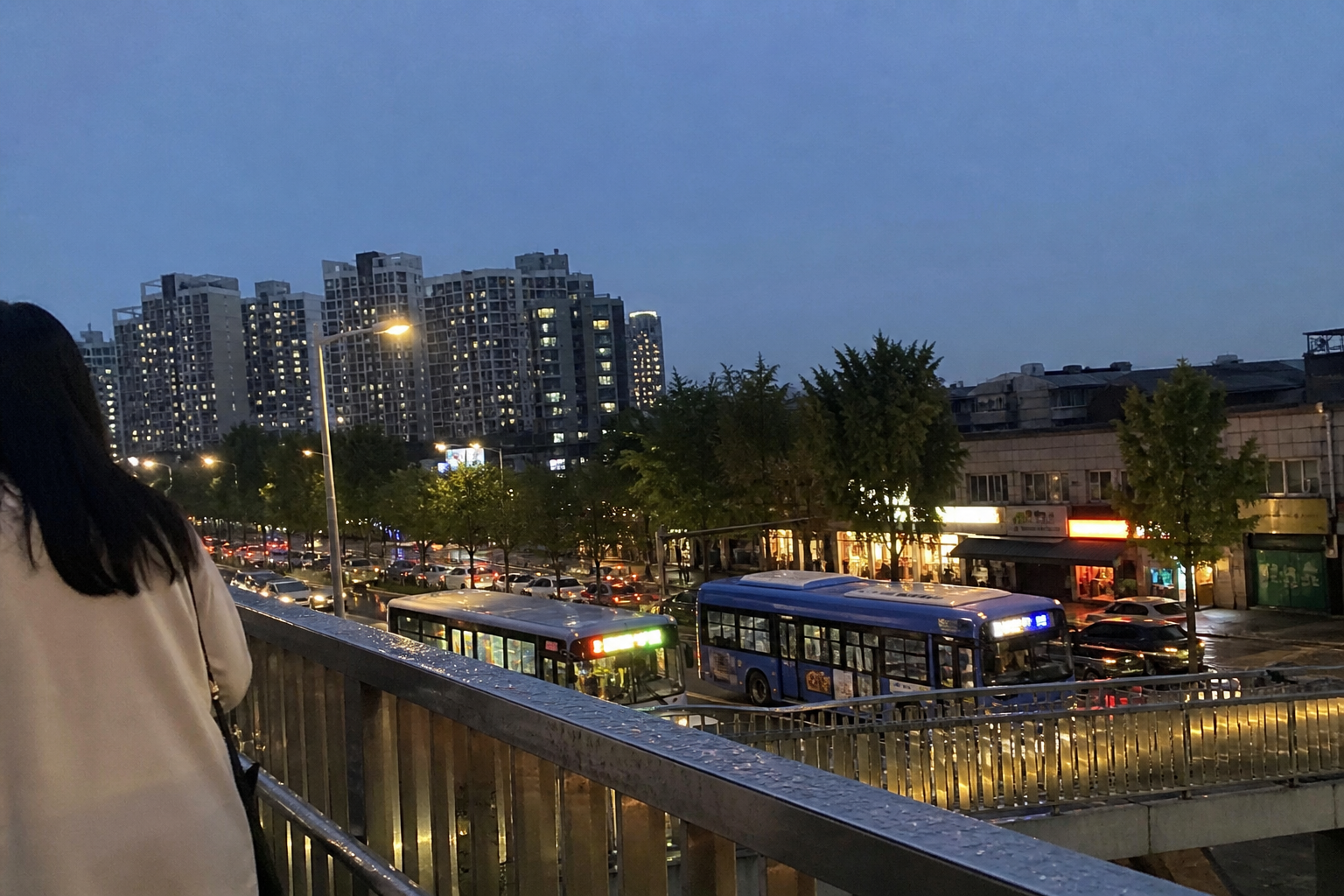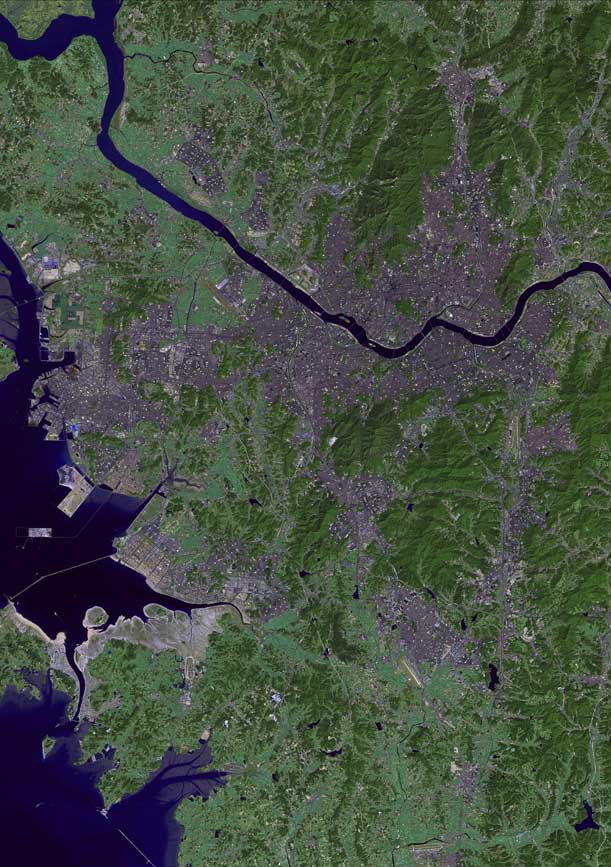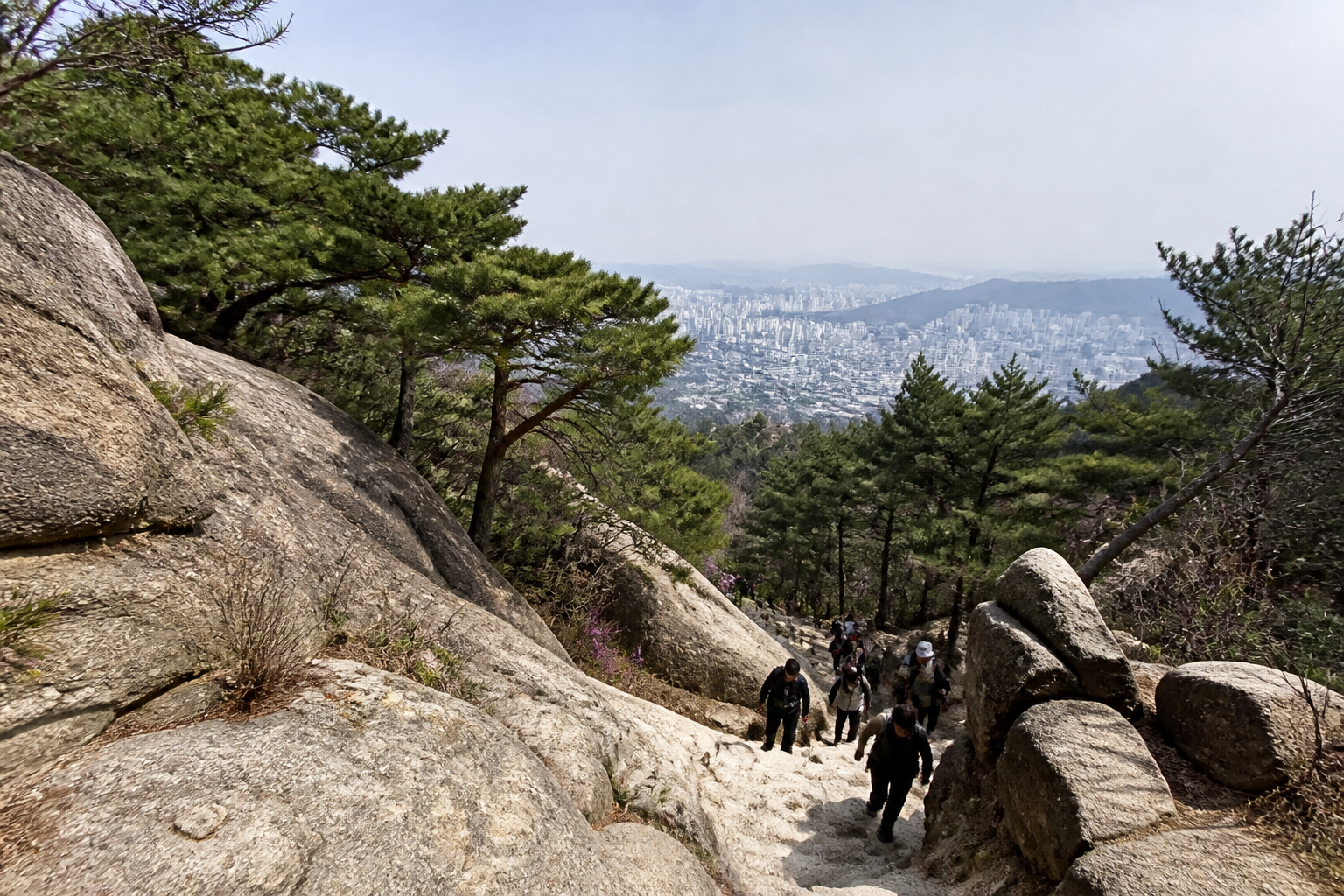
Bukhansan (Korean: 북한산, lit. 'North Han Mountain'), alternatively Pukhan-san or Bukhan Mountain, is a mountain on the northern periphery of Seoul, South Korea. There are three major peaks, Baegundae 836.5 meters (2,744 ft), Insubong 810.5 meters (2,659 ft), Mangyeongdae 787.0 meters (2,582.0 ft). Because of its height and the fact that it borders a considerable portion of the city, Bukhansan is a major landmark visible from most city districts. The name "Bukhansan" means "mountain north of Han River", referring to the fact that it is the northern border of the city. During the Joseon era, the peaks marked the extreme northern boundary of Seoul. Bukhansan is the highest mountain within Seoul boundaries. Apart from Bukhansan, there are seven other mountains including Dobongsan and Suraksan that are over 600 metres high within the city. Popular throughout the year, Bukhansan, and Bukhansan National Park, which was formed in 1983, are renowned for birdwatching, hiking and rockclimbing. Bukhansan attracts a large number of hikers; around 5 million per year.
Read the fixed source
Follow the exact revision used for this summary, or open its history to see the contributors and later changes.
Text source & license
Adapted and shortened by SEOULIAN from the linked fixed revision; no change in factual meaning is intended. Source: Wikipedia contributors. This adapted summary is shared under CC BY-SA 4.0.
Image attribution
Title: Bukhansan — SEOULIAN Imagegen editorial photograph
Author: SEOULIAN with ChatGPT Image Generation
Source: SEOULIAN imagegen editorial photo
License: SEOULIAN AI-generated editorial image
AI-generated editorial illustration created with ChatGPT Image Generation; illustrative and not documentary evidence.