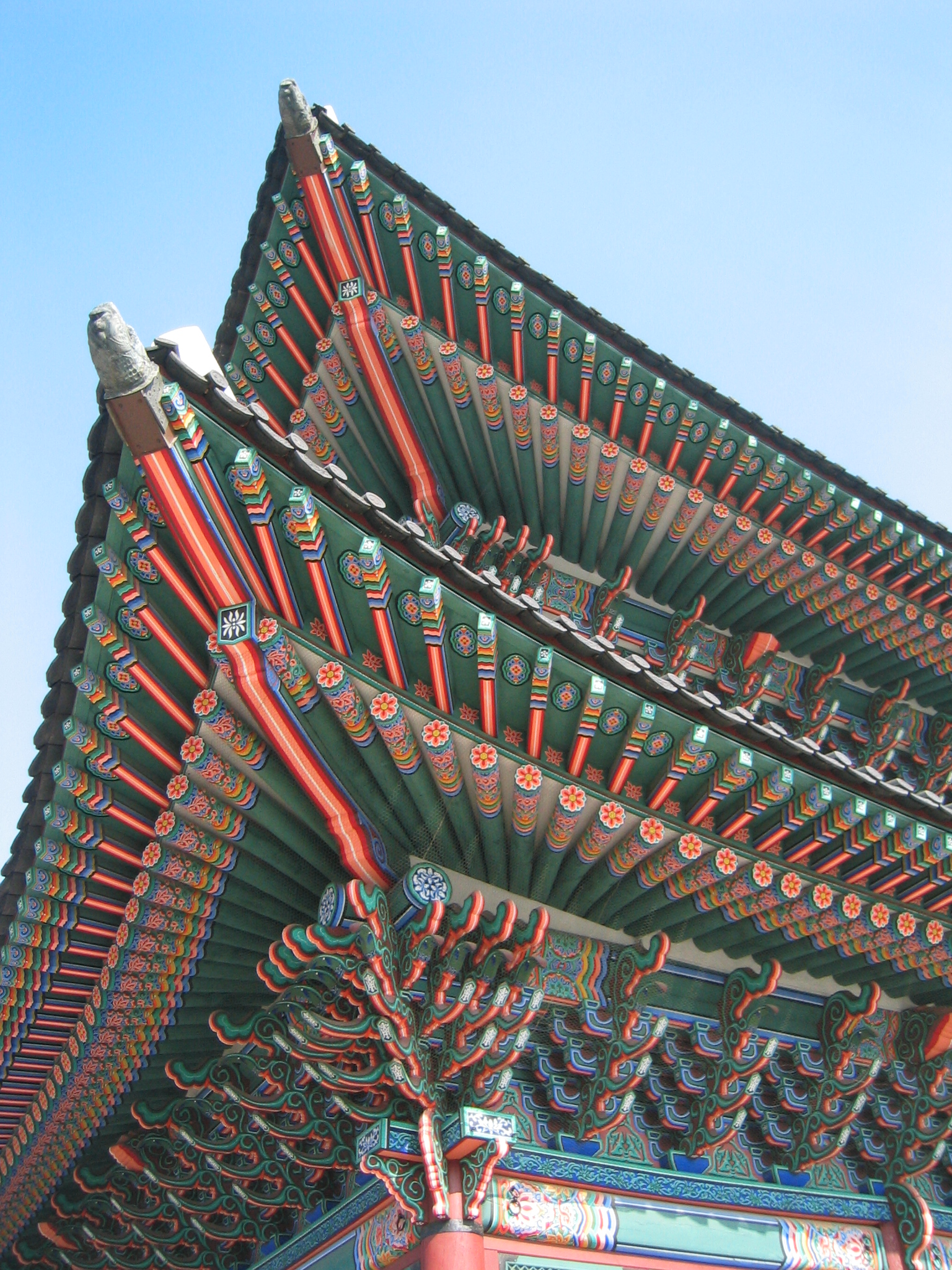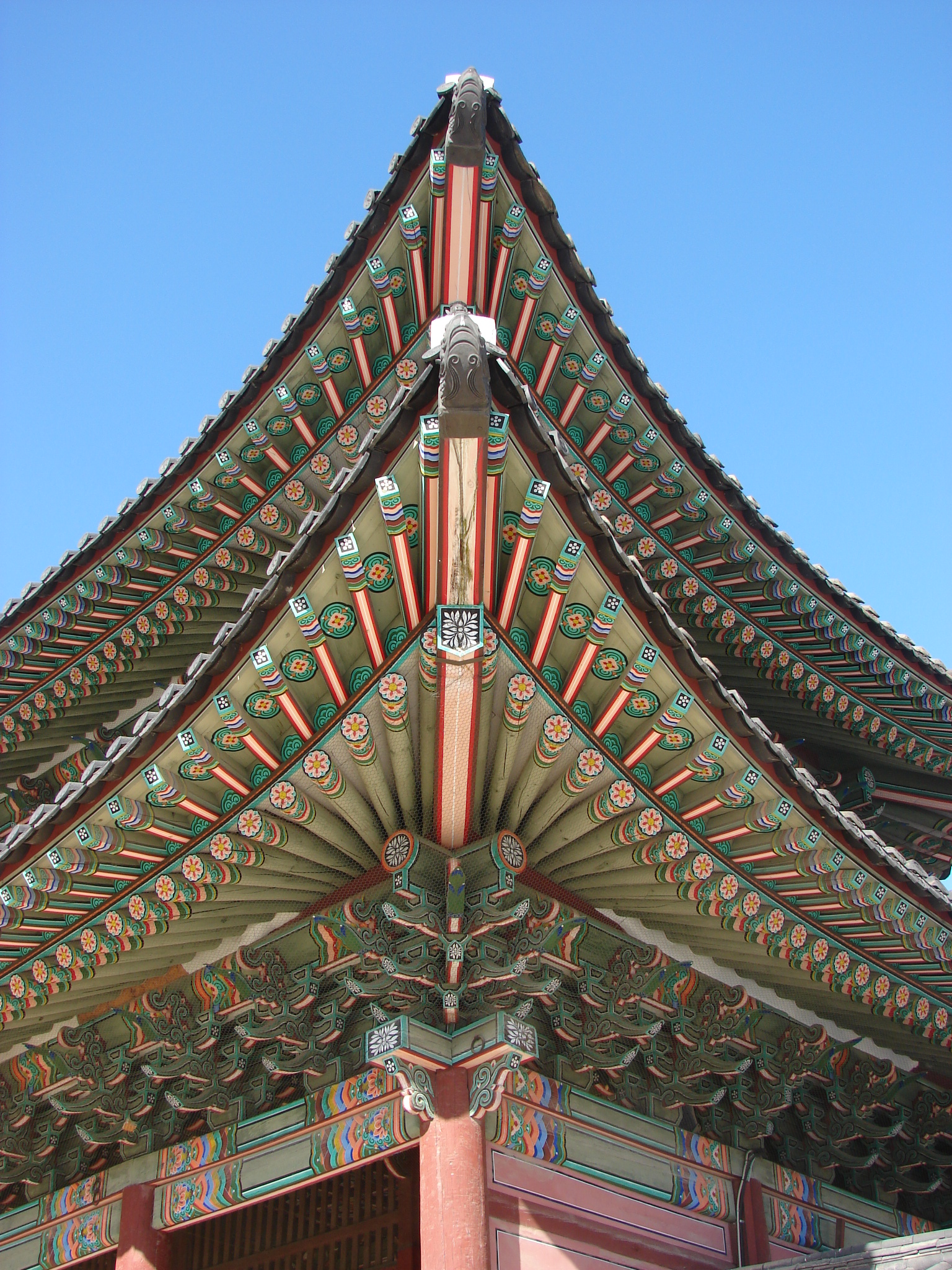
Dancheong (Korean: 단청; Hanja: 丹靑) refers to Korean decorative colouring on wooden buildings and artifacts for the purpose of style. It is an adaptation of the Chinese practice danqing, danqing refers to Chinese painting on silk and paper, and also decoration on wood. It literally means "cinnabar and blue-green", and is sometimes translated as "red and blue" in English. Along with its decorations and the choice of paint colours, Dancheong carries various symbolic meanings. It is based on five basic colours; blue (east), white (west), red (south), black (north), and yellow (center). Together, these colours symbolize the desire for stability, peace, and a rewarding afterlife. Furthermore, the use of those five colours reflected the use of the yin and yang principle and the philosophy of the five elements. The Dancheong is usually used in important places, such as temples and palaces, and can even be found on the eaves of temple's roofs with patterns of animals (e.g. dragons, lions, cranes). Dancheong also functions not only as decoration, but also for practical purposes such as to protect building surfaces against temperature and to make the crudeness of materials less conspicuous. It also protects the wood against insects, prolonging its lifetime. Applying dancheong on the surfaces of buildings require trained skills, and artisans called dancheongjang (단청장 丹青匠) designed the painted patterns. The Dancheonjang are considered living national treasures in South Korea and are classified as being part of the National Intangible Cultural Heritage by the Cultural Heritage Administration in South Korea.
Read the fixed source
Follow the exact revision used for this summary, or open its history to see the contributors and later changes.
Text source & license
Adapted and shortened by SEOULIAN from the linked fixed revision; no change in factual meaning is intended. Source: Wikipedia contributors. This adapted summary is shared under CC BY-SA 4.0.
Image attribution
Title: Séoul palais
Author: daplaza@free.fr
Source: Wikimedia Commons
License: CC BY 3.0
Wikimedia thumbnail downloaded and displayed without editorial alteration.