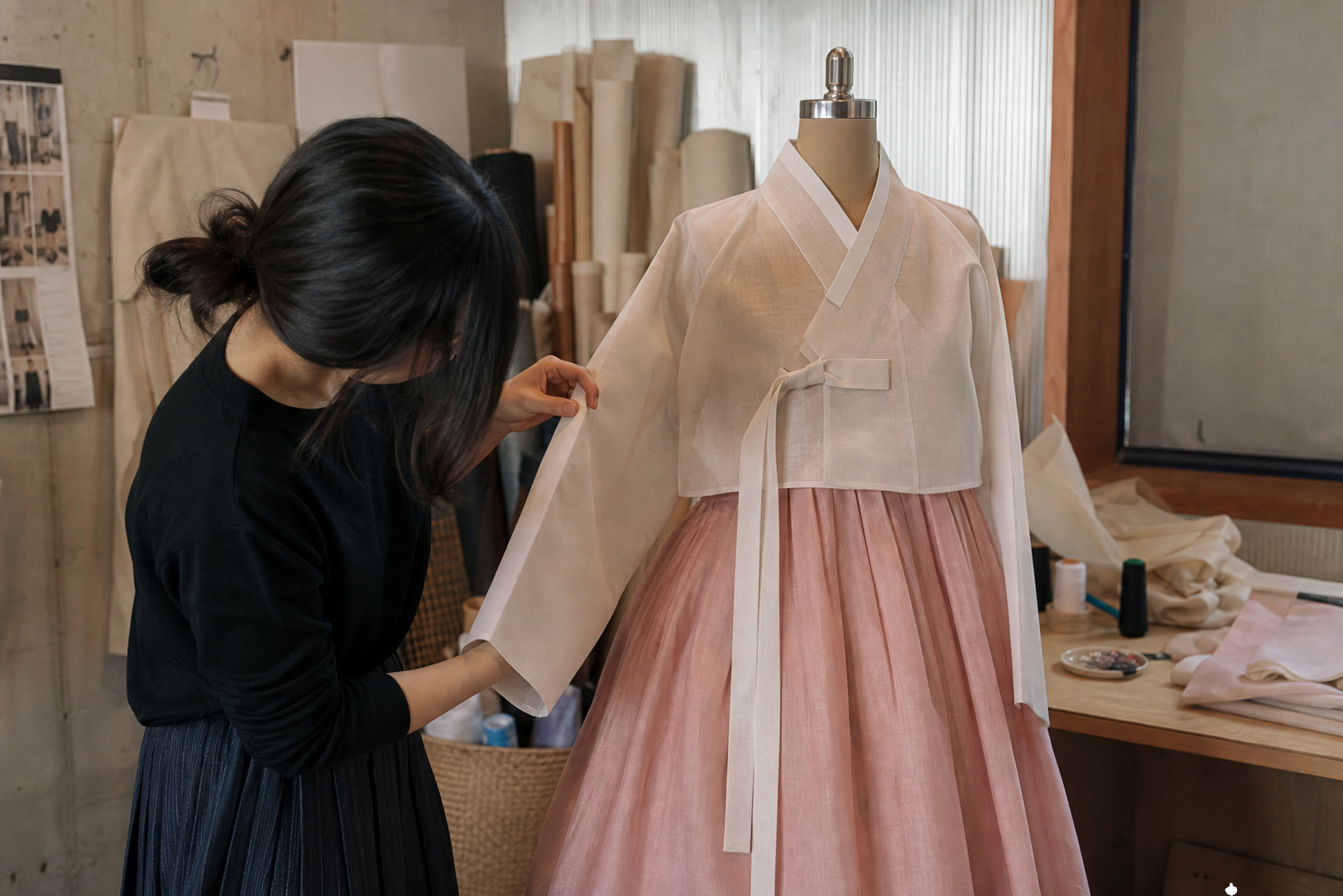
The hanbok (Korean: 한복; Hanja: 韓服; lit. 'Korean dress') is the traditional clothing of the Korean people. The term hanbok literally means Korean clothing in South Korea and internationally, where it is the standard term for the attire. North Koreans refer to the clothes as chosŏnot (조선옷; lit. 'Korean clothes'). The attire is also worn by the Korean diaspora. Koryo-saram—ethnic Koreans living in the lands of the former Soviet Union—also retained a hanbok tradition. The hanbok is fundamentally composed of a jeogori (top), baji (trousers), chima (skirt), and the po (coat). While this core arrangement has remained consistent for a long time, its length, width, and shape have gradually changed over time.
Koreans have worn hanbok since antiquity. The earliest visual depictions of hanbok can be traced back to the Three Kingdoms of Korea period (57 BCE to 668 CE) with roots in the ancestors of the Koreanic peoples of what is now northern Korea and Manchuria. The clothes are also depicted on tomb murals from the Goguryeo period (4th to 6th century CE), with the basic structure of the hanbok established since by at least this time. The ancient hanbok, like modern hanbok, consisted of a jeogori, baji, chima, and po. Some interpretations suggest that certain elements of the hanbok, such as specific colors or patterns, were influenced by traditional folk beliefs or shamanism. For thousands of years, many Koreans have preferred white hanbok, a color considered pure and symbolizing light and the sun. In some periods, commoners (seomin) were forbidden from wearing certain colorful hanbok regularly. However, during the Joseon dynasty (1392–1897) and the Japanese occupation of Korea (1910–1945), there was also an attempt to ban white clothes and to encourage non-bleached dyed clothes, which ultimately failed. Modern hanbok are typically patterned after the hanbok worn in the Joseon period, especially those worn by the nobility and royalty. There is some regional variation in hanbok design between South Korea and North Korea, which arose from their relative isolation in the late 20th century. Communities of ethnic Koreans abroad, including those in China, also maintain their own hanbok traditions, all of which are rooted in the shared cultural heritage of Korea.
Read the fixed source
Follow the exact revision used for this summary, or open its history to see the contributors and later changes.
Text source & license
Adapted and shortened by SEOULIAN from the linked fixed revision; no change in factual meaning is intended. Source: Wikipedia contributors. This adapted summary is shared under CC BY-SA 4.0.
Image attribution
Title: Hanbok — SEOULIAN Imagegen editorial photograph
Author: SEOULIAN with ChatGPT Image Generation
Source: SEOULIAN imagegen editorial photo
License: SEOULIAN AI-generated editorial image
AI-generated editorial illustration created with ChatGPT Image Generation; illustrative and not documentary evidence.