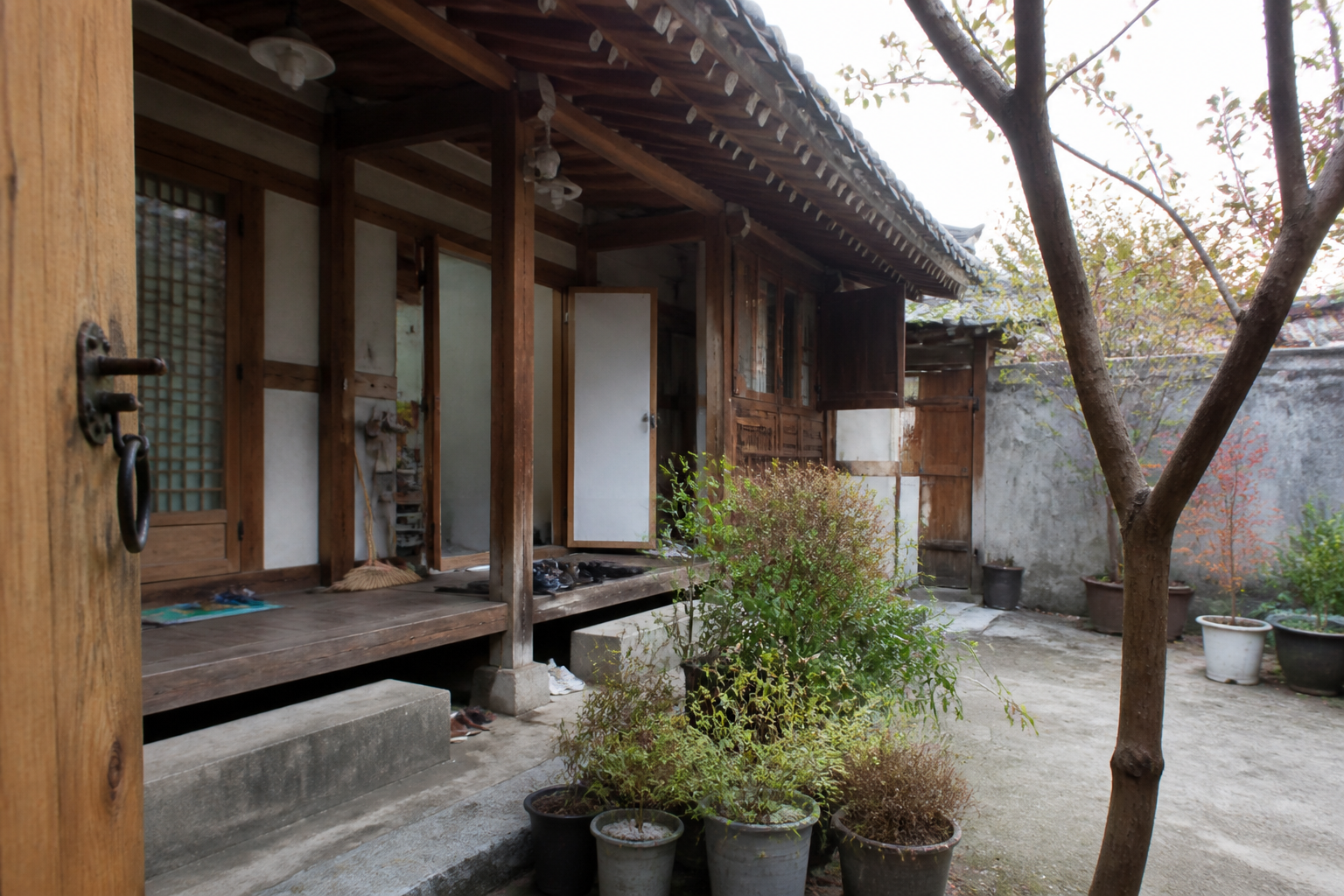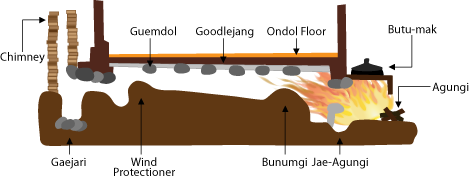
Ondol (ON-dol; , Korean: 온돌; Hanja: 溫突/溫堗; Korean pronunciation: [on.dol]) or gudeul (구들; [ku.dɯl]) in Korean traditional architecture is underfloor heating that uses direct heat transfer from wood smoke to heat the underside of a thick masonry floor. In modern usage, it refers to any type of underfloor heating, or to a hotel or a sleeping room in Korean (as opposed to Western) style. The main components of the traditional ondol are an agungi (아궁이; [a.guŋ.i]), a firebox or stove, accessible from an adjoining room (typically kitchen or master bedroom), a raised masonry floor underlain by horizontal smoke passages, and a vertical, freestanding chimney on the opposite exterior wall providing a draft. The heated floor, supported by stone piers or baffles to distribute the smoke, is covered by stone slabs, clay and an impervious layer such as oiled paper.
Read the fixed source
Follow the exact revision used for this summary, or open its history to see the contributors and later changes.
Text source & license
Adapted and shortened by SEOULIAN from the linked fixed revision; no change in factual meaning is intended. Source: Wikipedia contributors. This adapted summary is shared under CC BY-SA 4.0.
Image attribution
Title: Ondol
Author: Dzihi
Source: Wikimedia Commons
License: CC BY 3.0
Wikimedia thumbnail downloaded and displayed without editorial alteration.