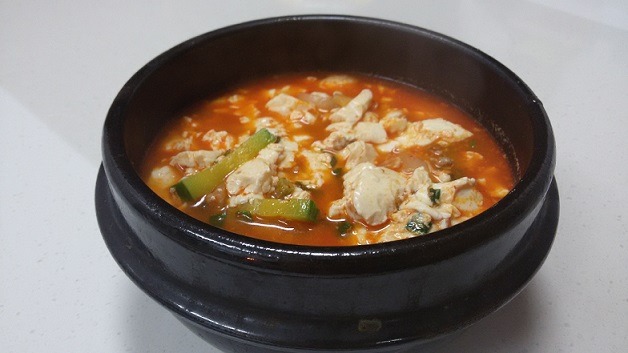
Sundubu-jjigae (Korean: 순두부찌개) is a jjigae in Korean cuisine. The dish is made with freshly curdled extra soft tofu (sundubu) which has not been strained and pressed, vegetables, sometimes mushrooms, onion, optional seafood (commonly oysters, mussels, clams and shrimp), optional meat (commonly beef or pork), and gochujang or gochugaru. The dish is assembled and cooked directly in the serving vessel, which is traditionally made of thick, robust porcelain, but can also be ground out of solid stone. A raw egg can be put in the jjigae just before serving, and the dish is delivered while bubbling vigorously. It is typically eaten with a bowl of cooked white rice and several banchan. Extra soft tofu, called sundubu (순두부; lit. 'mild tofu') in Korean, is softer than other types of tofu and is usually sold in tubes. The first iteration of sundubu was discovered by a Joseon civil official who used spring water and sea water during its cooking process. The stew has multiple variations from various counties in South Korea. The dish has reached popularity overseas, making appearances in American and Canadian media such as Kim's Convenience of CBC Television. Restaurants that specialise in sundubu-jjigae can be found in many cities, usually Koreatowns, in the United States and Canada.
Read the fixed source
Follow the exact revision used for this summary, or open its history to see the contributors and later changes.
Text source & license
Adapted and shortened by SEOULIAN from the linked fixed revision; no change in factual meaning is intended. Source: Wikipedia contributors. This adapted summary is shared under CC BY-SA 4.0.
Image attribution
Title: Sundubu-jjigae
Author: 행복한 초록개구리
Source: Wikimedia Commons
License: CC BY 4.0
Wikimedia thumbnail downloaded and displayed without editorial alteration.