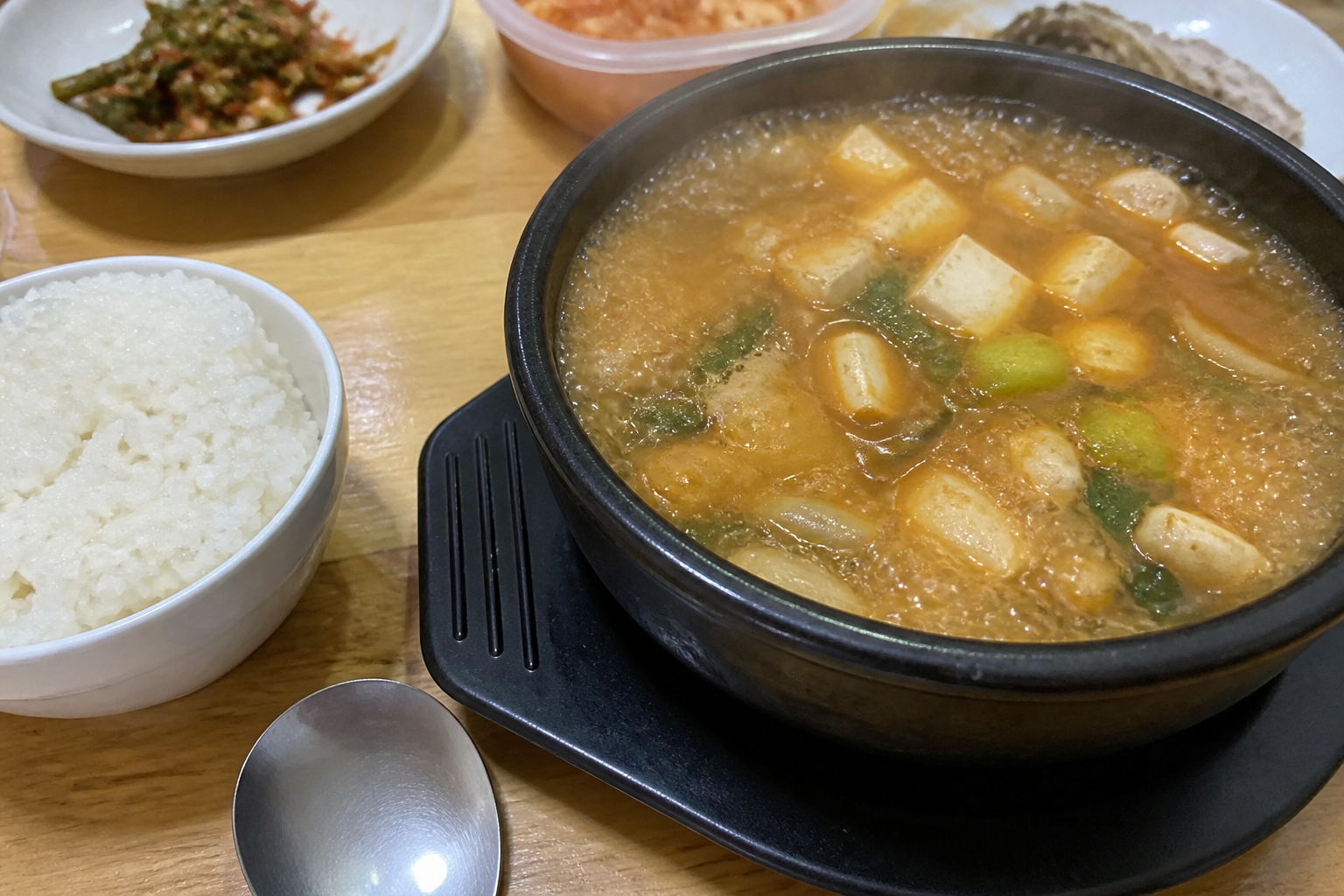
Doenjang-jjigae (Korean: 된장찌개; pronounced [twen.dʑaŋ.t͈ɕi.ɡɛ]), referred to in English as soybean paste stew, is a Korean traditional jjigae (stew-type dish), made from the primary ingredient of doenjang (soybean paste), and additional optional ingredients of vegetables, seafood, and meat. It is one of the most iconic and popular traditional dishes in Korean cuisine, and is often eaten regularly regardless of occasion or time of day. Doenjang-jjigae was initially made with home-made doenjang; however, due to extensive industrialisation of soybean paste, households and restaurants nowadays use factory-made doenjang instead as their ingredient. From traditional to modern Korean cuisine, doenjang has become one of the most frequently used jang (sauce/paste). It is claimed as a national dish. Doenjang-jjigae is often mistaken for doenjang-guk (soybean paste soup). The main difference between Korean-style stew and soup is in the method of cooking and serving. Jjigae is thicker, has more ingredients, and is largely served as a dish. Guk is served more so as a companion to the rice to be eaten together.
Read the fixed source
Follow the exact revision used for this summary, or open its history to see the contributors and later changes.
Text source & license
Adapted and shortened by SEOULIAN from the linked fixed revision; no change in factual meaning is intended. Source: Wikipedia contributors. This adapted summary is shared under CC BY-SA 4.0.
Image attribution
Title: Doenjang-jjigae — SEOULIAN Imagegen editorial photograph
Author: SEOULIAN with ChatGPT Image Generation
Source: SEOULIAN imagegen editorial photo
License: SEOULIAN AI-generated editorial image
AI-generated editorial illustration created with ChatGPT Image Generation; illustrative and not documentary evidence.