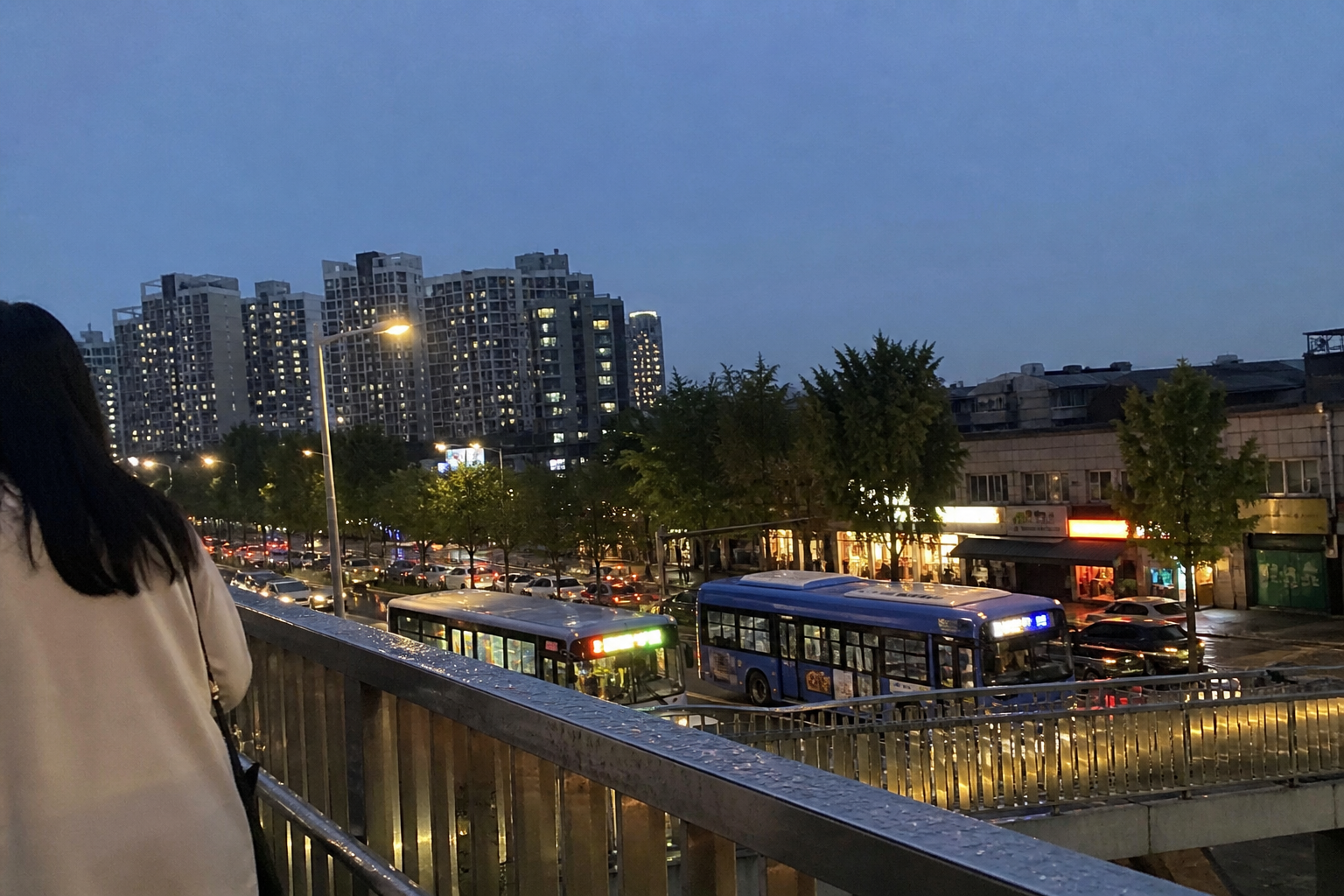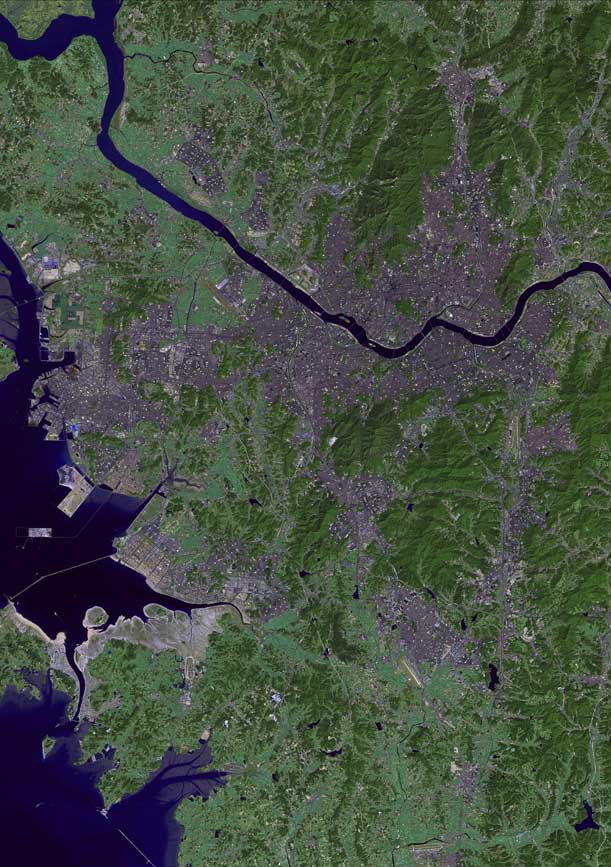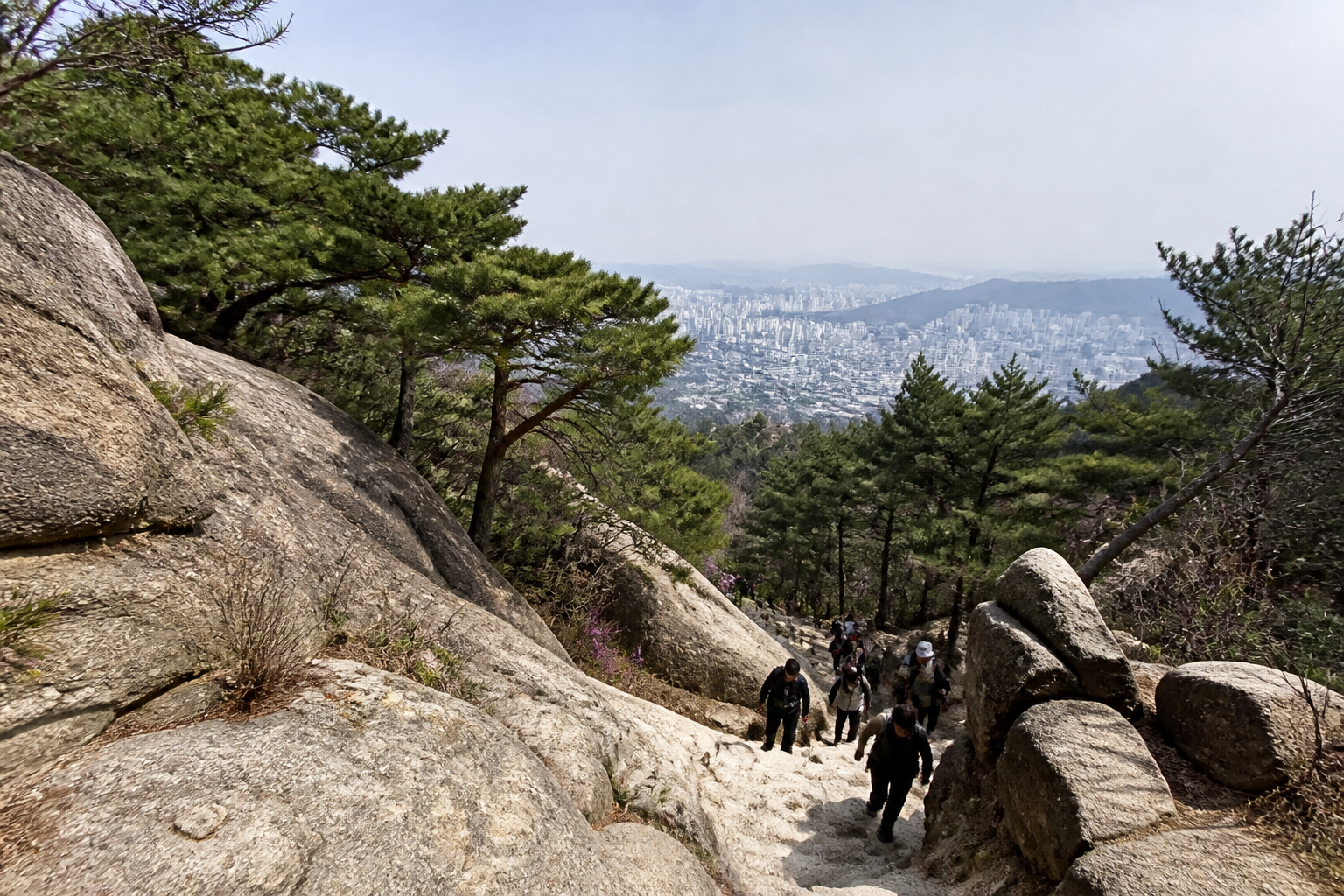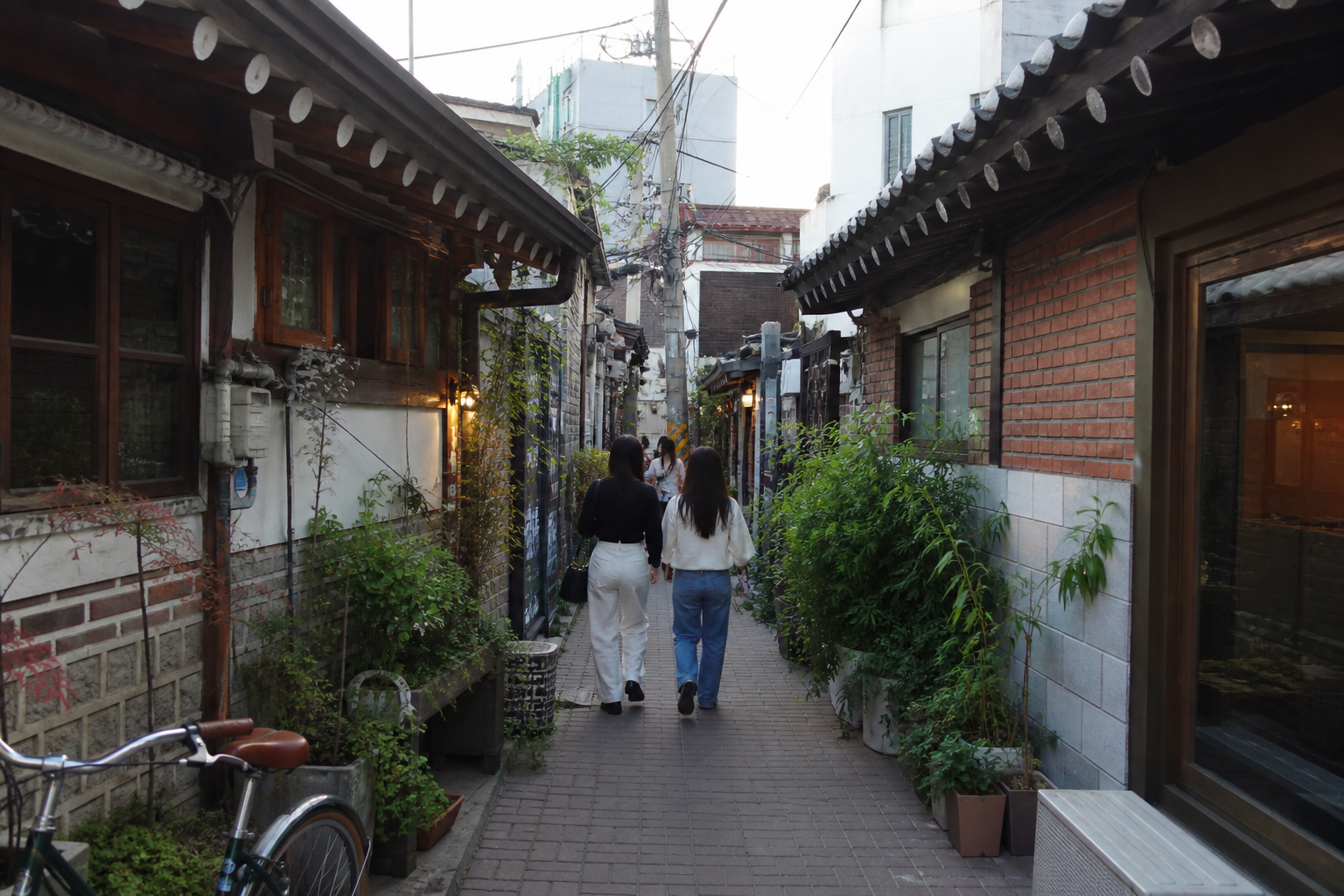
Ikseon-dong (益善洞) is a legal-status dong located in the center of Jongno 1·2·3·4-ga-dong, Jongno-gu, Seoul. It borders Unni-dong to the north, Donui-dong to the south, Nagwon-dong to the west, and Yaryong-dong and Myo-dong to the east. Transportation is convenient thanks to the nearby Samil-daero and Donhwamun-ro, and Jongno 3-ga station on the subway. Within the dong are the Jongno 1·2·3·4-ga-dong Community Center and the 'Uri Sori Library', among other facilities. As of 2020, the population is around 1,000. Ikseon-dong is famous for its hanok (traditional Korean house) village built from the 1920s onwards, and remains one of the oldest concentrated hanok districts in Seoul. During the Japanese colonial period, many artists lived here, including female pansori singers. After liberation, people from various social strata coexisted. Ikseon-dong, which once thrived on gisaeng restaurant (yojeong) tourism before declining, became a home for sexual minorities in the latter half of the 20th century, and has been a tourist attraction since the mid-2010s. Since the late 2010s, the neighborhood has been undergoing gentrification, causing rapid changes and criticism that its unique identity is being lost.
Read the fixed source
Follow the exact revision used for this summary, or open its history to see the contributors and later changes.
Text source & license
Adapted and shortened by SEOULIAN from the linked fixed revision; no change in factual meaning is intended. Source: Wikipedia contributors. This adapted summary is shared under CC BY-SA 4.0.
Image attribution
Title: Ikseon-dong — SEOULIAN Imagegen editorial photograph
Author: SEOULIAN with ChatGPT Image Generation
Source: SEOULIAN imagegen editorial photo
License: SEOULIAN AI-generated editorial image
AI-generated editorial illustration created with ChatGPT Image Generation; illustrative and not documentary evidence.