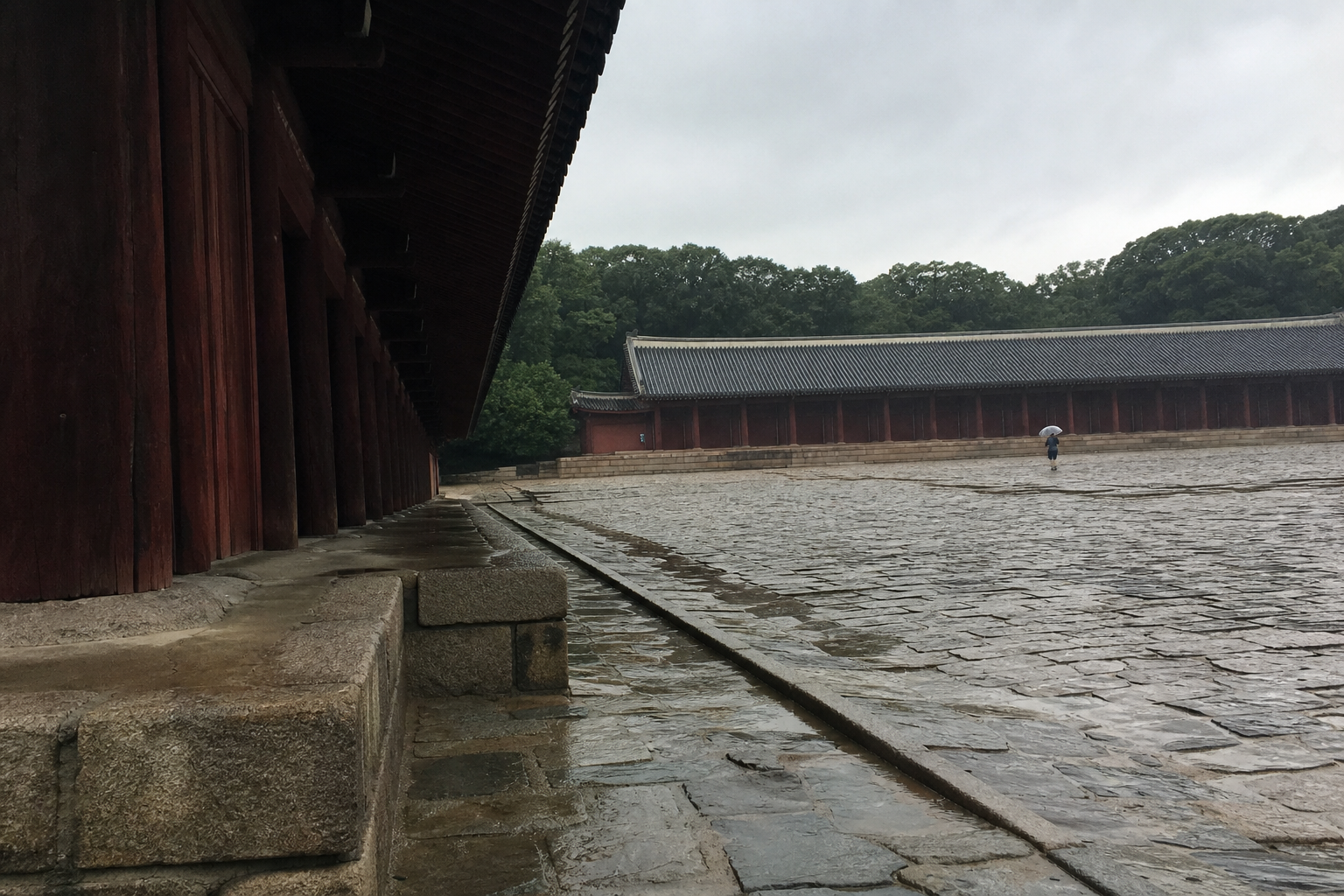
Jongmyo (Korean: 종묘) is a Confucian royal ancestral shrine in the Jongno District of Seoul, South Korea. It was originally built during the Joseon period (1392–1897) for memorial services for deceased kings and queens. According to UNESCO, the shrine is the oldest royal Confucian shrine preserved and the ritual ceremonies continue a tradition established in the 14th century. Such shrines existed during the Three Kingdoms of Korea period (57–668), but these have not survived. The Jongmyo Shrine was added to the UNESCO World Heritage list in 1995. Changdeokgung and Changgyeonggung lie to the north of Jongmyo. Yulgok-ro separated Jongmyo from the palaces from 1932 to 2019, until Yulgok-ro was turned into a road tunnel and the connection between Jongmyo and the palaces restored. The main buildings of Jongmyo were constructed in October 1394 when Taejo, founder and first king of Joseon, moved the capital to Hanseong (present-day Seoul). The shrine was destroyed by fire in the Japanese invasions of Korea (1592–1598), then rebuilt in early 1600s. The shrine continues to be the venue for the Jongmyo Daejae ancestor-worship ceremony, where descendants of the imperial family honor the spirits of their deceased ancestors.
Read the fixed source
Follow the exact revision used for this summary, or open its history to see the contributors and later changes.
Text source & license
Adapted and shortened by SEOULIAN from the linked fixed revision; no change in factual meaning is intended. Source: Wikipedia contributors. This adapted summary is shared under CC BY-SA 4.0.
Image attribution
Title: Jongmyo — SEOULIAN Imagegen editorial photograph
Author: SEOULIAN with ChatGPT Image Generation
Source: SEOULIAN imagegen editorial photo
License: SEOULIAN AI-generated editorial image
AI-generated editorial illustration created with ChatGPT Image Generation; illustrative and not documentary evidence.