A different meaning of return
English speakers often hear ‘comeback’ as recovery after a long absence. In Korean pop usage it normally marks an artist’s new release and promotional period. That semantic shift reveals an industry organized around cycles rather than a single launch day.
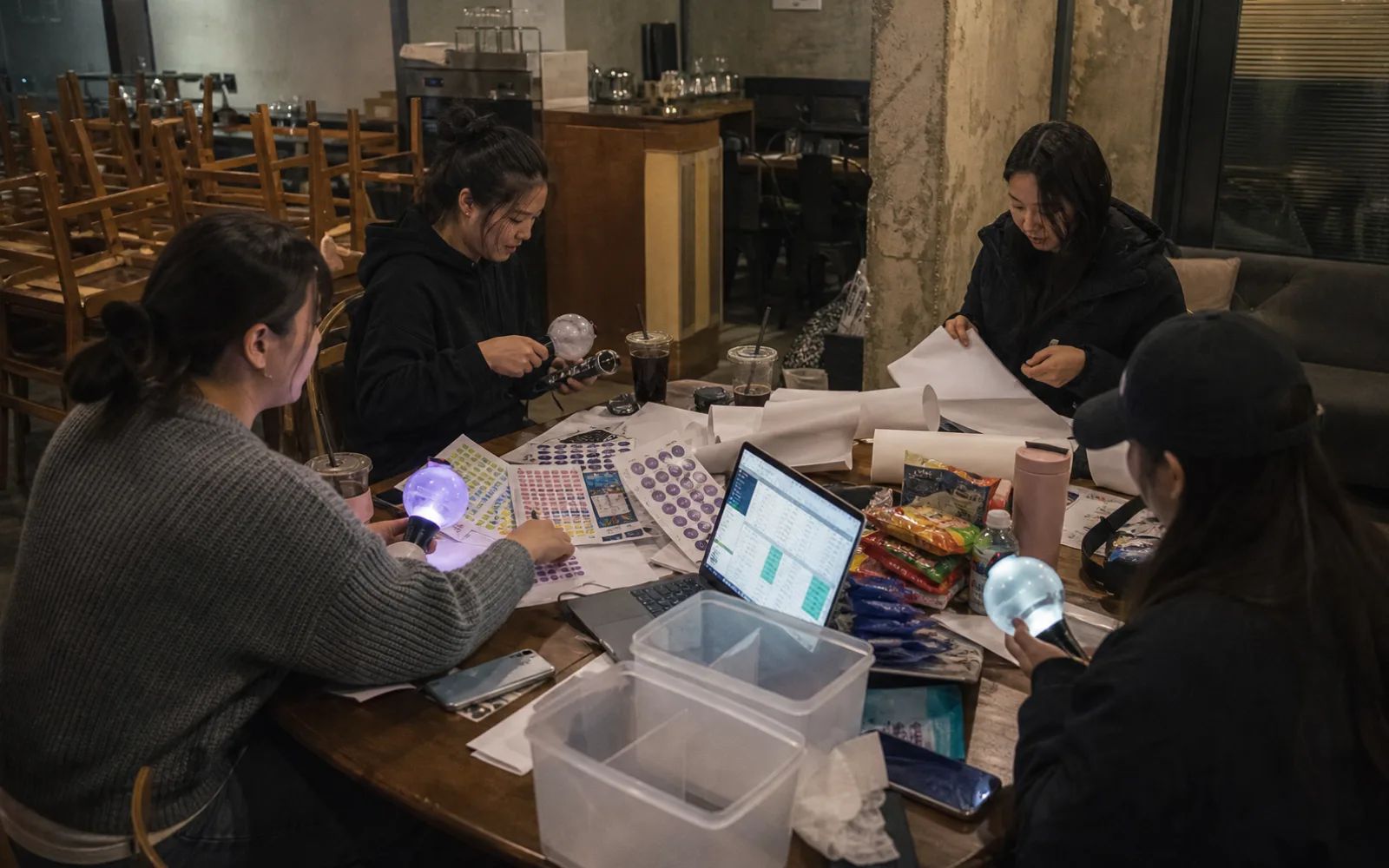
Major terrestrial and cable music programs broadcast weekly. Their ranking methods combine changing mixes of digital performance, physical sales, broadcasts, votes, and other criteria. Artists present new stages while fans coordinate attendance, chants, voting, streaming, and purchases.
Television became a performance laboratory
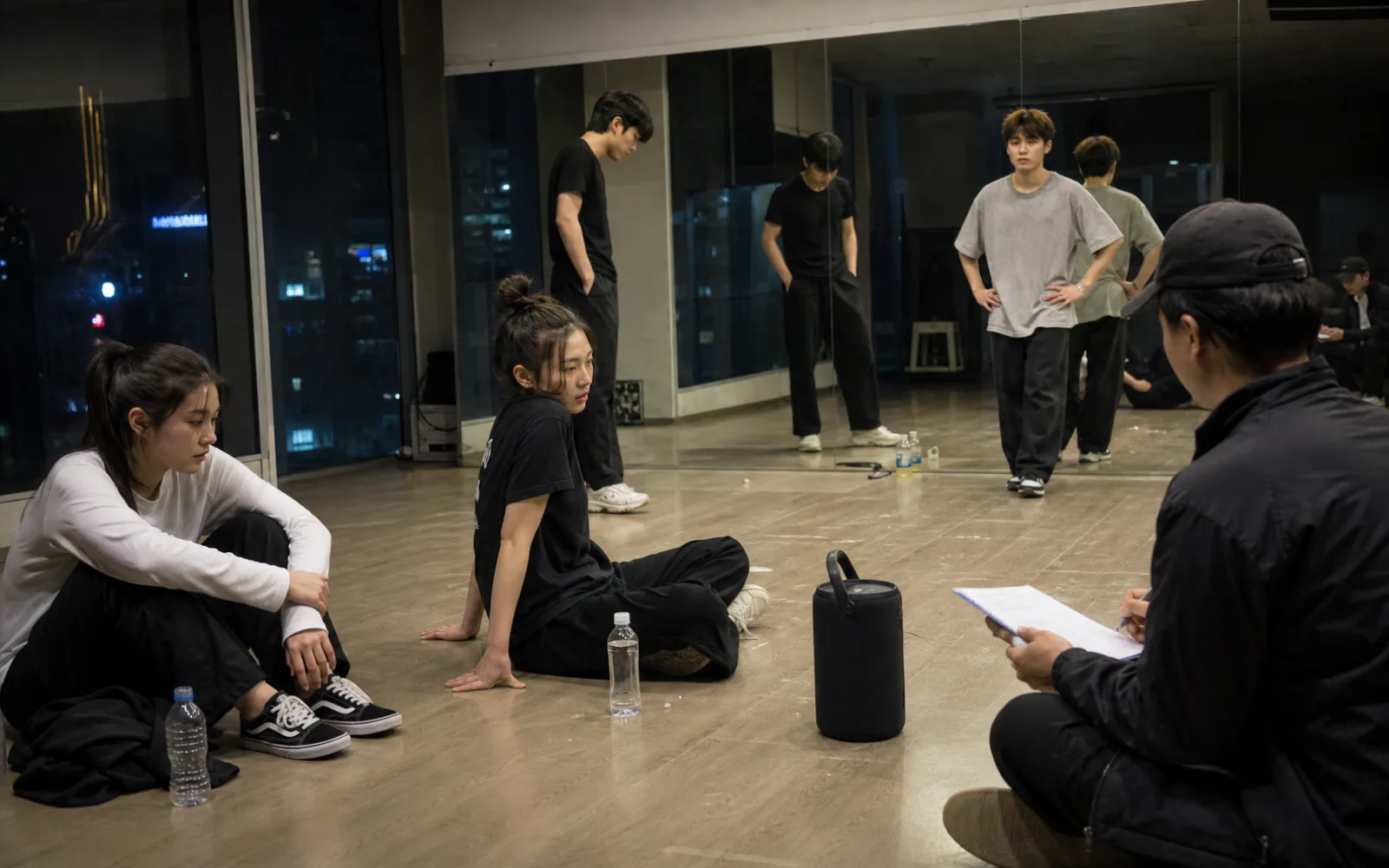
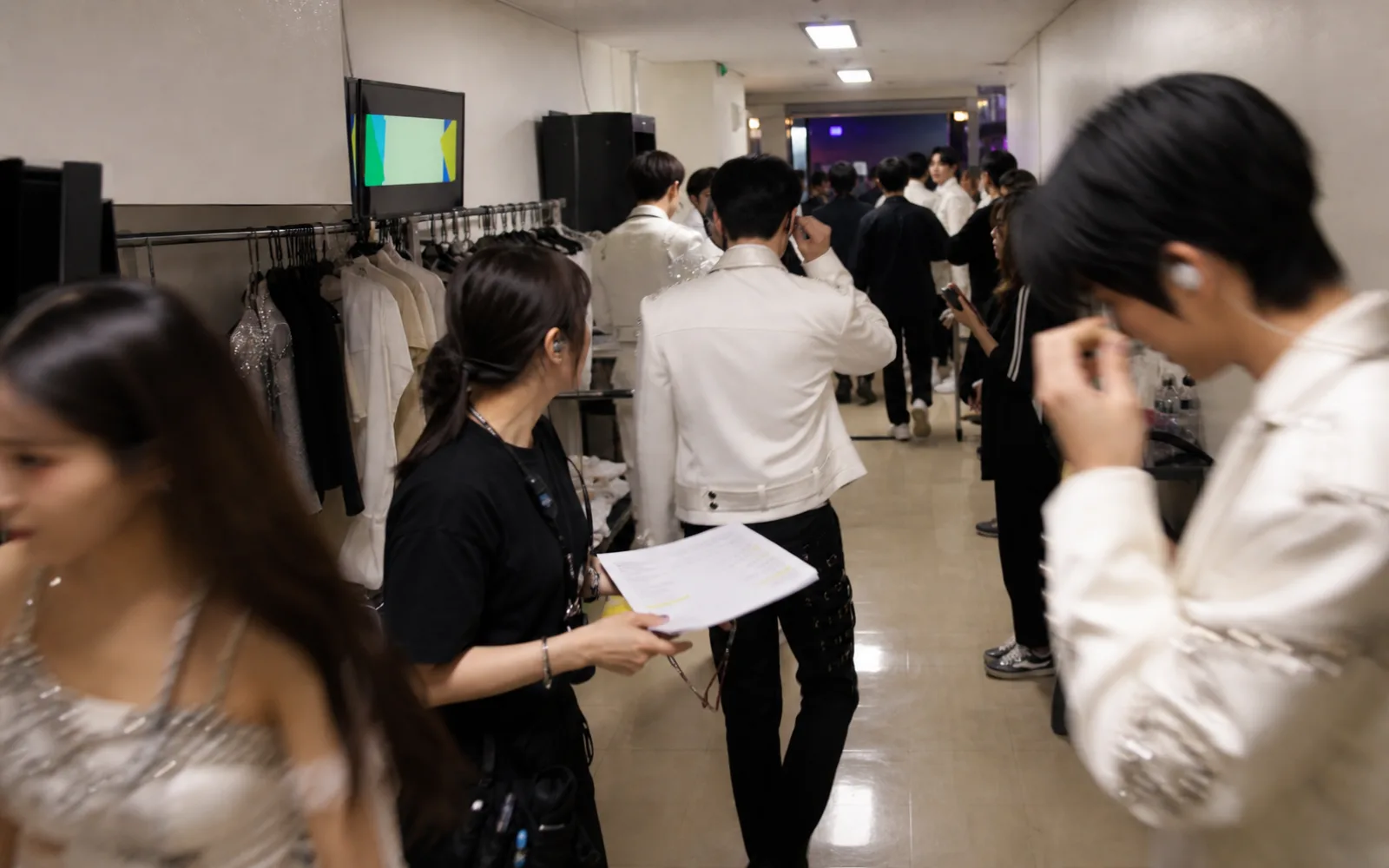
A song may appear across several programs with different sets, camera blocking, outfits, and details. Pre-recording allows complex choreography to be captured precisely; encore stages and live moments expose other abilities. The weekly circuit rewards acts that can renew visual attention without changing the underlying track.
This pressure helped create K-pop’s unusually dense performance archive. A fan abroad can compare stages, practice videos, fancams, and audience recordings, learning the choreography as a changing object rather than a single official clip.
Audience labor becomes audible
Fan chants and group singing are designed into the live soundscape. The audience does not simply cheer between songs; it occupies named spaces inside the arrangement, calls members, and marks transitions. Scholars describe this collective voice as a form of musicianship as well as listenership.
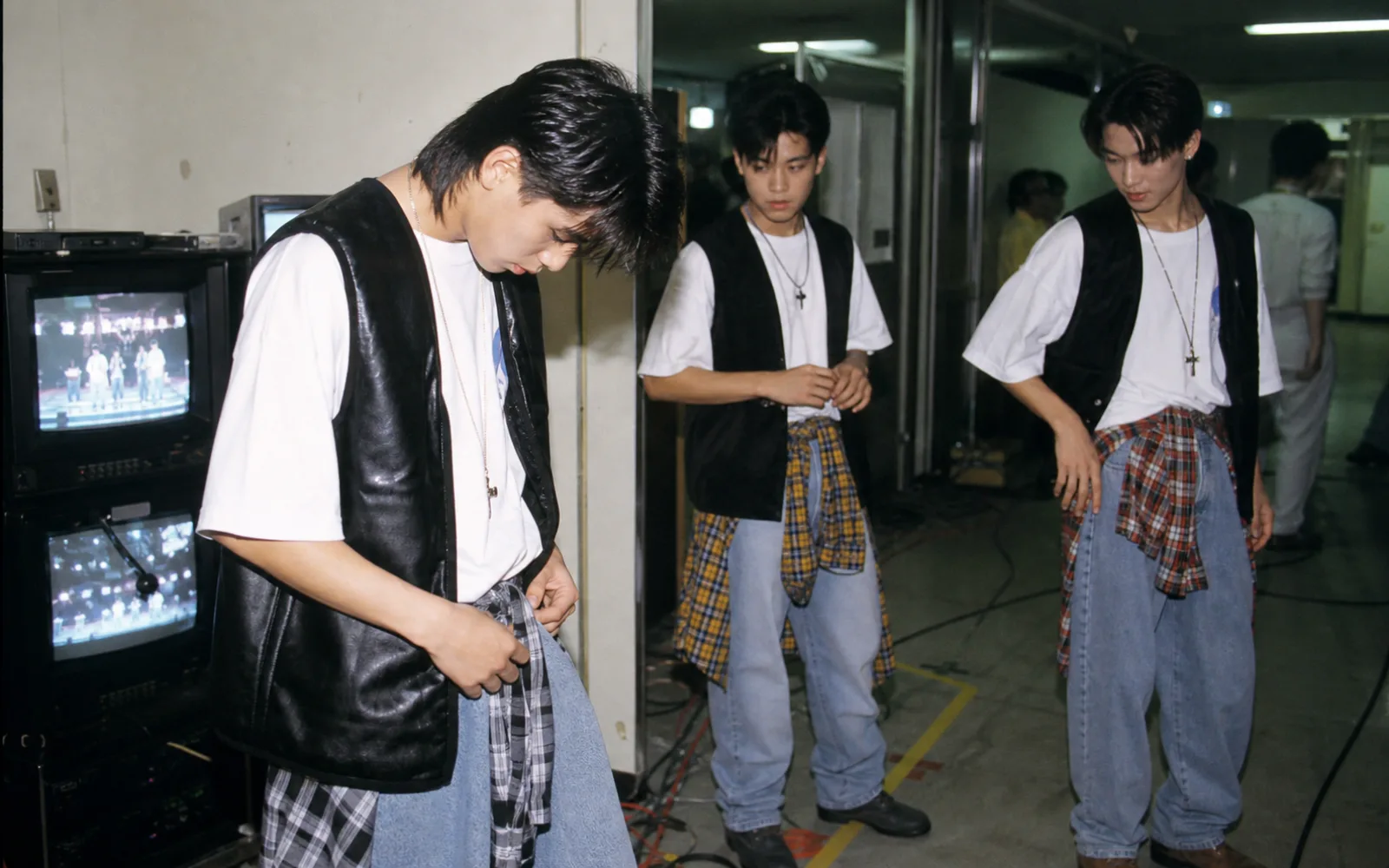
The Korean broadcast system gave K-pop a public clock, a repeatable stage, and a measurable contest. Digital platforms later exported the recordings, but television had already taught the industry how to make every release feel like an event series.
THE INSIDER SIGNAL · SEOULIAN INTERPRETATION
What becomes visible from inside Korea
To a Korean fan, ‘comeback’ names the start of work: teasers, pre-recordings, broadcasts, voting windows, fan chants, and the compressed life of a song in public.
SOURCE DESK · VERIFIED FACT TRAIL
Research used for this essay
- Music Shows and Fan Support Culture Korea.net K-InfoHub · Official explainer on weekly programs, scoring, light sticks, and fan participation.
- Ttechang: The K-pop Live Scene across Listenership and Musicianship Oxford Academic · Scholarly analysis of group singing and interactive performance.
- Researching K-pop: History & Timeline Library of Congress · Broadcast and industry chronology.
Original text, no copied entertainment assets
This essay is SEOULIAN’s original synthesis of the linked sources. Facts and chronology were independently rewritten and compared; source expression is not reproduced. No song lyrics, audio, video, album artwork, logos, or celebrity photographs are embedded.
Image disclosure
Credit: SEOULIAN · Created with ChatGPT Image Generation
Creator: SEOULIAN with ChatGPT Image Generation
Source type: SEOULIAN imagegen editorial photo
Disclosure: AI-generated editorial illustration created with ChatGPT Image Generation; illustrative and not documentary evidence.